How packaging artwork management clarifies team roles in packaging
Packaging artwork projects involve more stakeholders than most teams realise.
3 min read
William Janeway
:
May 6, 2026
Managing product, packaging, and artwork processes has become increasingly complex as organisations scale across markets, channels, and regulatory environments. What was once a linear workflow is now a multi-layered system involving numerous stakeholders, tools, and dependencies.
This complexity introduces a range of operational challenges that impact speed, accuracy, and overall efficiency.
One of the most common challenges is the fragmentation of systems used to manage product information, packaging specifications, and artwork files.
Teams often rely on a combination of:
As a result, information becomes duplicated, outdated, or inconsistent. Without a single source of truth, teams spend significant time verifying data rather than progressing work.
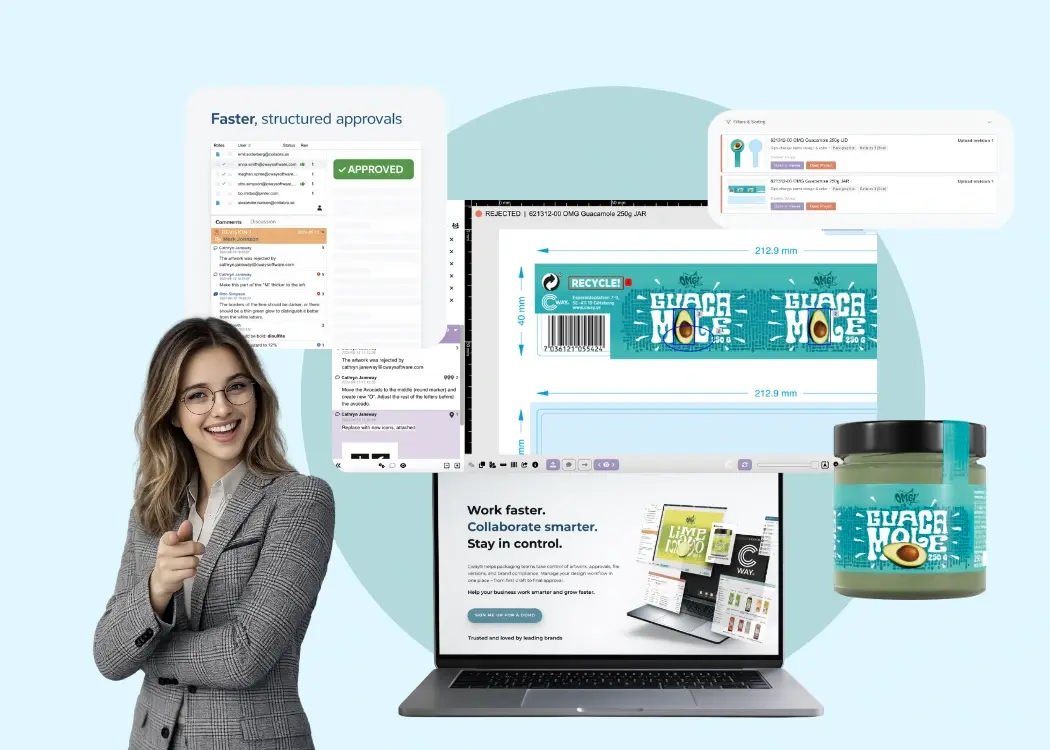
Platforms like Cway help reduce fragmentation by bringing artwork, workflows, and related product data into a single environment. Instead of switching between disconnected tools, teams can manage files, approvals, and information in one place, improving consistency and reducing duplication. At the same time, integrations allow existing systems to remain in use while improving overall data alignment.
Packaging and artwork development typically involve multiple stages—briefing, design, review, approval, and production. However, these stages are not always visible in real time.
This lack of visibility leads to:
When teams cannot easily track progress, delays often go unnoticed until they become critical.
Structured workflows with defined stages and responsibilities make it easier to track progress in real time. This improves transparency across teams, helping identify bottlenecks earlier and ensuring that tasks are completed on time.
Artwork files go through numerous iterations, often shared across different teams and external partners.
Without strict version control:
Even small errors at this stage can lead to costly reprints or compliance issues.
Centralised asset management with built-in version control ensures that all stakeholders are working on the latest files. This reduces the risk of errors, avoids duplicated work, and keeps feedback aligned with the correct version.
Approval workflows are rarely straightforward. They often involve multiple stakeholders, including marketing, regulatory, legal, and external agencies.
Common issues include:
This complexity increases cycle times and creates uncertainty about whether artwork is truly final.
Bringing approvals into a single system helps consolidate feedback and clarify decision-making. With structured approval stages and full traceability, teams can reduce confusion, minimise revision cycles, and move faster toward final sign-off.
Packaging must meet a wide range of regulatory requirements that vary by market. Managing these requirements across multiple SKUs and regions adds significant complexity.
Challenges include:
Errors in this area can result in delays, recalls, or financial penalties.
Embedding compliance into workflows—through controlled approvals and audit trails—helps ensure that required checks are completed consistently. This makes it easier to maintain accuracy and demonstrate compliance when needed.
Product and packaging development involves collaboration between internal departments and external partners such as design agencies, printers, and suppliers.
Misalignment between stakeholders can lead to:
Differences in tools, processes, and expectations further complicate coordination.
Providing a shared environment for collaboration allows internal teams and external partners to work with the same information. Role-based access helps maintain control while improving communication and reducing misalignment.
Organisations are under increasing pressure to launch products faster while maintaining high quality and compliance standards.
However, inefficiencies in workflows, approvals, and data management can slow down the entire process.
Balancing speed with accuracy remains a persistent challenge.
Automating repetitive steps and streamlining approvals can significantly reduce delays. By removing manual handovers and improving coordination, teams can accelerate delivery without compromising quality.
Although large amounts of data are generated during product and artwork development, it is often underutilised.
Many organisations lack visibility into:
Without this insight, it is difficult to identify opportunities for improvement or measure performance.
Capturing and analysing workflow data—such as approval times and revision cycles—provides visibility into how processes actually perform. These insights help identify inefficiencies and support continuous improvement.
Processes that work for a small number of products often break down at scale.
As portfolios grow:
Manual processes and disconnected systems struggle to keep up with this growth.
Standardising workflows and centralising processes creates a more structured foundation for growth. This makes it easier to manage increasing complexity without losing control or efficiency.
Product, packaging, and artwork management are no longer isolated functions—they are interconnected processes that require coordination, visibility, and control.
The challenges outlined above are not caused by a single issue, but by the interaction of multiple factors: fragmented systems, complex workflows, and increasing external demands.
Understanding these challenges is the first step toward building more structured, efficient, and scalable operations.
Packaging artwork projects involve more stakeholders than most teams realise.
Managing artwork processes across multiple teams, versions, and approvals can quickly become chaotic and error-prone. Traditional methods often lead...
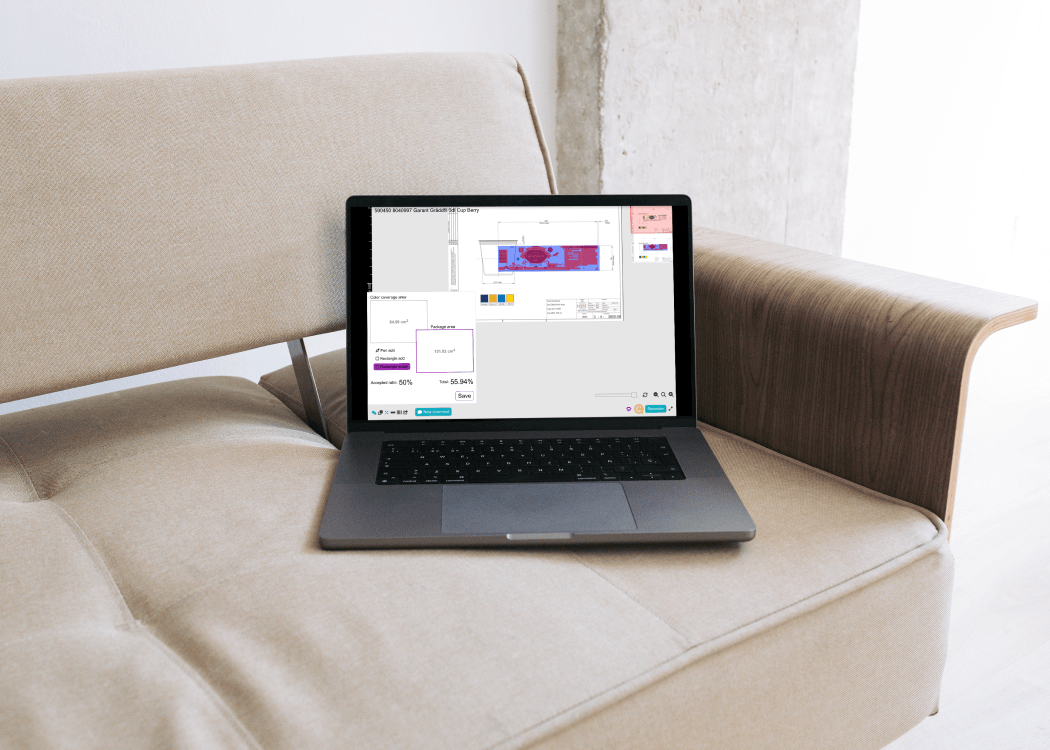
We’re excited to announce the launch of a powerful new feature in the Cway platform: Print Coverage Calculation. This is just the initial version,...