Why artwork lifecycle management is essential in 2025
Delays, miscommunication, and costly packaging errors—sound familiar? These are just a few of the challenges companies face when managing product...
4 min read
Ekaterina Skalatskaia
:
Updated on March 30, 2026
Seasonal product launches are some of the most time-sensitive initiatives for consumer brands. Whether it’s a holiday edition, a summer campaign, or a limited-time promotion, timing is everything.
Yet many teams struggle to launch seasonal SKUs on time. Delays in packaging, approvals, and compliance can push timelines beyond critical retail windows—resulting in lost revenue and missed opportunities.
In this guide, we break down why seasonal SKU launches get delayed—and what you can do to fix them.
A seasonal SKU launch refers to introducing a product variation tied to a specific time period—such as holidays, back-to-school campaigns, or limited-edition packaging.
These launches often involve:
Unlike standard product launches, seasonal SKUs operate under strict, non-negotiable deadlines.
Holiday promos, back-to-school packaging, Valentine’s Day limited editions, summer campaigns—seasonal product launches are everywhere. For brands, they’re critical marketing moments. For brand managers and packaging teams, they often feel like fire drills.
These launches come with high stakes and fixed timelines. If you're late, you miss your window. But getting seasonal SKUs live on time is a challenge for even the most experienced teams.
Even experienced teams face delays. Here are the most common reasons:
Seasonal packaging means new graphics, updated product claims, fresh colors, promotional copy—all managed across multiple formats and teams. Assets often live in email threads, shared drives, or personal folders.
Chasing down the "right version" becomes a full-time job. One packaging designer recently told us, “We were working off three different dielines before someone noticed.”
Every step in the packaging workflow often needs multiple rounds of review and sign-off: design, marketing, legal, compliance, print production.
Without a system in place, these approvals happen by email or chat, creating version confusion and slowing things down.
Claims and regulatory compliance can change depending on the season, region, or product category. If compliance review isn’t built into your workflow, errors are often caught late—requiring costly, time-consuming fixes.
When marketing is driving the timeline, packaging is handling the files, compliance is managing legal reviews, and supply chain needs the final approved artwork—without a centralized platform, critical details fall through the cracks.
A beverage company preparing a Christmas edition product planned a 6-week launch timeline.
However:
The result: a 3-week delay, missing the peak retail window.
This scenario is more common than most teams expect.
Understanding where delays occur is key to fixing them.
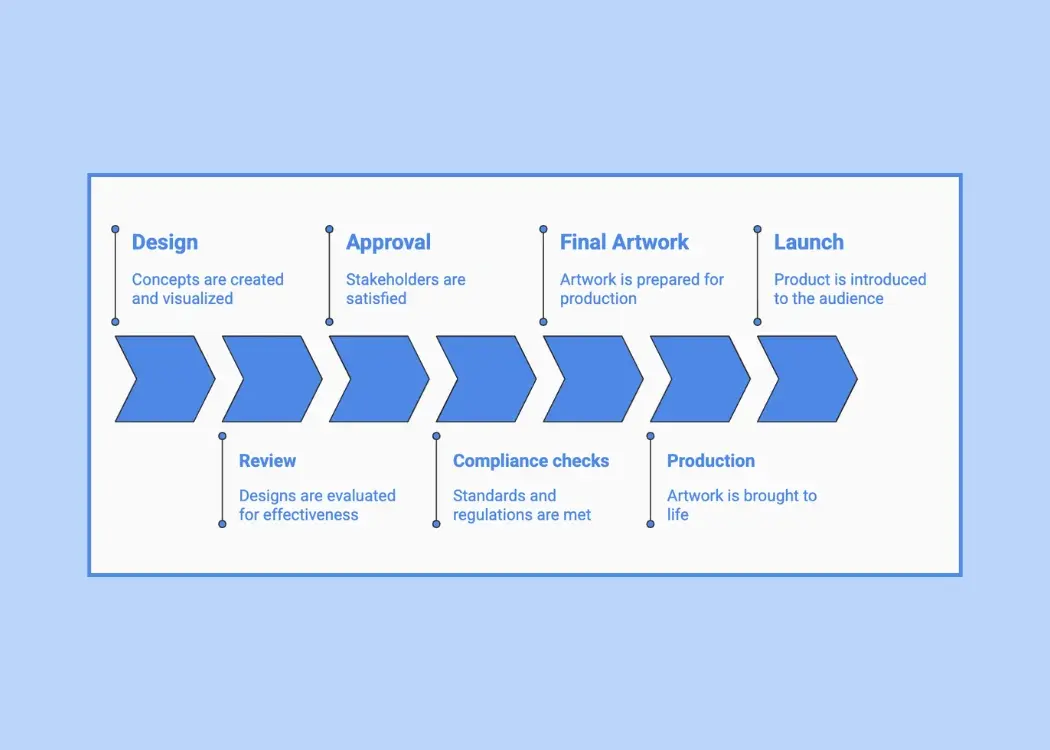
Week 1–2: Design Phase
Initial concepts, packaging layouts, and artwork creation.
Week 3–4: Approval Phase
Feedback from marketing, legal, and stakeholders.
👉 Delays often happen here due to slow responses and version confusion.
Week 5: Compliance Review
Regulatory validation of claims, labeling, and materials.
👉 Late-stage issues can trigger rework.
Week 6: Finalization & Production
Final artwork approval and handoff to production.
👉 Without structured workflows, delays compound at each stage.
Even temporary packaging must meet full regulatory requirements.
Key risks include:
Ignoring these risks can result in costly rework—or even product recalls.
Delays don’t just affect timelines—they impact the entire business.
Teams that consistently launch on time focus on process—not just speed.
Store all files, artwork, and claims in one place. This eliminates confusion and ensures everyone works from the latest version.
Structured approval workflows reduce manual follow-ups and speed up decision-making.
Compliance should be part of the process—not the final step. Early validation prevents costly revisions later.
When all stakeholders can track progress and provide feedback in one place, delays decrease significantly.
Use this checklist to stay on track:
Modern packaging and marketing teams rely on dedicated tools to manage complexity.
These platforms help:
Without the right tools, managing seasonal SKU launches at scale becomes nearly impossible.
Cway® is an all-in-one platform designed to streamline packaging and marketing workflows.
It helps teams:
By reducing manual work and improving visibility, teams can launch faster—with fewer errors.
Ready to get seasonal SKUs live on time? Discover how Cway® can streamline your next launch.
A seasonal SKU is a temporary product variation created for a specific time period, such as holidays, promotions, or limited-edition campaigns. It often includes updated packaging, messaging, or design elements.
Seasonal SKU launches are often delayed due to scattered assets, manual approval processes, late-stage compliance checks, and poor alignment between teams. These issues create bottlenecks that slow down the entire workflow.
A typical seasonal SKU launch takes between 4 to 8 weeks, depending on the complexity of the packaging, number of stakeholders involved, and efficiency of approval and compliance workflows.
The biggest delays usually occur during approval stages, where feedback is slow or unclear, and during compliance reviews when issues are discovered too late and require rework.
Teams can speed up launches by centralizing assets, automating approval workflows, integrating compliance checks early, and improving collaboration between marketing, legal, and packaging teams.
Yes. Even temporary or seasonal packaging must comply with all applicable regulations, including labeling, materials, and recyclability requirements.
Dedicated workflow and asset management platforms help teams organize files, track versions, automate approvals, and ensure compliance—reducing delays and errors.
Delays, miscommunication, and costly packaging errors—sound familiar? These are just a few of the challenges companies face when managing product...
Rising SKU costs can crush your packaging budget—especially when you're up against tight deadlines before budget season closes. This article reveals...
Three thousand packaging artworks a year. That's not an edge case — it's a realistic volume for any mid-to-large FMCG brand managing multiple product...