Artwork lifecycle management (ALM): a guide for packaging teams
Managing packaging artwork isn’t just about design — it’s a complex process involving briefs, reviews, approvals, and strict compliance. In this...
3 min read
William Janeway
:
March 13, 2026
In complex packaging projects, artwork doesn’t move in a straight line. A single label or carton design may pass through marketing, regulatory, legal, quality, and external agencies before it is approved for production. Without clear coordination, even a small artwork update can quickly turn into a confusing chain of emails, version conflicts, and approval delays.
This is where artwork lifecycle coordination becomes critical.
Artwork lifecycle coordination ensures that packaging artwork progresses smoothly through every stage — from initial brief to final release — with the right stakeholders involved at the right time. Instead of reacting to issues as they appear, teams create a structured process that keeps artwork moving forward in a controlled and predictable way.
Artwork lifecycle coordination refers to the management and orchestration of all tasks, stakeholders, and approvals involved in the artwork lifecycle. Its purpose is to ensure that artwork files are created, reviewed, approved, and released in the correct sequence without delays or compliance risks.
In packaging environments, coordination becomes especially complex because artwork often contains:
Each of these elements may require review from different teams. Without coordination, feedback becomes fragmented and decisions lose traceability. As artwork complexity increases, companies must manage not just files, but the entire process surrounding them.
Many organizations still coordinate artwork through spreadsheets, email threads, and shared folders. While this may work for small teams, it breaks down quickly when artwork volumes grow.
Common coordination challenges include:
Fragmented feedback
Comments arrive from different stakeholders across multiple channels, making it difficult to track which changes are final.
Unclear ownership
Teams may not know who is responsible for the next step in the process, causing projects to stall.
Version confusion
Multiple versions of the same artwork circulate between teams, increasing the risk of incorrect files reaching print.
Approval delays
Sequential approvals can stretch timelines if reviewers are not clearly assigned or deadlines are unclear.
When coordination becomes reactive rather than structured, teams lose visibility into artwork status and decision history. This increases operational effort and raises the risk of errors reaching production.
In many organizations, a dedicated artwork lifecycle coordinator or packaging artwork manager helps manage the process.
Their responsibilities typically include:
This role acts as the central point of contact across the artwork lifecycle, helping teams maintain visibility and control as projects move forward.
However, as artwork volumes increase across SKUs, markets, and product variants, manual coordination becomes increasingly difficult to sustain.
To reduce coordination complexity, many organizations implement Artwork Lifecycle Management (ALM) systems.
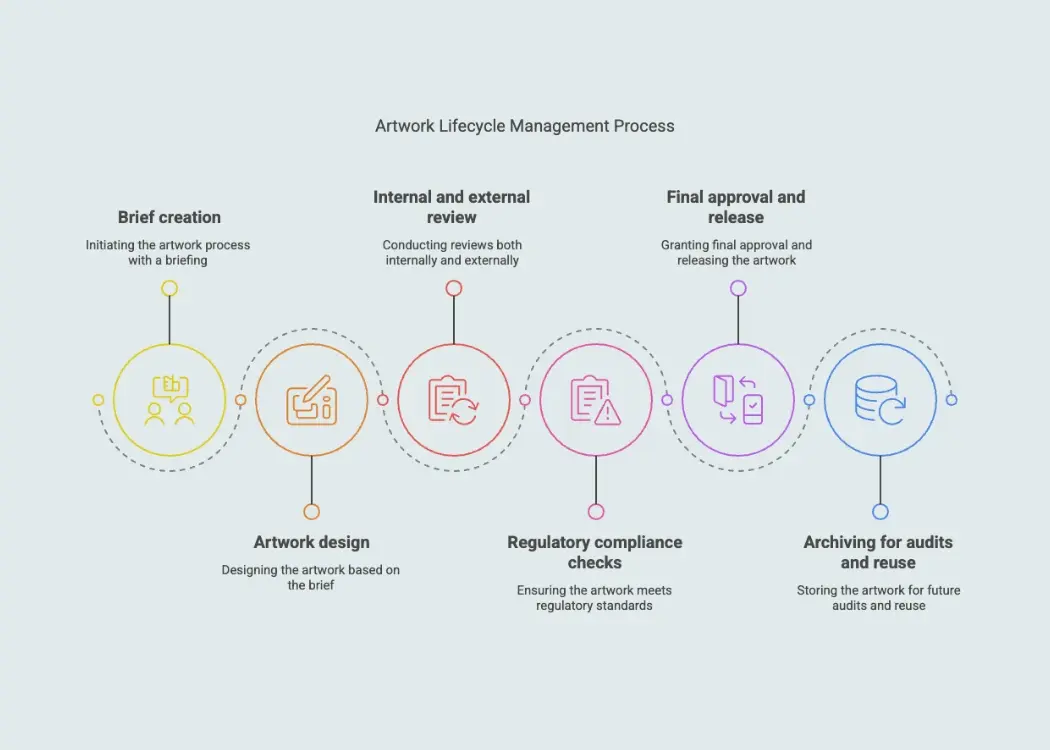
These systems structure the artwork process into defined stages, such as:
By managing artwork as a lifecycle rather than a collection of files, teams gain visibility into where each project stands and what needs to happen next.
This structured approach provides several advantages:
Centralized feedback
All comments and revisions are collected in one place.
Clear approval workflows
Approvals follow a defined sequence, ensuring compliance and accountability.
Improved version control
Teams always work on the latest version of the artwork.
Greater transparency
Project status, responsibilities, and deadlines remain visible across teams.
The result is a more predictable and scalable artwork process.
Packaging artwork is no longer a simple design task. It is a cross-functional process involving compliance requirements, global markets, and tight launch timelines. As product portfolios grow, companies must also manage increasing volumes of packaging and labeling updates, making the artwork management process more complex than ever.
Without strong artwork lifecycle coordination, teams often experience:
These challenges often appear when organizations rely on spreadsheets, emails, and shared folders instead of a structured artwork workflow management approach.
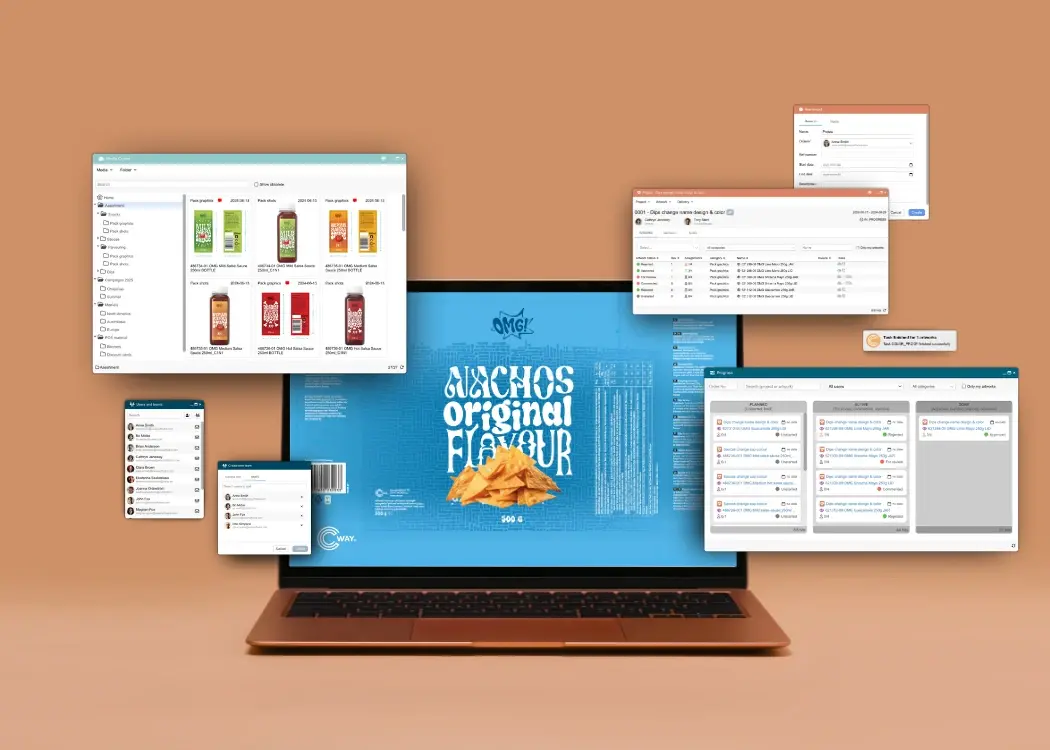
To solve this, many packaging teams adopt packaging artwork management software. These platforms help centralize artwork files, automate approval workflows, and improve collaboration between marketing, regulatory, and design teams.
Effective coordination — supported by modern artwork management software — ensures that artwork moves smoothly through each stage of the lifecycle, helping organizations launch products faster while maintaining accuracy and compliance.
For companies managing hundreds or even thousands of packaging SKUs, using an artwork management platform to support the artwork lifecycle is no longer optional — it’s essential.
Artwork lifecycle coordination is the process of managing all tasks, stakeholders, and approvals involved in packaging artwork development. It ensures artwork moves efficiently from briefing and design to review, approval, and final production release.
Packaging artwork involves multiple departments such as marketing, regulatory, legal, and design. Proper coordination ensures feedback is centralized, approvals are clear, and the correct version of artwork reaches production.
In many organizations, a packaging artwork manager or artwork lifecycle coordinator oversees the process. They manage communication between teams, track approvals, control versions, and ensure artwork progresses through each stage of the lifecycle.
Artwork lifecycle management software centralizes feedback, automates approval workflows, and provides clear version control. This helps packaging teams reduce delays, improve compliance, and maintain full visibility across artwork projects.
Managing packaging artwork isn’t just about design — it’s a complex process involving briefs, reviews, approvals, and strict compliance. In this...
Delays, miscommunication, and costly packaging errors—sound familiar? These are just a few of the challenges companies face when managing product...
If your team creates packaging artwork—whether for food products, cosmetics, or medical devices—you already know how complex and multi-layered the...