Artwork lifecycle management (ALM): a guide for packaging teams
Managing packaging design today involves far more than simply creating visual assets. From regulatory checks to version tracking and approvals, the...

3 min read
William Janeway
:
Updated on March 16, 2026
Managing packaging artwork is one of the most complex workflows in product development. Marketing teams, designers, regulatory specialists, and packaging managers all need to collaborate on files that are constantly changing. Without the right system in place, artwork approvals become slow, version control breaks down, and compliance risks increase.
This is why many companies are investing in the most efficient platforms for artwork lifecycle management—solutions designed to centralize artwork files, automate approvals, and streamline collaboration across teams.
In this article, we explore how modern artwork management software works, what features to look for, and which platforms help organizations manage packaging artwork at scale.
Before comparing platforms, it helps to understand what is artwork management in the context of packaging and labeling.
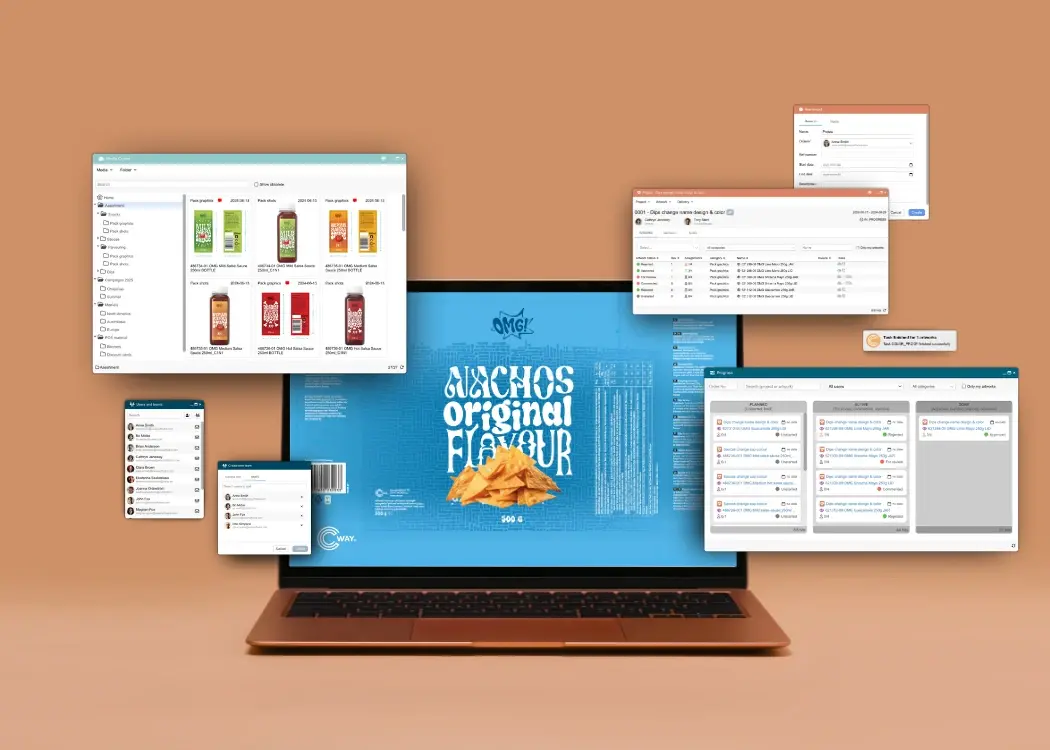
Artwork management refers to the structured process of creating, reviewing, approving, storing, and updating packaging design files. The goal is to ensure that every piece of artwork—labels, packaging layouts, regulatory information, and marketing elements—moves through a controlled workflow.
A modern artwork management system typically supports:
If you want a deeper explanation of the concept and the full lifecycle involved, you can explore this guide on Artwork Lifecycle Management.
Many companies still rely on email threads, shared drives, and spreadsheets to manage packaging artwork.
This approach creates several problems:
When teams attempt to manage packaging artwork files manually, the process quickly becomes chaotic—especially when dealing with multiple SKUs, markets, and languages.
That’s why more organizations are implementing automated artwork management platforms designed specifically for packaging workflows.
The best software for managing packaging artwork at scale usually includes several core capabilities.
A strong artwork management platform provides a single location where all artwork files are stored and managed.
This makes it easier to:
Many top-rated tools for managing packaging artwork files also integrate with DAM systems and product information management tools.
One of the biggest advantages of modern systems is artwork workflow management.
Instead of manually sending files for review, teams can create automated workflows that route artwork to the correct stakeholders.
These top tools to manage digital artwork approval workflows typically allow you to:
This structured artwork workflow helps companies reduce approval times while maintaining full traceability.
Packaging artwork often includes regulated information such as:
Specialized label and artwork management software helps ensure that the correct regulatory content is used across different markets.
By integrating regulatory checks into the artwork management process, companies can significantly reduce compliance risks.
Artwork development rarely happens in one department.
Marketing, design agencies, legal teams, and packaging specialists all contribute feedback. Efficient artwork management software provides collaborative tools such as:
This improves artwork lifecycle coordination and keeps all stakeholders aligned.
Several platforms today offer specialized functionality for packaging and label artwork.
When evaluating the top tools to automate artwork lifecycle tasks, organizations typically look for solutions that combine:
The best workflow tools for packaging and labeling artwork are usually designed specifically for industries like food & beverage, pharmaceuticals, and consumer goods—where artwork accuracy and speed are critical.
These platforms act as a centralized artwork management system that supports the entire lifecycle from concept to approved packaging.
Selecting among the most efficient platforms for artwork lifecycle management depends on several factors:
Scale of your product portfolio
Companies with hundreds or thousands of SKUs require highly scalable systems.
Workflow complexity
If your artwork involves many stakeholders and regulatory steps, advanced workflow automation becomes essential.
Integration needs
The ideal packaging artwork management software integrates with your existing systems such as DAM, PLM, or PIM.
Compliance requirements
Highly regulated industries benefit from specialized label and artwork management software that supports regulatory workflows.
As product portfolios expand and regulatory requirements increase, companies are moving toward more structured and automated artwork workflows.
Modern platforms are evolving to include:
These innovations make it easier than ever to manage complex packaging artwork processes efficiently.
Organizations that adopt the most efficient platforms for artwork lifecycle management gain faster approvals, better collaboration, and stronger compliance across global markets.
Managing packaging design today involves far more than simply creating visual assets. From regulatory checks to version tracking and approvals, the...
In complex packaging projects, artwork doesn’t move in a straight line. A single label or carton design may pass through marketing, regulatory,...
Packaging artwork files are one of the most critical assets in product development. Labels, cartons, flexible packaging, and regulatory information...