How to automate compliance updates in packaging artwork
Staying compliant with regulatory requirements in packaging design can be a constant challenge. In this article, we’ll explore the best tools to...
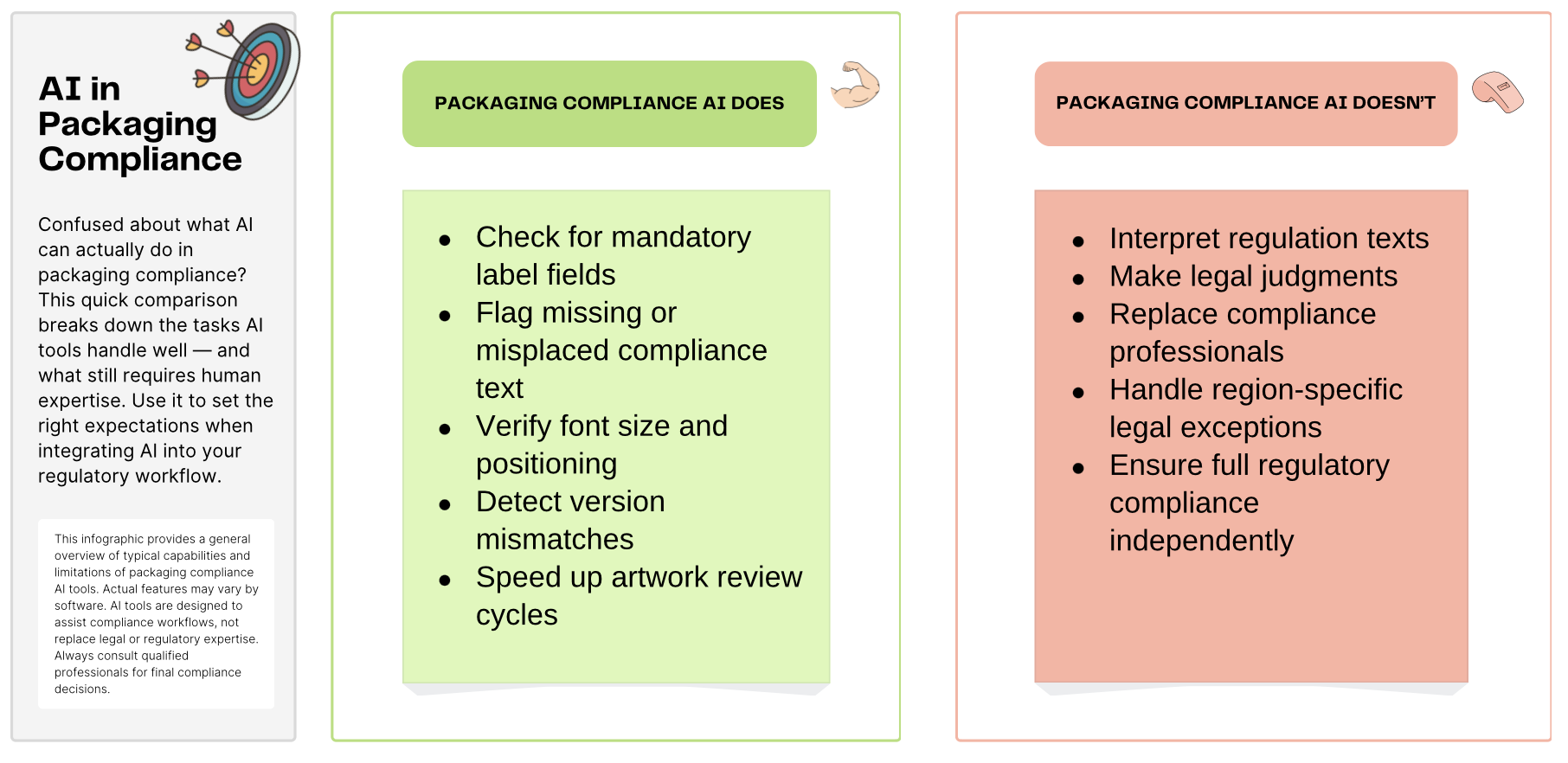
Packaging compliance is complex, and AI promises to simplify it. But what exactly can packaging compliance AI do—and where does it fall short? In this article, we cut through the hype and explain the real capabilities and limitations of AI in regulatory packaging checks.
AI in packaging is no longer futuristic — it’s already helping teams avoid costly errors and stay compliant. But confusion still surrounds what packaging compliance AI tools really offer.
Let’s be clear:
AI helps your compliance process — it doesn’t replace it.
Let’s bust the myths and get real about what AI does and doesn’t do in packaging compliance.
AI tools can scan artwork to verify that key regulatory fields are present — including:
Ingredient lists
Nutrition panels
Legal disclaimers
Recycling marks
Manufacturing or expiration dates
These automated compliance checks help ensure no critical element is missed before printing.
Missing statements like “Keep out of reach of children” or “Store in a cool, dry place” can lead to compliance issues or even product recalls.
AI systems are trained to detect expected statements by region or product type, and flag them when missing.
Regulatory bodies often require minimum font sizes or specific label placements (e.g. front of pack, near barcode). AI can measure and compare fonts or element positions to detect if:
The warning is too small
Legal text is hidden or off-position
Labels are overlapping or misaligned
This is especially useful when packaging is adapted across multiple SKUs and languages.
AI excels at comparing approved templates with new artwork to find discrepancies, such as:
Updated allergen statements not reflected in the artwork
Label layout mismatches
Wrong product version used (e.g. EU vs US)
Cway® software, for example, centralizes version control to help avoid costly inconsistencies.
Let’s set realistic expectations. AI isn’t a substitute for legal and regulatory expertise. Here’s what it doesn’t do:
AI can follow rules — but it can’t understand legal nuance. It won't:
Interpret vague or evolving compliance laws
Judge intent behind regulations
Decide how exceptions apply in your case
You still need human experts to navigate regulation updates, market-specific interpretations, and product-specific nuances.
AI doesn’t offer legal opinions. It won’t tell you:
“This artwork is compliant with FDA rules.”
“This claim violates EU health regulation.”
That’s a job for your legal team or compliance consultants. AI simply flags what looks non-compliant or inconsistent.
AI doesn’t:
Attend regulatory reviews
Interpret industry-specific nuances
Handle communications with legal teams or regulators
Your compliance team is irreplaceable. AI helps them move faster — not disappear.

Cway® software combines smart automation with flexible review tools that help:
Your compliance team stays in control — with fewer repetitive checks.
Packaging compliance AI is promising — and it's improving fast. But it’s not magic.
Today, AI helps teams catch common errors, streamline reviews, and work more efficiently.
But the legal decisions, regulatory interpretations, and certifications?
Still the domain of human experts.
📚 For a deeper look at what AI can’t do in packaging workflows, check out our article:
👉 AI Limitations in Artwork Management
With platforms like Cway® software, you can combine automation with expert oversight to create faster, smarter, and safer packaging workflows.
Staying compliant with regulatory requirements in packaging design can be a constant challenge. In this article, we’ll explore the best tools to...
In this article, we’ll explore why packaging compliance software is a must-have for modern brands. Learn how it helps meet packaging standards,...
In regulated industries like food & beverage, pharmaceuticals, or cosmetics, every detail on your packaging must meet strict legal and brand...