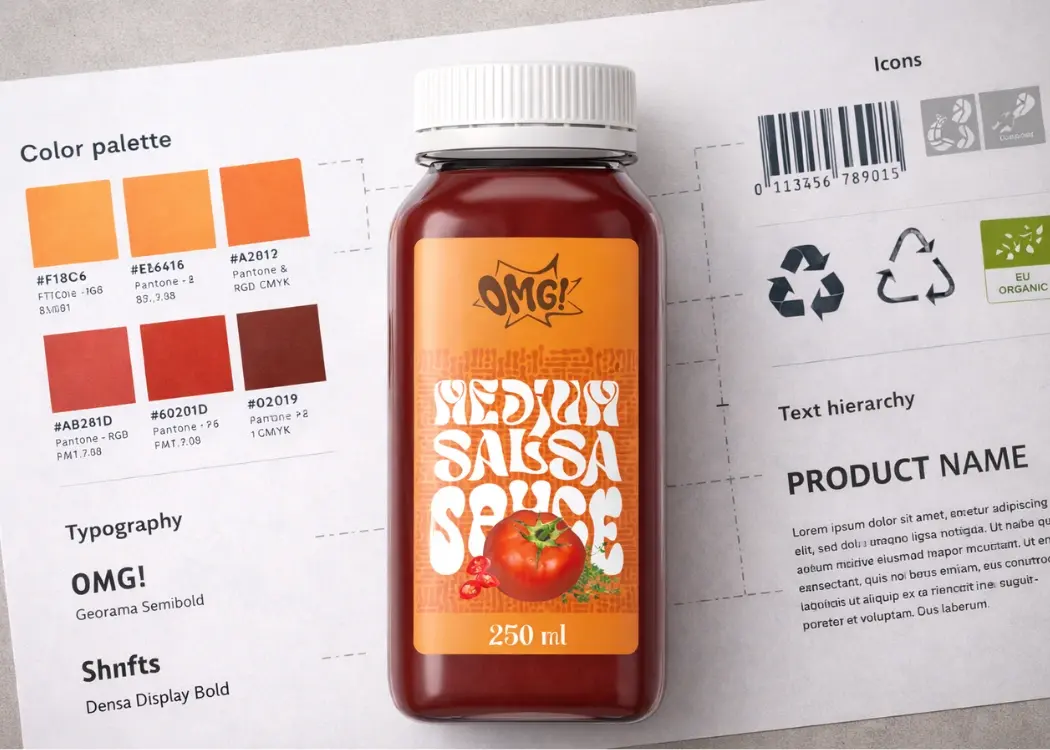
Packaging with principles: bringing Fair Trade values to life
World Fair Trade Day, celebrated annually on the second Saturday of May, is more than just a symbolic event—it's a powerful call to action. On May...
4 min read
William Janeway
:
November 21, 2025 at 10:15 AM
For most of history, packaging was purely practical — a protective shell, a label, a way to get a product from factory to shelf. But at some point, packaging stopped being just a container and started becoming a canvas.
From the swirling flourishes of Art Nouveau to Andy Warhol’s famous soup cans, packaging has evolved into one of the most expressive and strategic tools a brand possesses. Today, it’s not just about function — it’s about emotion, storytelling, and artistry.
Let’s trace how packaging became art — and what modern brand designers can learn from that journey.
In its earliest form, packaging was about protection and preservation. Clay pots, paper wrappers, and tins kept products safe but rarely said anything about who made them. Design was utilitarian — labels told you what was inside, nothing more.
The turning point came when industrial production created competition. As products crowded shelves, brands realized that design could do more than identify — it could differentiate.
In the late 19th century, the Art Nouveau movement transformed packaging into something ornamental and collectible. Artists like Alphonse Mucha brought elegance to everyday items, designing lavish posters and boxes for Job Cigarettes, Nestlé chocolate, and Moët & Chandon.
At the same time, designers like René Lalique and Émile Gallé sculpted perfume bottles that blurred the line between container and sculpture. These objects weren’t just vessels; they were art pieces in themselves.
As industrial brands like Coca-Cola, Cadbury, and Nestlé emerged, they began to understand the power of consistent visual identity. Logos, typography, and color became storytelling tools.
By the 1920s, packaging wasn’t just about selling a product — it was about building trust, familiarity, and emotion.
In 1962, Andy Warhol painted 32 canvases of Campbell’s soup cans — one for each flavor. The result was seismic. Suddenly, packaging wasn’t just commercial design; it was art.
Warhol’s genius was his ability to take something ordinary — a can from the supermarket shelf — and elevate it to gallery status. By doing so, he collapsed the distance between consumer culture and fine art.
The Pop Art movement of the 1960s embraced mass production, advertising, and logos as legitimate subjects of creative expression. Artists like Roy Lichtenstein and Claes Oldenburg turned toothpaste tubes, comics, and branded goods into artistic commentary.
This cultural shift validated the aesthetics of commerce. It suggested that good packaging design could embody not only style but also identity, irony, and emotion.
After Pop Art, packaging could no longer be dismissed as “just marketing.” It became a mirror of modern life — a visual shorthand for what a society values.
For designers, it was a revelation: even the most commercial object could carry artistic weight and cultural meaning.
While Warhol was turning packaging into art, industrial designer Raymond Loewy was turning design into business strategy. Known as “the father of industrial design,” Loewy believed that beauty and usability could drive profitability.
His redesign of Lucky Strike cigarettes, the Shell logo, and his refinements to Coca-Cola’s contour bottle all followed his guiding principle: “The most advanced design that is still acceptable to the public.”
By the mid-20th century, brands began to understand that packaging wasn’t a finishing touch — it was the brand.
Design systems became more structured. Typography, color, and composition were standardized. But simplicity didn’t mean soulless — it meant strategic clarity. Brands like Heinz, Nivea, and Colgate built their identities around timeless visual codes that still endure today.
Packaging had become the first and most intimate touchpoint in the customer journey. Before advertising, before social media, there was the moment when a customer picked up a product and felt something.
That emotion — trust, nostalgia, excitement — was design’s true currency.
In the 2000s, technology and lifestyle brands began to choreograph packaging as an emotional experience. Apple’s minimalist unboxing ritual became iconic: the slow lift of the lid, the weight of the materials, the pristine presentation.
Similarly, Aesop’s apothecary-style bottles and kraft paper bags turned simplicity into a form of sophistication. Their packaging doesn’t just protect a product — it embodies the brand’s voice, values, and aesthetic restraint.
Modern packaging has fully embraced art as collaboration.
Absolut Vodka worked with artists like Keith Haring, Damien Hirst, and Andy Warhol, turning its bottle into a creative platform.
Louis Vuitton x Yayoi Kusama transformed perfume bottles and shopping bags into dotted, joyful artworks.
Pepsi, Coca-Cola, and Nike regularly release limited editions designed by contemporary artists.
These collaborations turn everyday products into collectible art — merging cultural capital with commercial value.
Today’s creative teams are redefining what “artful” means. Beauty isn’t just about visuals — it’s about values.
Brands like Lush, Seed, and Everlane use minimalist, sustainable packaging to express ethics and authenticity. Materials, textures, and typography tell stories of responsibility and transparency.
Design isn’t only about attraction anymore — it’s about alignment.
Every package is a chance to evoke feeling — delight, nostalgia, curiosity, or surprise. Creative directors should think of packaging as the handshake between brand and customer.
When design stirs emotion, it transforms the ordinary into memorable.
Artful packaging succeeds when it reflects purpose. Whether minimalist or maximalist, the design must echo the brand’s deeper story — its beliefs, voice, and audience.
It’s not about decoration; it’s about intention.
In the age of social media, beautiful packaging travels faster than paid ads. It gets photographed, shared, and talked about.
Creative leaders today measure success not just in conversions, but in conversation. The question isn’t only “Does it sell?” — it’s “Does it inspire, engage, and endure?”
Packaging has always been a bridge — between art and commerce, creativity and strategy, brand and human. What began as a label has become a language; what started as containment has evolved into communication.
When a customer holds your product, they’re holding more than packaging — they’re holding a story.
In the modern era, packaging isn’t just design. It’s the art of emotion, identity, and meaning — the purest expression of what a brand stands for.
World Fair Trade Day, celebrated annually on the second Saturday of May, is more than just a symbolic event—it's a powerful call to action. On May...
Have you ever spent hours hunting for the latest packaging file, only to realize someone has been working on an outdated version? Or maybe you’ve...
For brands managing packaging, printing is one of the largest operational costs — and yet it’s often treated as a fixed expense rather than an area...