24 DAYS
Average packaging artwork approval cycle

Cway works with FMCG teams managing complex packaging workflows across multiple markets and regulatory environments.
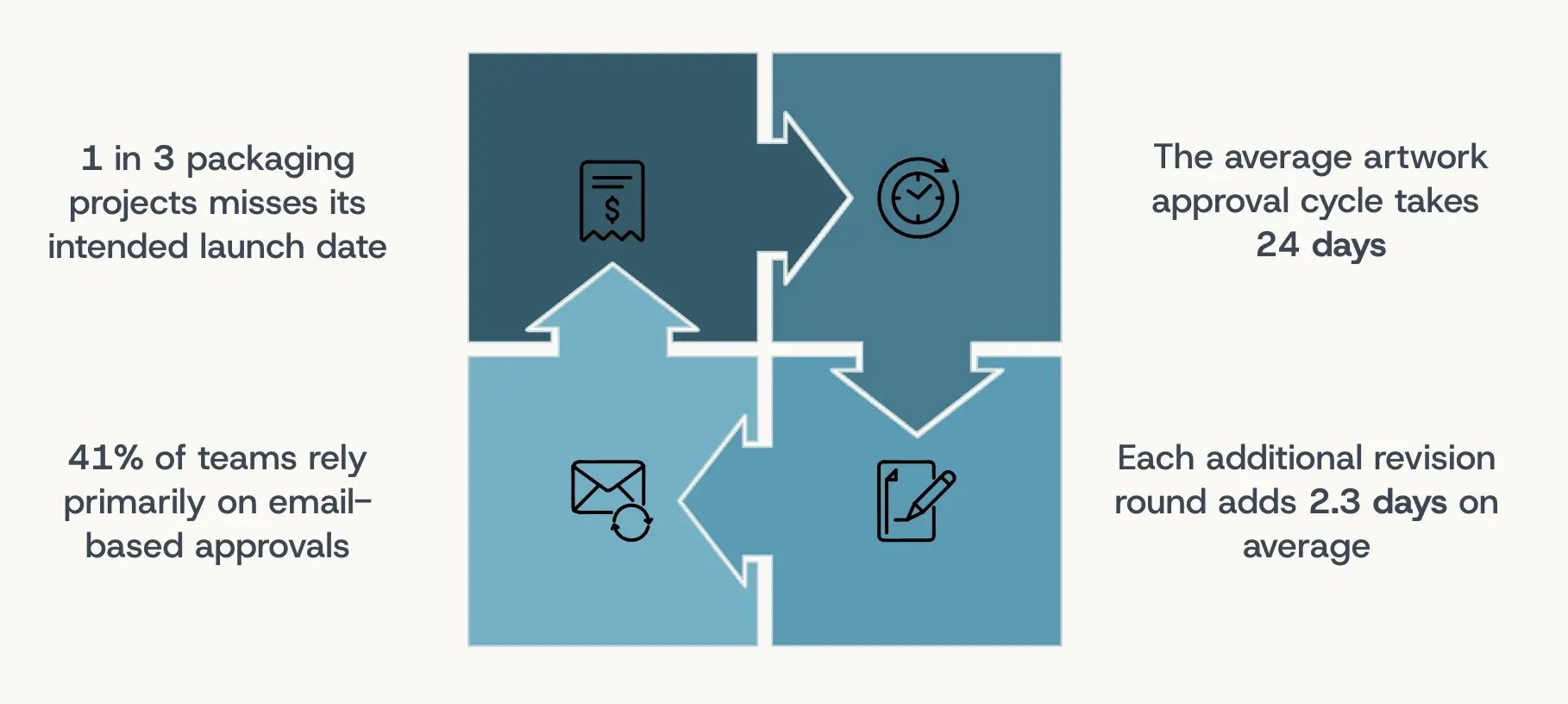
Over time, we observed recurring patterns:
We conducted this research to:
This benchmark is based on:
Timeframe: 2025–2026
Geographic scope: European and global FMCG markets
All data has been anonymized and aggregated.
An artwork approval cycle is the structured process of reviewing, revising, validating, and formally approving packaging artwork before production.
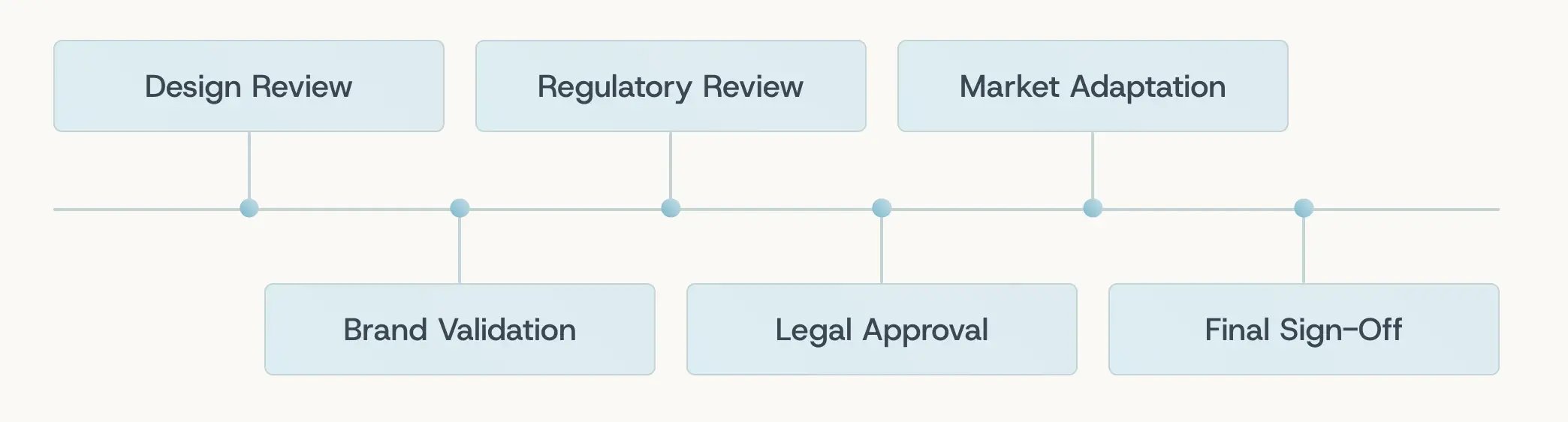
It typically includes:
In regulated industries, approval cycles also require:
 One of the central questions of this benchmark was:
How long does a packaging artwork approval cycle actually take in real-world FMCG environments?
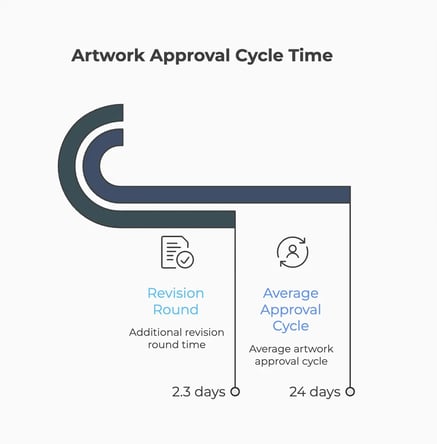
According to Cway’s 2026 benchmark, the average packaging artwork approval cycle takes:
24 calendar days
This figure represents the time from initial artwork submission to final production-ready approval, including all revision rounds and compliance checks.
In regulated industries, this timeline directly impacts:
Breakdown by workflow type:
| Workflow Type | Average Cycle Time |
|---|---|
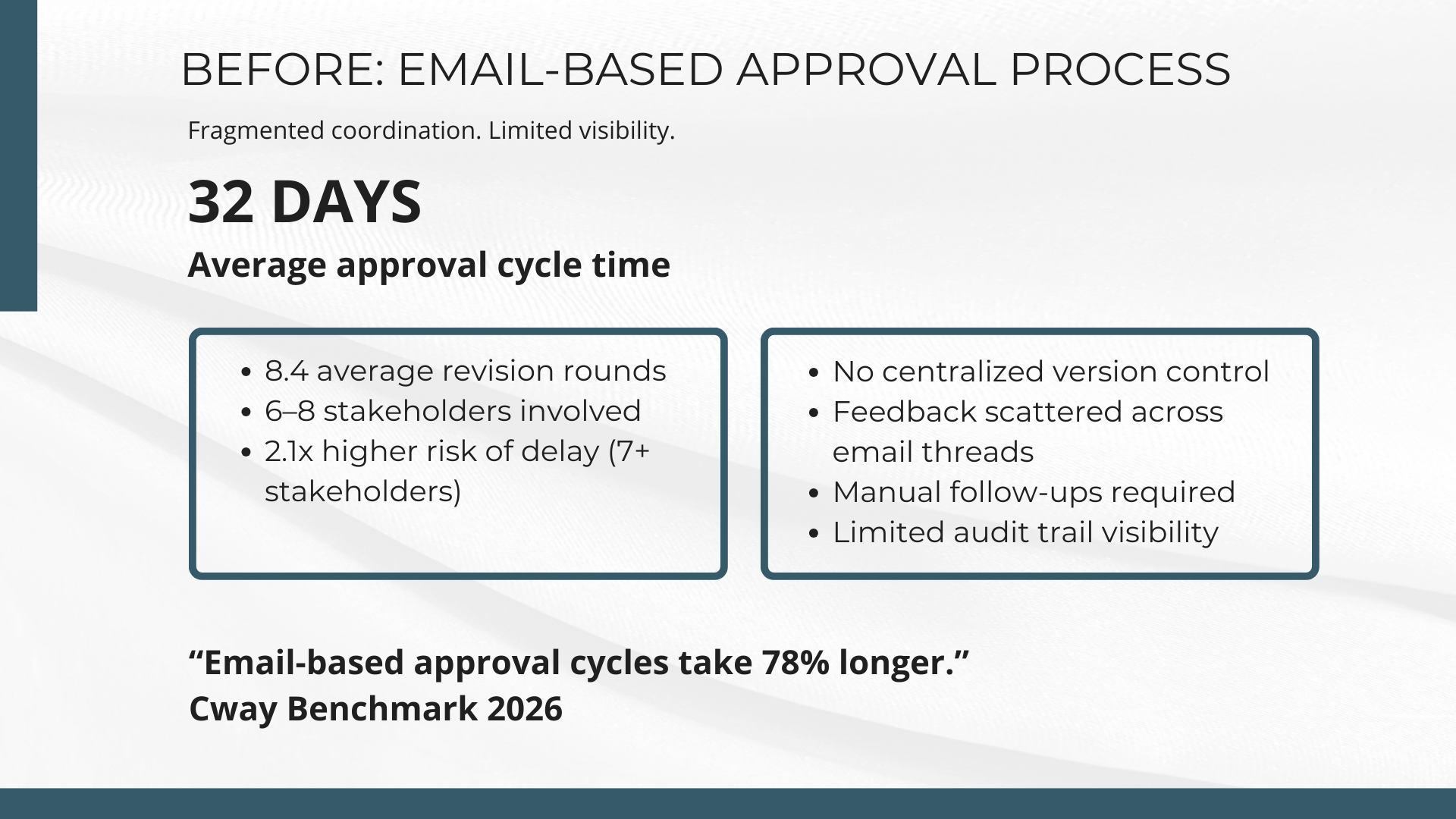
| Email-based process | 32 days |
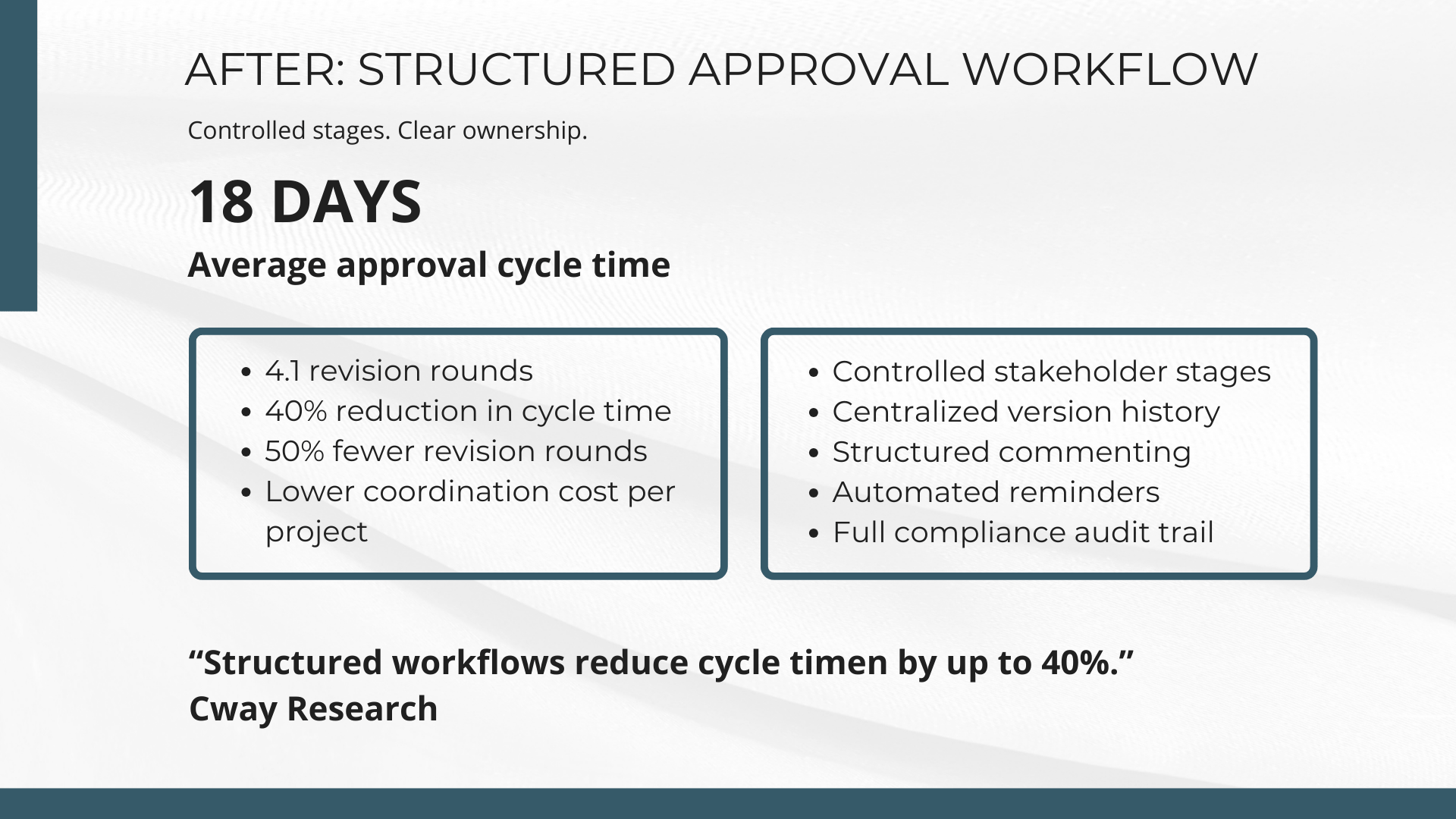
| Structured workflow software | 18 days |
Email-based approval cycles take 78% longer.
What This Means for FMCG Teams
In practical terms:
According to Cway’s research:
Approval cycle duration is not primarily driven by artwork complexity — it is driven by workflow structure.
This distinction is critical.
Most teams assume delays are caused by regulatory requirements or stakeholder volume. However, Cway’s benchmark indicates that workflow maturity is the dominant variable affecting approval speed.
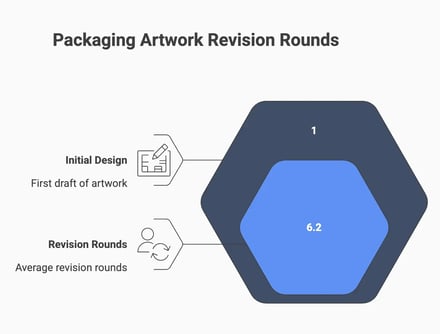 Beyond total cycle duration, Cway’s 2026 benchmark examined the number of revision rounds required before final artwork approval. Revision frequency is a critical indicator of process efficiency, alignment quality, and stakeholder coordination maturity.
According to Cway’s research, the average packaging artwork project goes through 6.2 revision rounds before reaching final approval.
However, as with overall cycle time, the number of revisions varies significantly depending on workflow structure.
| Workflow Type | Average Revision Rounds |
|---|---|
| Email-based workflows | 8.4 |
|
Structured workflows |
4.1 |
The gap is substantial. Projects managed primarily through email require more than twice as many revision rounds as those coordinated through structured workflow systems.
Cway’s research shows that revision volume is not merely a reflection of creative iteration. In many cases, additional rounds are driven by:
Each additional revision round adds an average of 2.3 days to the total approval cycle. Over the course of a typical project, this effect compounds rapidly. An increase from four to eight revision rounds can extend timelines by more than a week, even when stakeholder complexity remains constant.
In practical terms, revision frequency is one of the strongest predictors of delay risk. According to Cway’s benchmark, organizations with structured feedback loops and controlled versioning consistently reduce both the number and volatility of revision rounds.
The underlying implication is clear:
Revision intensity is not an unavoidable byproduct of regulated packaging environments. It is a measurable outcome of process design and coordination discipline.
Stakeholder volume is another structural factor influencing approval performance. Packaging artwork sits at the intersection of brand, regulatory, legal, and operational requirements, making cross-functional coordination unavoidable.
According to Cway’s 2026 benchmark, the average artwork project involves 6.8 stakeholders from initial review to final sign-off.
Typical roles include:
While cross-functional input is essential for compliance and brand integrity, stakeholder expansion increases coordination complexity. Each additional reviewer introduces potential feedback loops, sequencing dependencies, and approval ambiguity.
Cway’s research indicates that projects involving more than seven stakeholders are 2.1 times more likely to exceed planned timelines.
Importantly, delay risk does not increase linearly. Once stakeholder groups grow beyond a certain threshold, alignment overhead accelerates — particularly in environments lacking clearly defined approval stages and ownership boundaries.
To better measure risk exposure, Cway developed the Approval Complexity Index™.
The index considers:
Projects scoring high on the Approval Complexity Index are:
This index allows teams to proactively assess approval risk before delays occur.
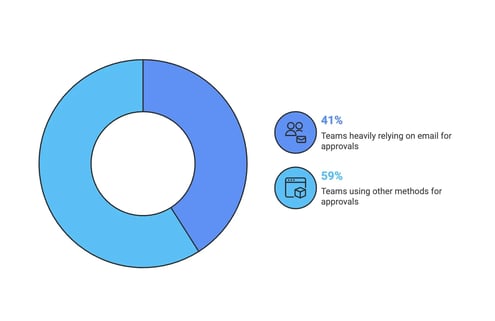
One of the clearest findings in Cway’s benchmark:
41% of teams still rely on email as their primary approval tool.
Comparison:
| Email-Based Approval | Structured Workflow |
|---|---|
| No version control | Centralized version history |
| Feedback in threads | Structured commenting |
| No audit trail | Full compliance log |
| Manual follow-ups | Automated status tracking |
| 8+ revisions avg | 4 revisions avg |
According to Cway’s research:
Email-based approval processes increase revision cycles by 52%.
While artwork complexity and regulatory requirements are often blamed for slow approvals, Cway’s 2026 benchmark suggests that delays are more frequently driven by coordination inefficiencies than by technical constraints.
According to Cway’s research, the most common delay drivers are structural rather than creative. They typically emerge at handover points between functions and during late-stage review loops.
The top delay drivers identified in Cway’s benchmark include:
Late stakeholder feedback
When reviewers are involved too late—or respond asynchronously—revision rounds multiply and timelines extend.
Email-based version confusion
Multiple file versions circulating in parallel increase the likelihood of rework, misalignment, and repeated validation.
Regulatory changes after design freeze
Compliance comments introduced after creative approval trigger cascading updates across teams and markets.
Manual follow-up coordination
Project owners often spend significant time chasing confirmations, clarifications, and approvals instead of progressing work.
Unclear ownership of final approval
When accountability for sign-off is ambiguous, decisions stall and deadlines slip.
Across analyzed projects, Cway’s benchmark indicates that these coordination gaps—not artwork difficulty—are the dominant predictors of delay risk.
In short, approval cycles rarely slow down because the artwork is complex. They slow down because the process is fragmented.
Approval delays impact more than timelines. They impact cost. Every additional day in the approval cycle increases internal coordination effort, prolongs agency involvement, and extends regulatory oversight. What initially appears as a minor delay often triggers cascading operational effects across teams and markets.
In high-volume FMCG environments, even small cycle extensions scale rapidly. A delay of several days per project, multiplied across dozens of concurrent packaging updates, translates into measurable financial and operational impact.
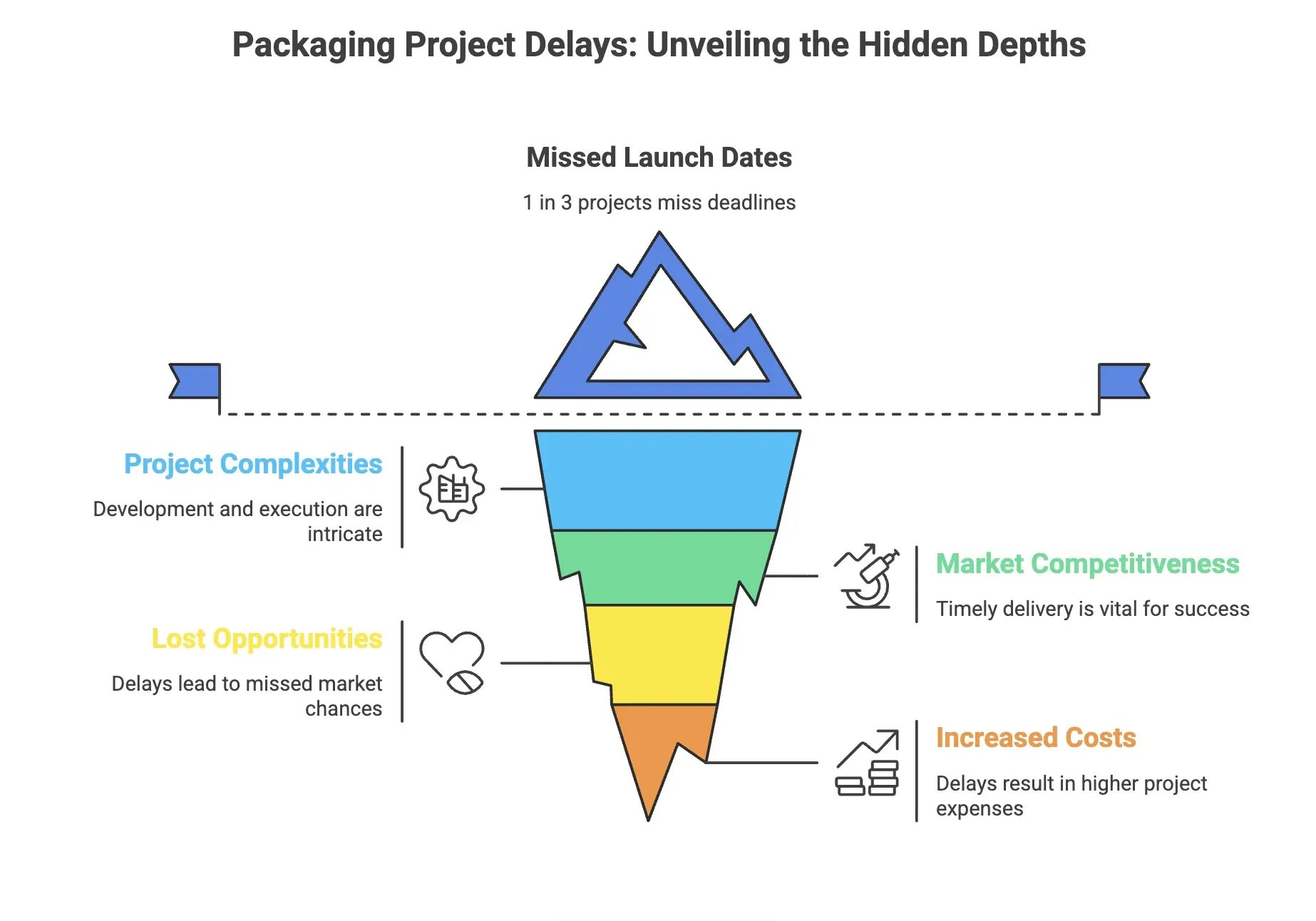
Cway’s benchmark estimates:
Each additional revision round increases:
Cway’s 2026 benchmark indicates that reducing approval cycle time is not primarily about accelerating individual reviewers. It is about redesigning the underlying workflow structure.
Across high-performing FMCG teams, cycle time improvements are driven by a small number of structural levers. These levers consistently reduce revision volatility, coordination friction, and late-stage escalation risk.
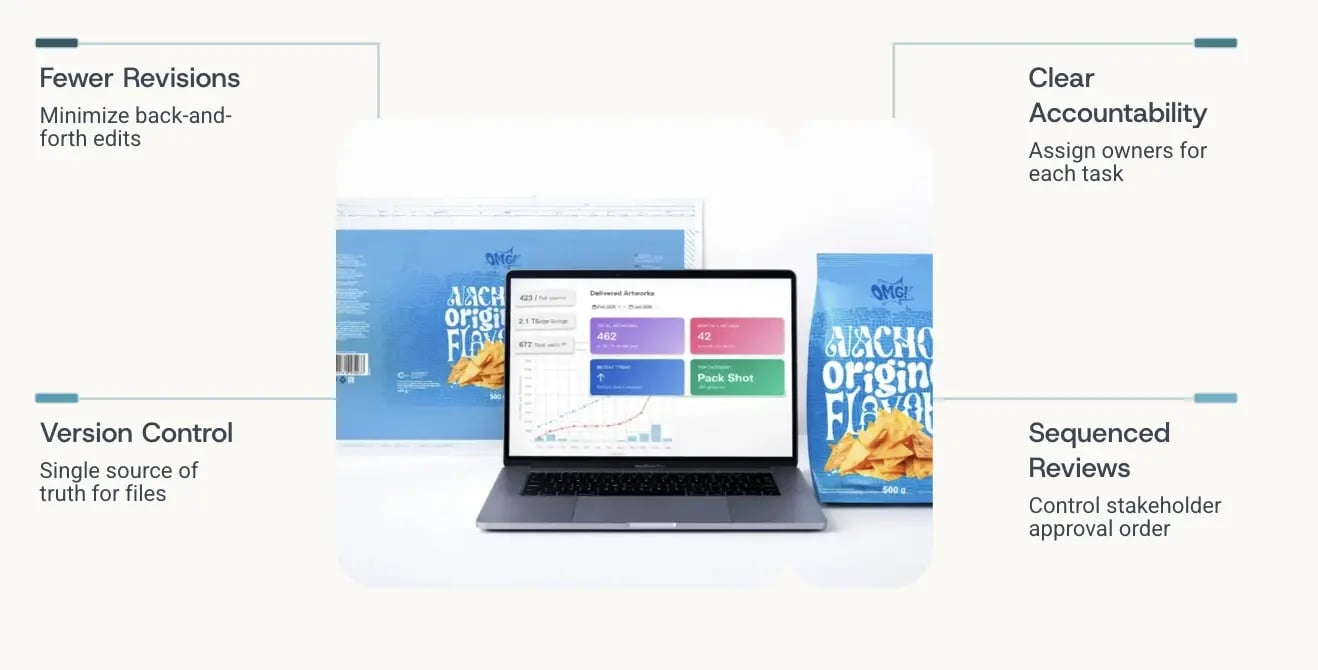
Top-performing teams formalize review phases (brand, regulatory, legal, production) rather than allowing feedback to occur simultaneously and informally. Clear stage sequencing reduces overlap, rework, and conflicting comments.
While cross-functional input remains essential, high-performing teams avoid involving all stakeholders in every revision round. Instead, they assign structured entry points and defined approval responsibilities.
Cway’s research shows that controlling stakeholder sequencing materially reduces revision rounds.
Version fragmentation is one of the strongest predictors of delay. Structured version management ensures that:
This alone significantly reduces unnecessary rework.
Cycle time accelerates when ownership is explicit and status visibility is centralized. High-performing teams monitor:
Rather than reacting to delays, they identify them early.
According to Cway’s Approval Complexity Index™, projects with higher stakeholder density and market variation require proactive coordination controls. High-performing organizations assess complexity at project start and adjust workflow intensity accordingly.
In addition to our benchmark averages, real-world implementations of structured artwork workflows show meaningful improvements. For example, one global food brand using Cway reported a 45% reduction in artwork approval cycle time and saved over 80 hours per month previously lost to manual coordination and rework.
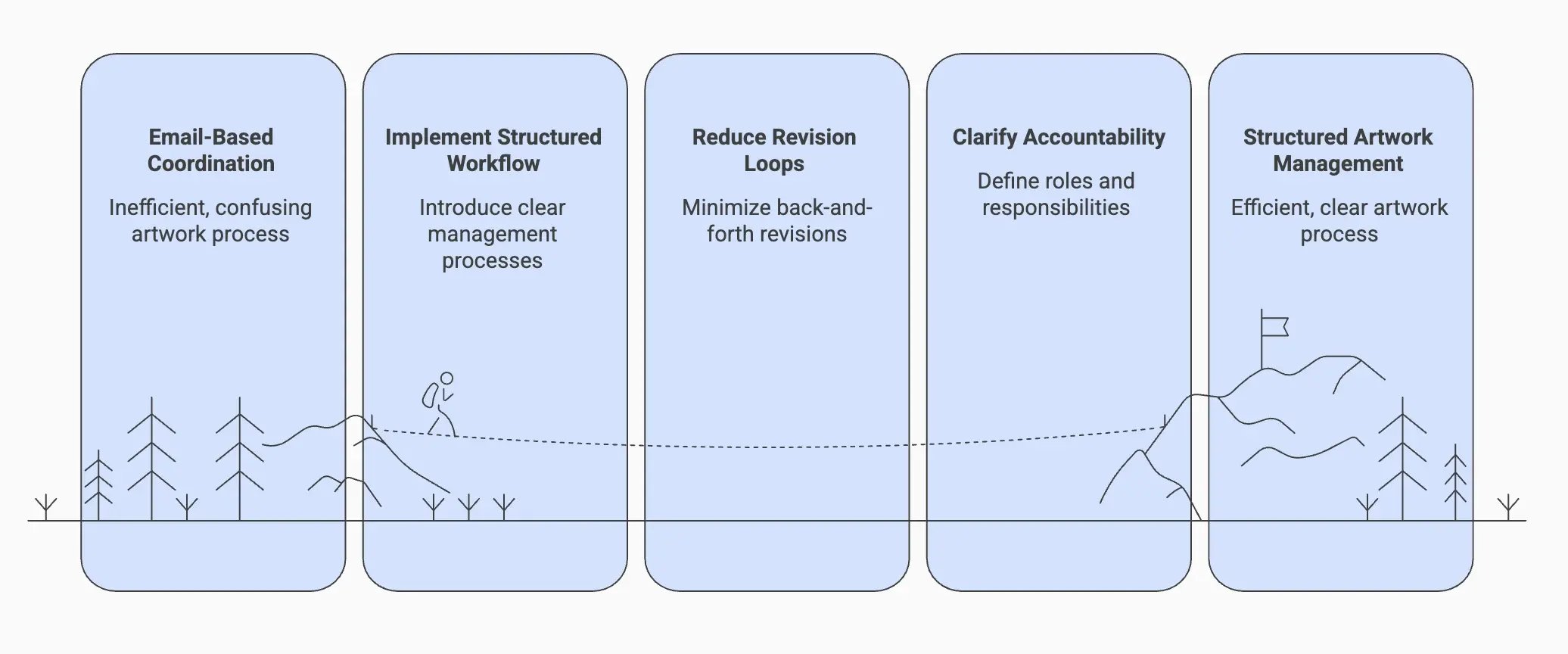
The central insight from Cway’s benchmark is clear:
Approval speed improves when the system improves.
Organizations that transition from email-based coordination to structured artwork management workflows reduce average cycle time by up to 40%, primarily through:
Cway supports FMCG teams in operationalizing these structural levers through centralized artwork workflow management, version control, and approval visibility analytics.
The objective is not simply faster approvals — it is predictable, controlled, and audit-ready packaging governance.