Packaging Development Workflow
for Faster, More Predictable Launches
Bring structure, speed, and visibility to packaging development.
Cway helps teams manage packaging design, collaborate across stakeholders, and track every iteration —
from early concepts to final artwork ready for approval.
Align teams earlier, reduce delays, and keep every project moving forward with full control.

Align Teams Early in Packaging Development
Packaging development breaks down at the handoffs — when teams work in silos and feedback is disconnected.
Cway connects everyone from the start:
- R&D and product teams defining requirements
- Designers creating and refining artwork
- Marketing providing feedback and approvals
- External agencies contributing to iterations
All feedback, files, and updates stay connected — reducing miscommunication and unnecessary rework.
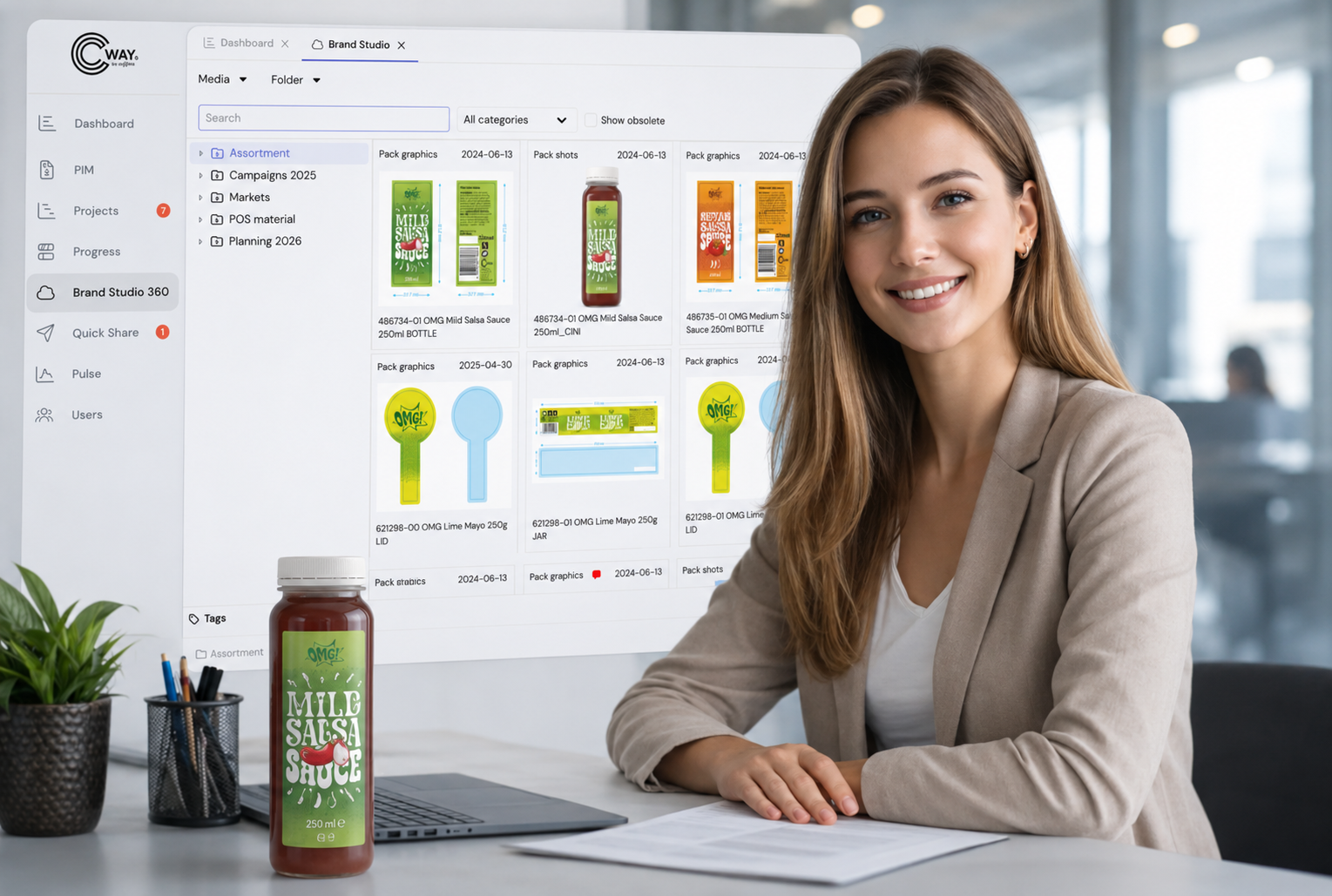
Manage Packaging Design Iterations Without Chaos
Packaging development is iterative by nature — without structure, iterations quickly become hard to track.
Cway keeps every change controlled:
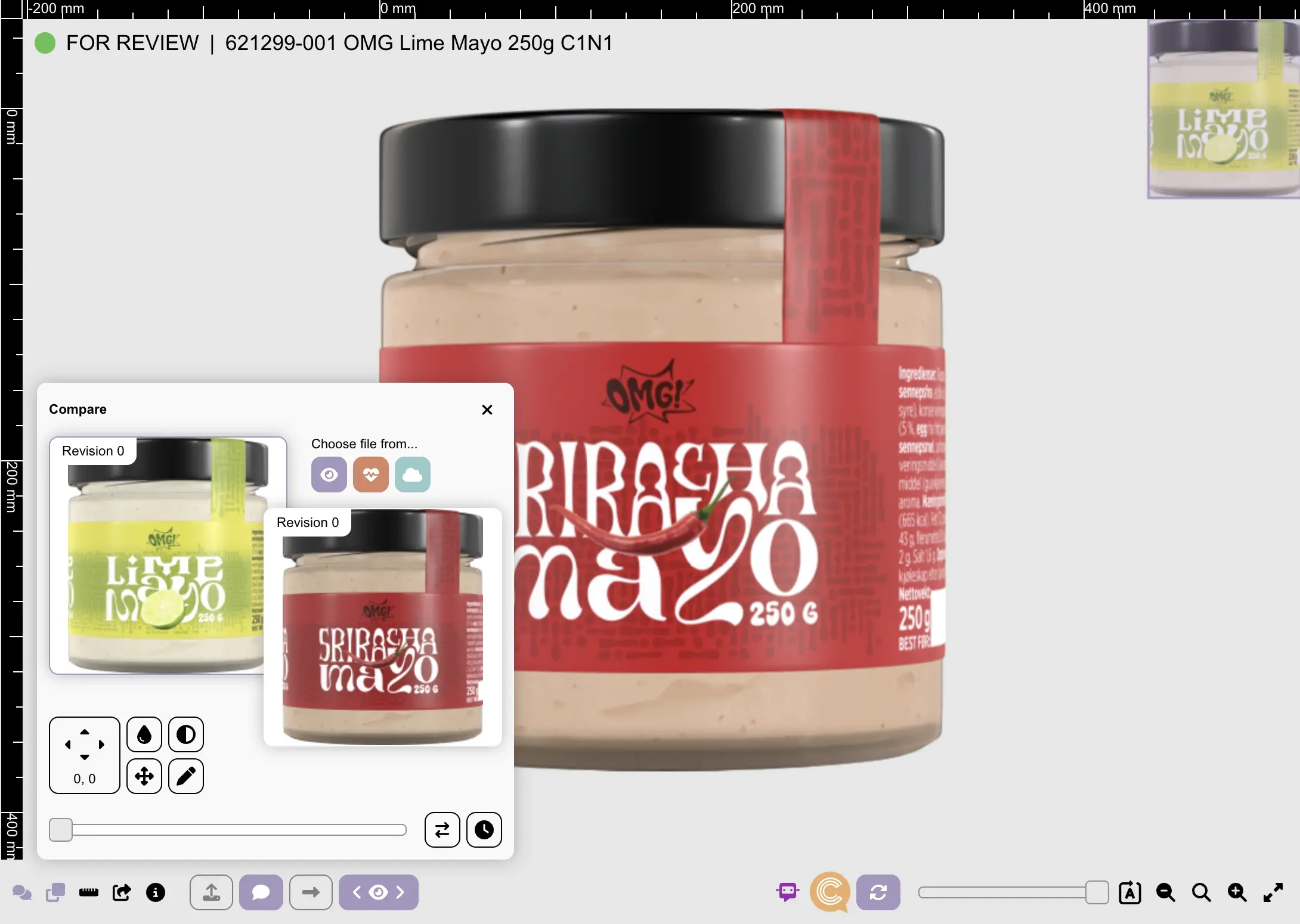
- Automatically track every artwork version
- Compare revisions visually to detect changes
- Maintain a complete history of feedback and updates
- Ensure teams always work on the latest version
Every iteration is visible, traceable, and easy to manage.
Collaborate with Vendors Without Friction
External partners are critical — but often slow things down.
Cway simplifies vendor collaboration:
- Share artwork via secure links
- Allow partners to review and upload new versions
- No account required for external users
- Maintain full control and visibility over all inputs
Work faster with agencies and vendors — without losing oversight.
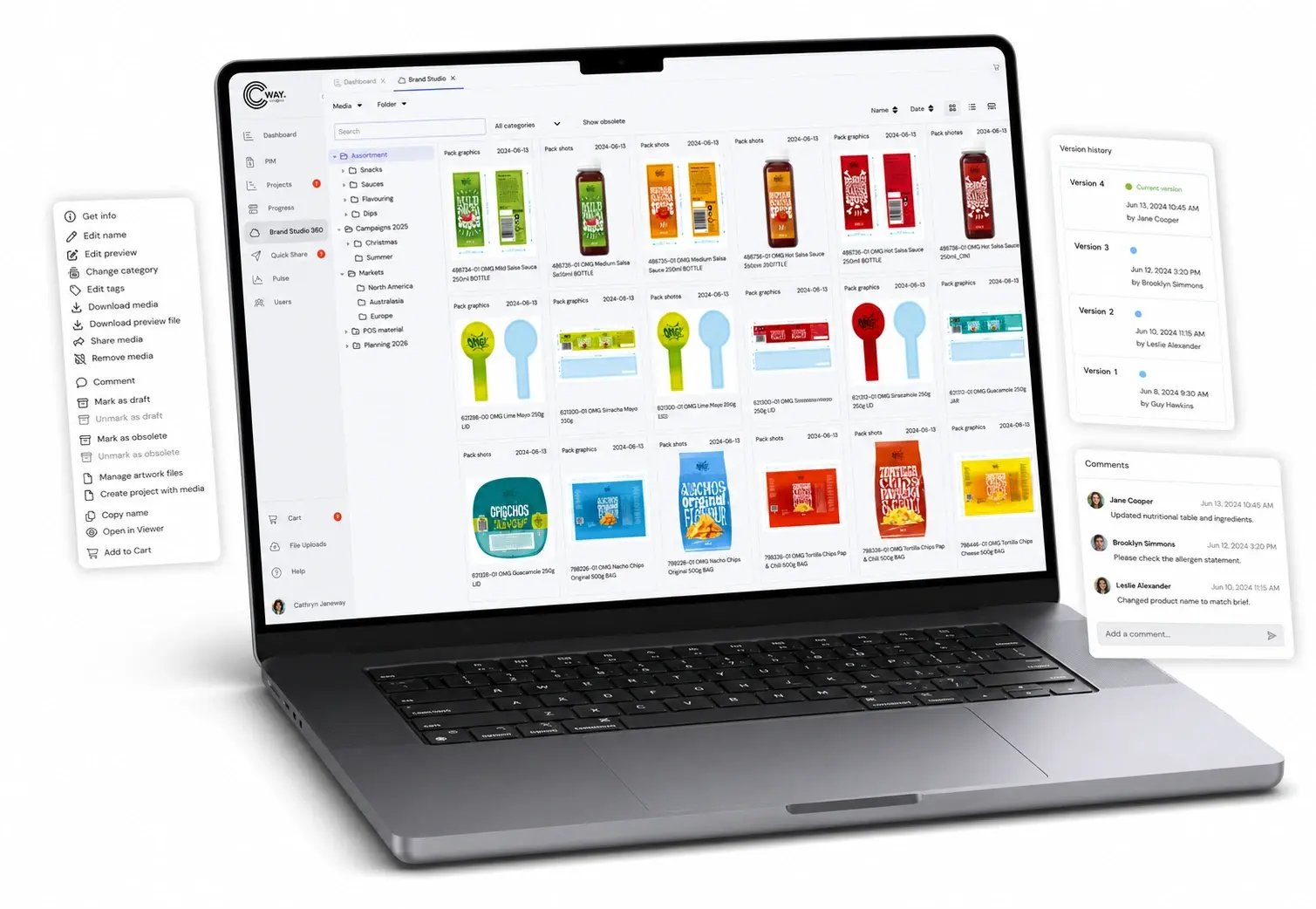
Centralize Packaging Assets and Workflow
Packaging development often spans multiple tools, folders, and systems.
Cway brings everything together:
- Store all packaging artwork in one place
- Connect files to projects and workflows
- Eliminate manual file handling
- Avoid version confusion
From concept to final design, assets stay organized and connected to the work around them.
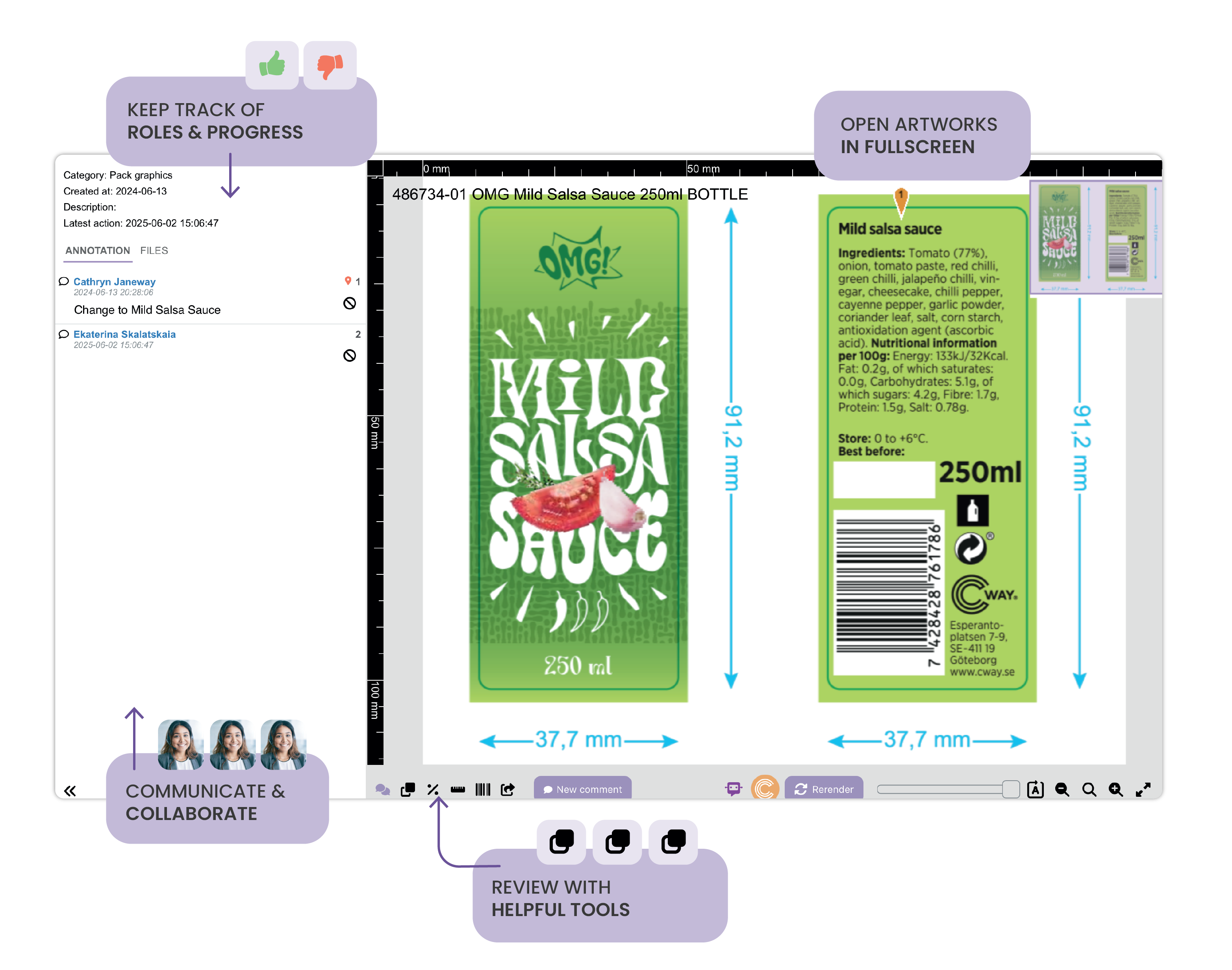
Move Faster with Structured Feedback
Unstructured feedback slows down decisions and creates unnecessary cycles.
Cway keeps feedback clear and actionable:
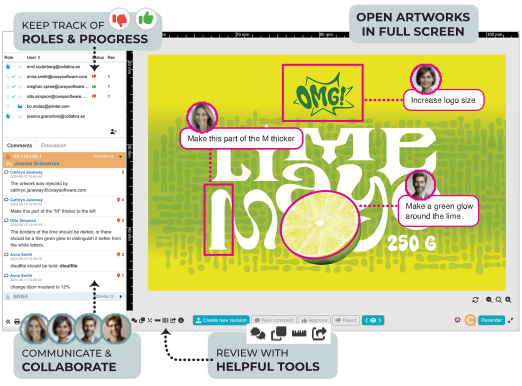
- Comment directly on artwork
- Keep all feedback in context
- Use AI to clarify feedback and apply rules for consistent reviews
- Create visual suggestions directly on designs
Teams align faster and iterate with confidence.
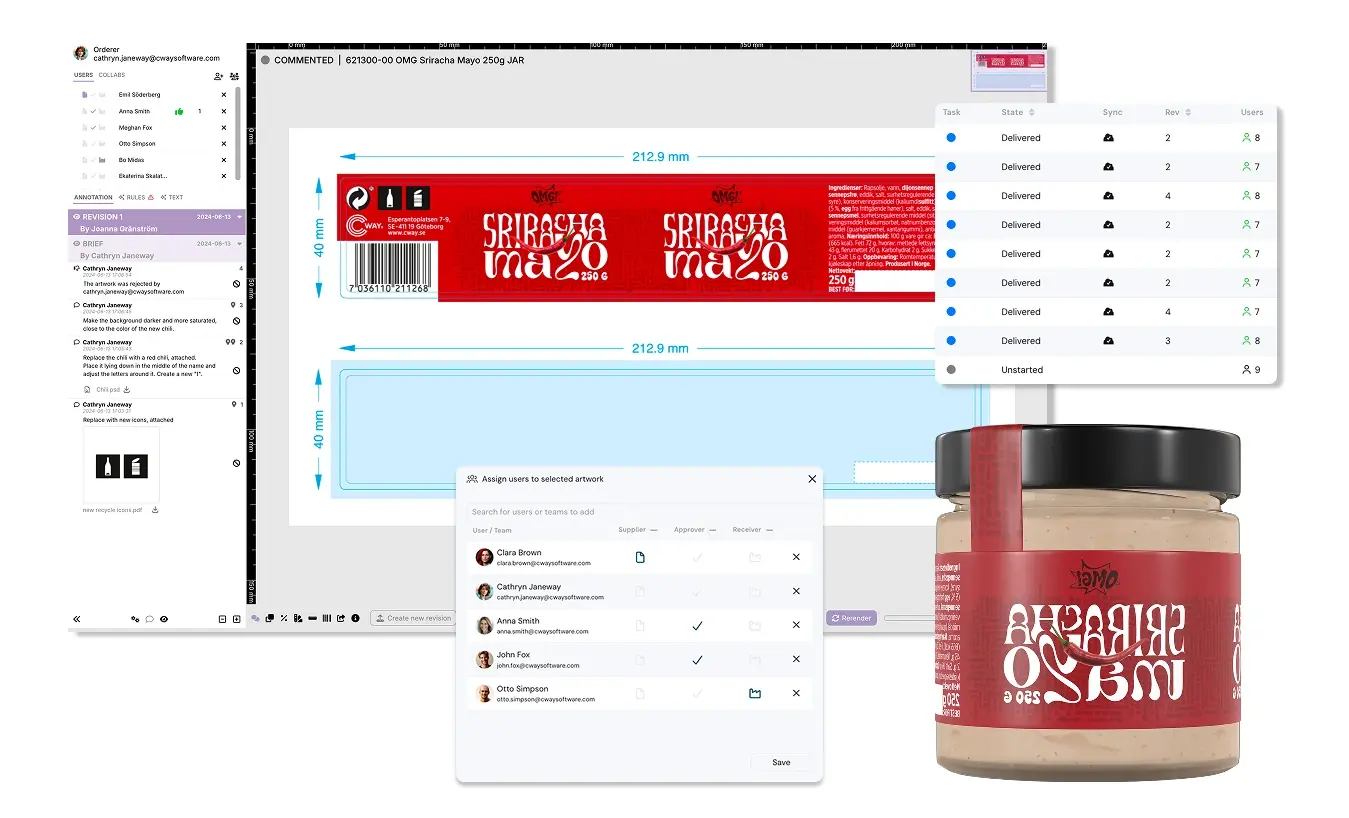
Gain Visibility Across Packaging Projects
Lack of visibility slows down product development.
Cway gives you insight into your workflow:
- Track progress across packaging projects
- Identify bottlenecks in reviews and iterations
- Monitor timelines and version cycles
- Improve time-to-market predictability
Better visibility leads to better decisions — and smoother execution.
Bring control to your packaging development workflow
Align teams, reduce delays, and launch faster.
Bring Control to Packaging Development
Align teams, reduce delays, and move from concept to approval with confidence.
Packaging development is a critical stage where ideas turn into production-ready assets. It involves multiple stakeholders, continuous iteration, and frequent handoffs — making structure essential.
Without it, teams struggle with scattered feedback, unclear ownership, and version confusion.
Cway brings structure to the process by connecting collaboration, version tracking, and workflow in one system. Teams can manage iterations, align stakeholders, and maintain full visibility as designs evolve.
The result is a more predictable workflow — where packaging moves forward without friction, delays, or loss of control.