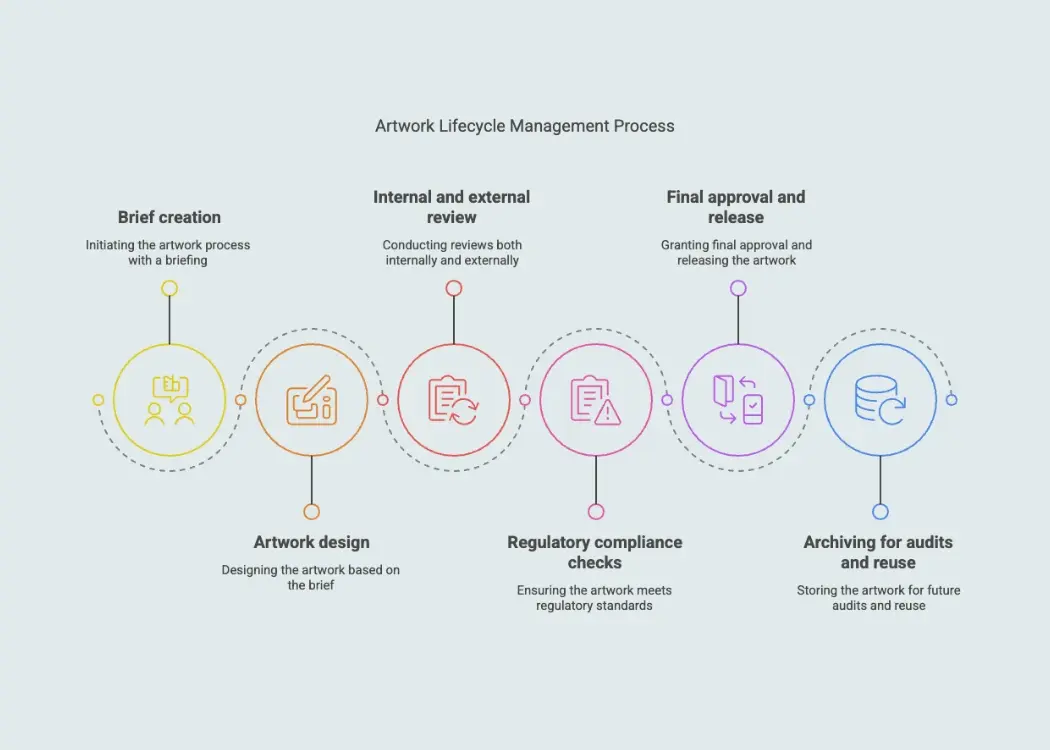
Why artwork lifecycle management is essential in 2025
Delays, miscommunication, and costly packaging errors—sound familiar? These are just a few of the challenges companies face when managing product...
2 min read
William Janeway
:
May 25, 2026
Expanding into new markets is often seen as a growth milestone. More countries mean more customers, more shelf presence, and more revenue opportunities.
But behind every new market launch is a packaging localization process that is far more complex — and expensive — than most organizations expect.
The obvious costs are easy to calculate: translation services, artwork adaptation, regulatory reviews, and printing updates.
The hidden costs are harder to see.
They appear in delayed launches, duplicated work, approval bottlenecks, outdated packaging versions, fragmented communication, and operational confusion spread across multiple teams and suppliers.
For many packaging organizations, localization becomes less of a translation challenge and more of a workflow coordination problem.
Modern packaging localization involves far more than converting text into another language.
Each market may require unique:
Now multiply that complexity across dozens of SKUs, regions, agencies, and packaging suppliers.
What seems manageable at small scale quickly becomes difficult to control.
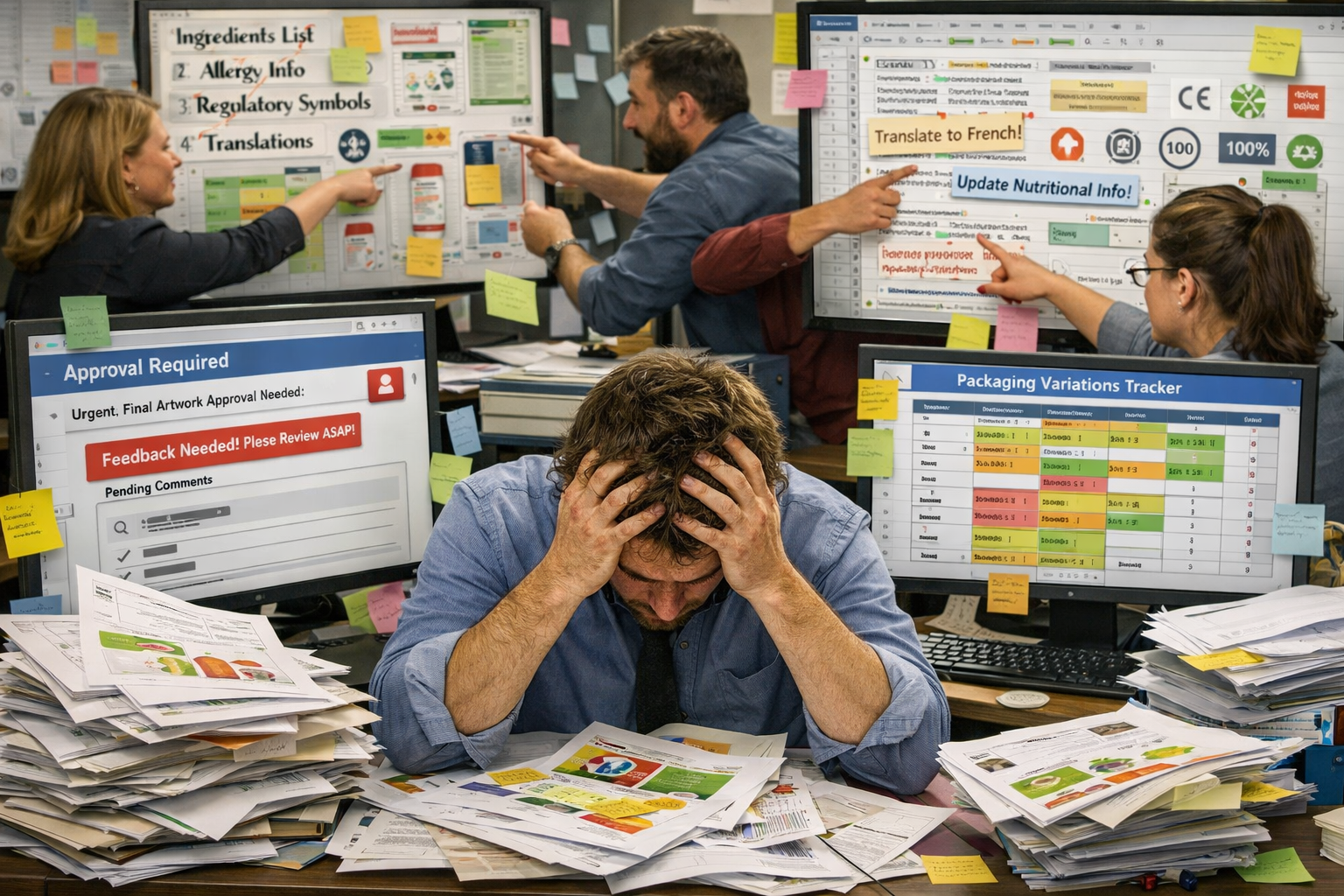
Many organizations still manage localization using disconnected spreadsheets, email threads, PDFs, shared drives, and manually tracked approvals. As packaging volume grows, these fragmented processes create operational blind spots that increase the likelihood of errors and delays.
Most packaging teams do not lose time because people are unskilled.
They lose time because information is scattered.
A localized packaging update may require input from:
Without structured workflows, teams spend significant time:
These delays compound over time and slow down packaging development cycles across markets.
One of the most common localization problems is version inconsistency.
A packaging file may be updated for one market while another region continues using outdated claims or previous ingredient information.
In global packaging operations, even small inconsistencies can create:
The challenge is rarely the lack of effort.
The challenge is maintaining visibility across hundreds of packaging variations moving simultaneously through different review stages.
Packaging localization is often one of the final steps before production.
That means even minor approval delays can affect manufacturing schedules and launch timelines.
When teams rely on manual coordination, localization reviews can become bottlenecks because stakeholders struggle to:
As organizations expand globally, these inefficiencies become increasingly difficult to scale.
The companies that manage localization effectively are not necessarily the ones with the largest teams.
They are the ones with the clearest workflows.
Centralized packaging operations help teams maintain:
Instead of relying on fragmented communication, teams can manage packaging development within a more structured review environment.
This becomes especially important when multiple markets are updating packaging simultaneously.
Many FMCG packaging teams still rely on individual employees to “catch” mistakes before production.
But scaling global packaging operations cannot depend on memory, manual follow-ups, or last-minute reviews.
As localization complexity increases, operational visibility becomes critical.
Organizations need processes that make it easier to:
The goal is not simply to move faster.
It is to reduce operational risk while maintaining control across increasingly complex packaging environments.
Packaging localization is often discussed as a regulatory or translation challenge.
In reality, the bigger issue is workflow management.
As product portfolios expand across markets, the hidden costs of localization come from fragmented approvals, poor visibility, duplicated effort, and version confusion — not just translation itself.
Teams that centralize packaging workflows and improve collaboration are better positioned to reduce delays, maintain consistency, and scale packaging operations with greater confidence.
Cway helps packaging teams improve visibility across artwork reviews, approvals, version control, and collaboration workflows involved in packaging development across global markets.
Delays, miscommunication, and costly packaging errors—sound familiar? These are just a few of the challenges companies face when managing product...

Three thousand packaging artworks a year. That's not an edge case — it's a realistic volume for any mid-to-large FMCG brand managing multiple product...
Expanding packaging across multiple markets sounds efficient in theory — until approvals stall, outdated files reach printers, or local compliance...