5 min read

How FMCG packaging claims get approved and audited

How FMCG packaging claims get approved and audited
9:17

Every packaging claim on your label—"100% recyclable," "high in fiber," "clinically proven"—carries regulatory weight. Before it reaches the shelf, that claim must be substantiated with evidence, reviewed by the right people, and documented for potential audits. This process is what separates compliant brands from those facing product recalls or regulatory penalties.

Cway helps FMCG packaging teams manage these claim approval workflows with trackable approvals and full audit trail capabilities. This article walks you through how packaging claims get approved and audited, from the evidence threshold to the roles involved and the documentation you need to keep.

Key Takeaways: How FMCG Packaging Claims Get Approved and Audited

  • Packaging claims must be substantiated with evidence before they appear on labels, as required by regulations like FDA and EU PPWR.
  • A structured approval workflow routes claims through marketing, legal, regulatory, and quality roles before sign-off.
  • Audit trails record every decision, comment, and file version so you can demonstrate compliance during inspections.
  • Cway gives you trackable approval workflows with built-in version history and compliance documentation storage.
  • Without a defined process, claim errors become product recalls, regulatory fines, and damaged consumer trust.

What Is Packaging Claim Substantiation?

Claim substantiation is the process of gathering and documenting evidence that supports a specific statement made on your packaging. If you claim a product is "low sodium" or "biodegradable," you need proof that meets the regulatory definition.

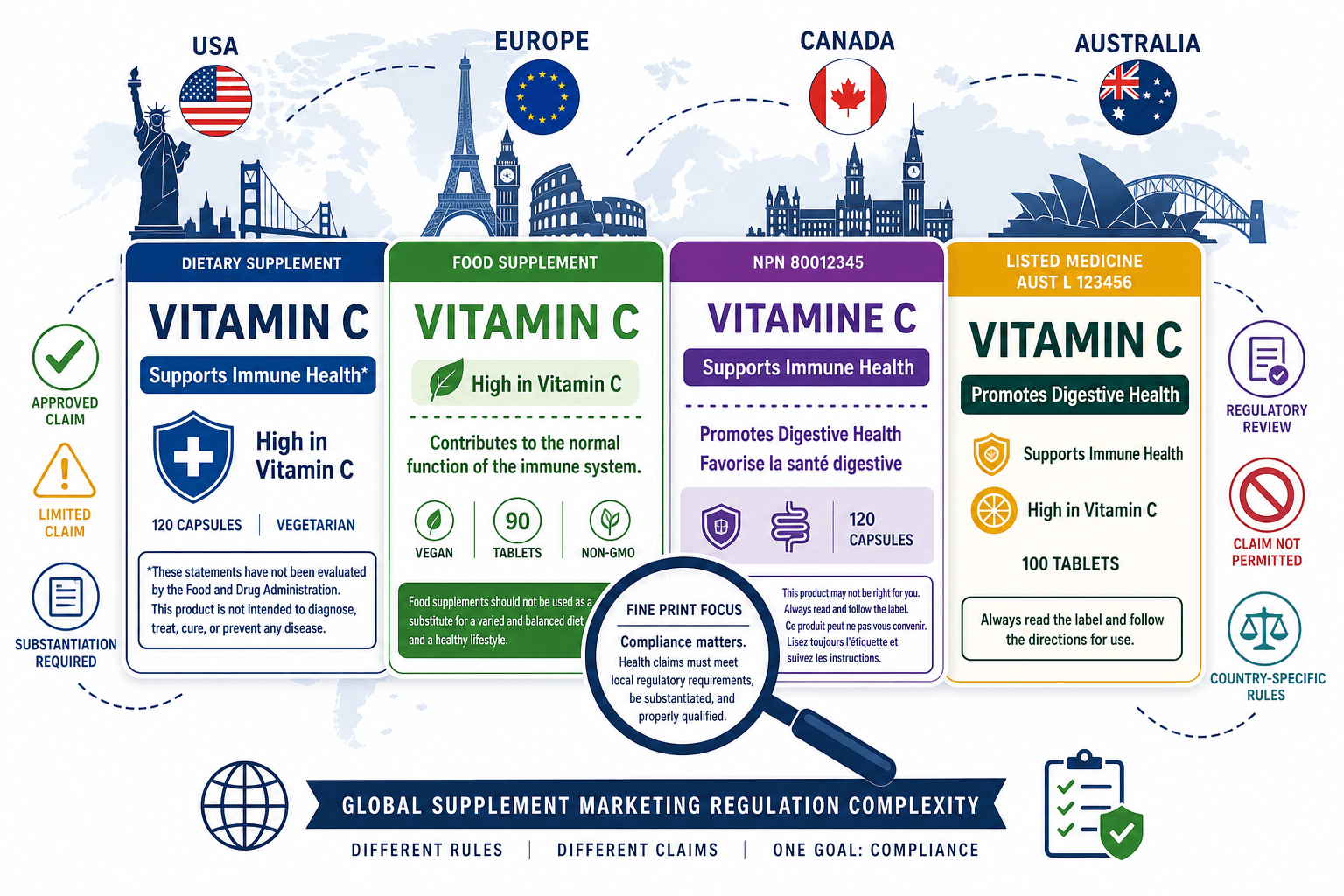
According to the European Food Safety Authority (EFSA), health claims require scientific evaluation before they can appear on EU market packaging. The FDA has similar rules in the United States, where nutrient content claims must meet specific thresholds defined in Title 21 CFR Part 101.

The key principle is simple: you must have competent evidence before making the claim, not after. This is why your substantiation workflow needs to run in parallel with your artwork development process—not as an afterthought.

What Types of Packaging Claims Require Approval?

Not all statements on a label face the same scrutiny. Regulatory agencies categorize claims into different types, each with its own evidence requirements.

Nutrient Content Claims

These describe the level of a nutrient using terms like "low fat," "high in fiber," or "reduced sodium." The FDA and EU define specific thresholds for each term. For example, "low sodium" requires fewer than 140 milligrams per serving in the US.

Health Claims

Health claims describe a relationship between a food substance and reduced disease risk. These require the most rigorous evidence—often peer-reviewed studies and pre-approval from regulatory bodies.

Environmental Claims

With the EU Green Claims Directive expected to take effect in 2027, environmental statements like "recyclable" or "made from recycled materials" face increasing scrutiny. As noted by Inline Plastics, the days of vague sustainability claims are ending—you must back up every green statement with clear, verifiable data.

Who Needs to Approve a Packaging Claim?

A packaging claim typically moves through multiple approval stages, each owned by a different function. Skipping a stage—or relying on informal sign-off—is where most compliance gaps occur.

Marketing

Marketing initiates the claim request and drafts the on-pack language. Their role is to balance consumer appeal with regulatory boundaries.

Legal

Legal reviews the claim for potential liability and ensures it aligns with advertising regulations. They assess whether the language could be considered misleading under FTC or local consumer protection laws.

Regulatory Affairs

Regulatory affairs verifies that the claim meets the specific definitions and evidence thresholds required by target markets. They confirm whether the claim type (nutrient, health, environmental) is permissible for the product category.

Quality Assurance

QA confirms that the supporting evidence is accurate and that the product formulation supports the claim. They may also verify test results from laboratories or third-party certifications.

Cway gives teams the flexibility to define reviewer roles, approval responsibilities, access controls, and review deadlines without relying on rigid workflow stages. Automated reminders, task assignments, and real-time progress tracking help keep approvals moving efficiently while maintaining transparency and accountability.

How Does a Legal Packaging Approvals Workflow Look in Practice?

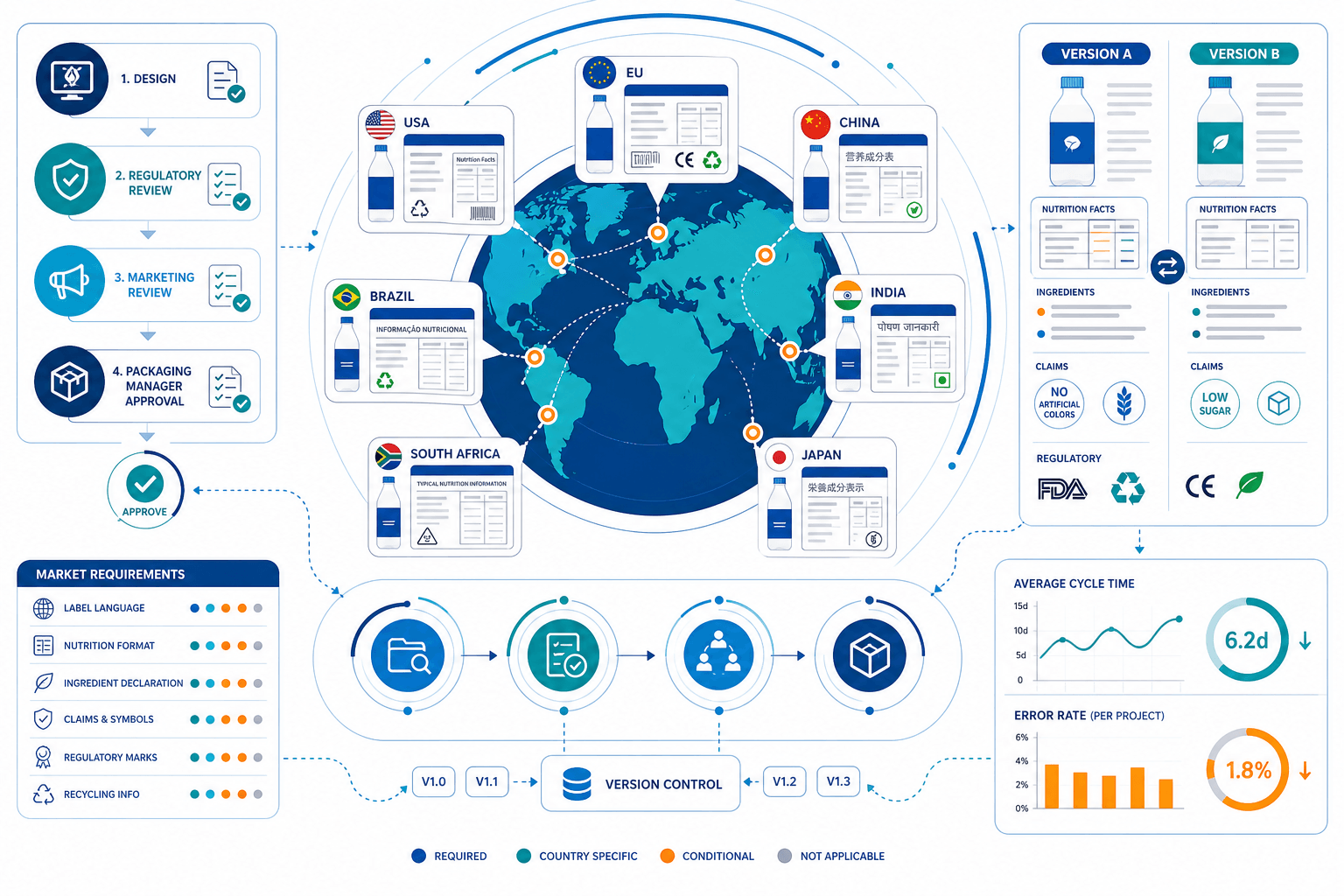
A well-designed claim approval workflow follows a predictable sequence. Each step produces documented outputs that feed into your audit trail.

Step 1: Claim Initiation. Marketing submits a claim request that includes the proposed language, target markets, and product details. This creates the project record.

Step 2: Evidence Collection. The regulatory team gathers supporting documentation—test results, certifications, study summaries—and attaches it to the claim record.

Step 3: Sequential Review. The claim moves through legal, regulatory, and quality reviews. Each reviewer can approve, reject, or request changes with timestamped comments.

Step 4: Final Sign-Off. Once all mandatory approvers have signed off, the claim is marked as approved and linked to the specific artwork version where it will appear.

Step 5: Archive and Lock. The approved claim, along with all supporting files and decision records, is archived for audit retrieval.

Why Audit Trails Matter for Packaging Compliance

An audit trail is a chronological record of every action taken during the claim approval process. It includes who did what, when they did it, and what evidence they reviewed.

During a regulatory inspection, auditors may ask you to demonstrate how a specific claim was approved. Without a clear audit trail, you cannot prove that your process was followed. This can result in non-compliance findings even if the claim itself is technically accurate.

Cway maintains full audit trails automatically. Every comment, approval decision, file upload, and version change is logged with timestamps and user attribution. You do not need to reconstruct the approval history manually—it is captured as work happens.

What Evidence Should You Keep for Each Claim?

The documentation requirements vary by claim type, but most regulatory frameworks expect you to maintain certain records.

For nutrient claims: Laboratory test results showing nutrient levels, product formulation records, and calculation worksheets that demonstrate compliance with regulatory thresholds.

For health claims: Copies of the scientific studies cited, correspondence with regulatory agencies, and approval letters if pre-authorization was required.

For environmental claims: Supplier certifications, material composition reports, recycling infrastructure assessments, and third-party verification documents.

Cway connects assets with projects and approvals, so you can retrieve the evidence behind any claim without digging through folders or old messages.

How FMCG Brands Differentiate Packaging-Specific Compliance from Generic DAM

General-purpose digital asset management tools can store files and route approvals. But they typically lack the packaging-specific features that regulated FMCG brands need.

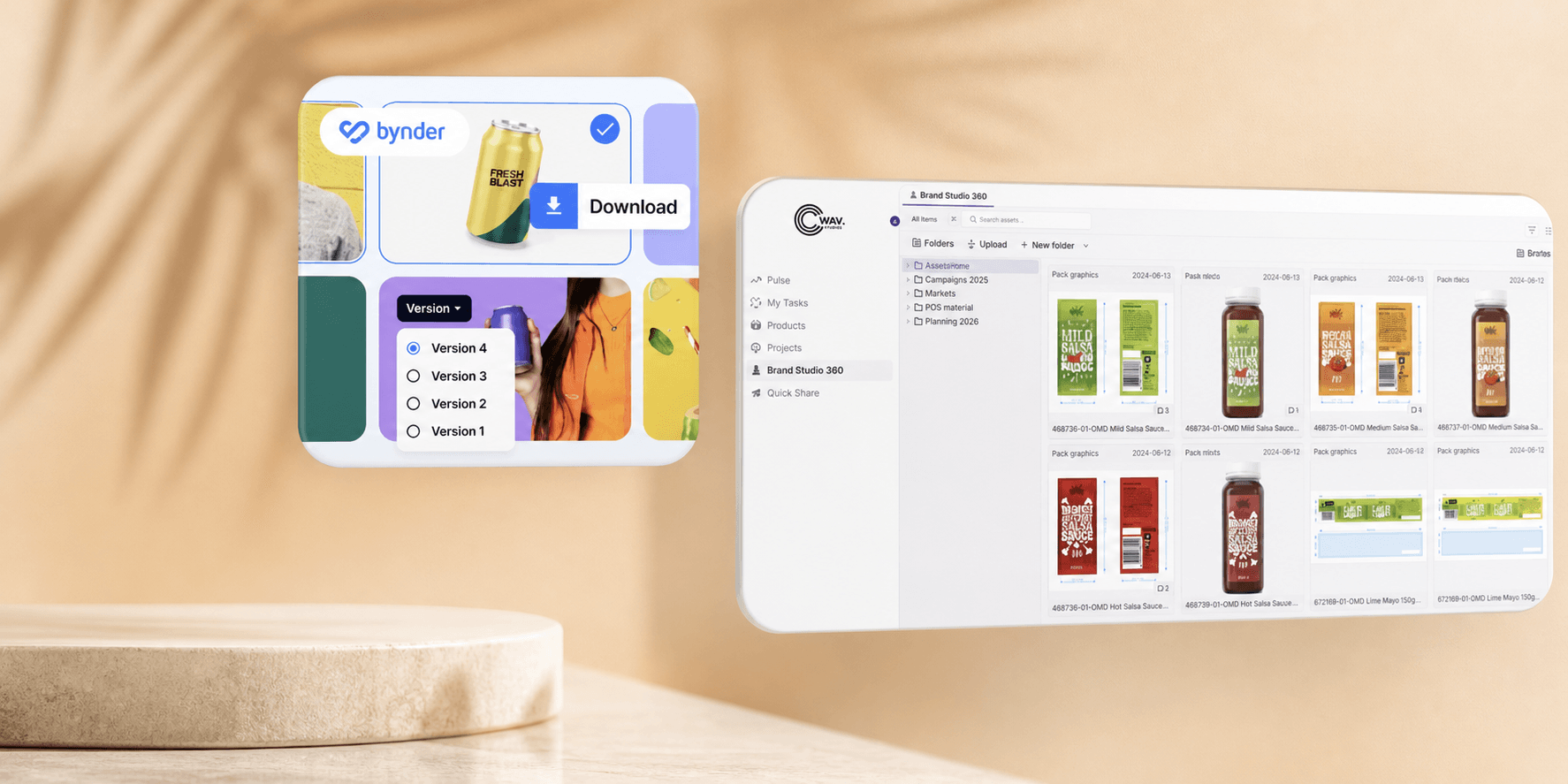
Packaging compliance requires version-controlled artwork files with side-by-side comparison, integrated regulatory review stages, claim-to-artwork linking, and audit-ready documentation. Generic tools may offer some of these features, but rarely all of them—and rarely in a way that mirrors how packaging teams actually work.

Cway is purpose-built for packaging complexity. It combines asset storage, approval automation, and version tracking in one platform, with compliance workflows designed around the real-world sequence of marketing, legal, regulatory, and quality reviews. This means you spend less time adapting a general tool and more time moving claims through approval.

In Conclusion: Build a Claim Approval Process That Survives Audits

Packaging claims approval is not just a quality gate—it is a compliance requirement with real consequences for errors. When you build a structured workflow with defined roles, evidence documentation, and full audit trails, you protect your brand from regulatory penalties and recall costs.

Start by mapping your current process: who initiates claims, who reviews them, and where the evidence is stored. Identify any gaps where sign-off happens informally or documentation is scattered. Then implement a system that captures every decision as it happens.

Cway gives you the infrastructure to run this process consistently across products, markets, and teams—with the traceability that auditors expect. When your next inspection comes, your compliance story will already be written in your audit trail.


FAQ


How to manage global FMCG packaging variants

1 min read

How to manage global FMCG packaging variants

If you sell FMCG products in more than one country, you already know that packaging artwork is never "one and done." Each market brings its own...

View Full Article
Global packaging design governance workflows in 2026

1 min read

Global packaging design governance workflows in 2026

Running packaging design for a single market is complex. Running it across five, ten, or twenty markets—each with distinct regulations, languages,...

View Full Article
10 strategic-fit criteria for FMCG artwork platforms

1 min read

10 strategic-fit criteria for FMCG artwork platforms

As FMCG organizations manage growing product portfolios, faster launch cycles, and increasing regulatory complexity, artwork management platforms...

View Full Article