3 min read

How to build a single source of truth for packaging

How to build a single source of truth for packaging
Smarter Packaging Management Through Centralized Data
6:40

Global packaging operations generate enormous amounts of data, approvals, artwork files, regulatory content, and product specifications. Yet in many organizations, this information still lives across disconnected systems, spreadsheets, emails, shared drives, and agency portals.

The result is familiar:

  • outdated artwork gets approved
  • compliance reviews happen too late
  • teams duplicate work
  • launch timelines slip
  • market-specific packaging errors increase

For brands operating across multiple products and markets, creating a centralized operational system is no longer optional. A true single source of truth is now essential for scaling packaging operations efficiently.

This is where modern packaging artwork and product information management platforms come in. Solutions like Cway Software help brands centralize artwork, approvals, digital assets, workflows, and structured product information into one governed environment.c

Here’s a practical step-by-step framework for building a scalable packaging single source of truth.

Step 1: Centralize All Packaging Artwork

The foundation of a governed packaging environment is centralized artwork management.

Many organizations still store packaging files across:

  • local desktops
  • shared network drives
  • email attachments
  • agency folders
  • cloud storage platforms

This creates version confusion and dramatically increases operational risk.

Instead, all packaging artwork should live in one controlled repository with:

  • version control
  • approval history
  • role-based permissions
  • review annotations
  • production status tracking

Cway’s artwork management environment centralizes packaging files and keeps revision history connected to approvals and workflows, ensuring teams always work from approved versions. c

Step 2: Standardize Your Artwork Approval Workflow

Without a structured artwork approval workflow, packaging processes become dependent on manual coordination.

That leads to:

  • missed approvals
  • unclear accountability
  • duplicated review cycles
  • delayed launches

A scalable workflow should define:

  • reviewer roles
  • approval stages
  • escalation rules
  • automated notifications
  • approval deadlines
  • audit trails

Cway provides workflow automation that routes packaging projects through predefined approval paths while maintaining full visibility and traceability.

Step 3: Consolidate Digital Assets

Packaging operations depend on thousands of supporting assets:

  • logos
  • icons
  • legal symbols
  • product renders
  • marketing visuals
  • dielines
  • templates

When assets are scattered across systems, teams waste time searching and often use outdated files.

A centralized digital asset management strategy helps teams:

  • maintain brand consistency
  • control asset usage
  • reduce duplication
  • speed artwork creation

Cway includes centralized asset management with controlled access, metadata organization, and secure collaboration capabilities. c

Step 4: Automate Notifications and Workflow Routing

Manual project coordination slows packaging operations significantly.

Teams often spend hours:

  • chasing approvals
  • sending reminders
  • coordinating handoffs

Workflow automation removes much of this administrative overhead.

Cway provides:

  • task assignments
  • reviewer notifications
  • workflow routing
  • escalation management
  • status updates

This reduces delays and improves operational efficiency across packaging teams. c

Step 5: Build End-to-End Visibility

A single source of truth should provide visibility into the entire packaging lifecycle.

Leaders need real-time insight into:

  • approval status
  • overdue reviews
  • project bottlenecks
  • market readiness
  • workload distribution

Without centralized reporting, operational issues often remain hidden until launch deadlines are threatened.

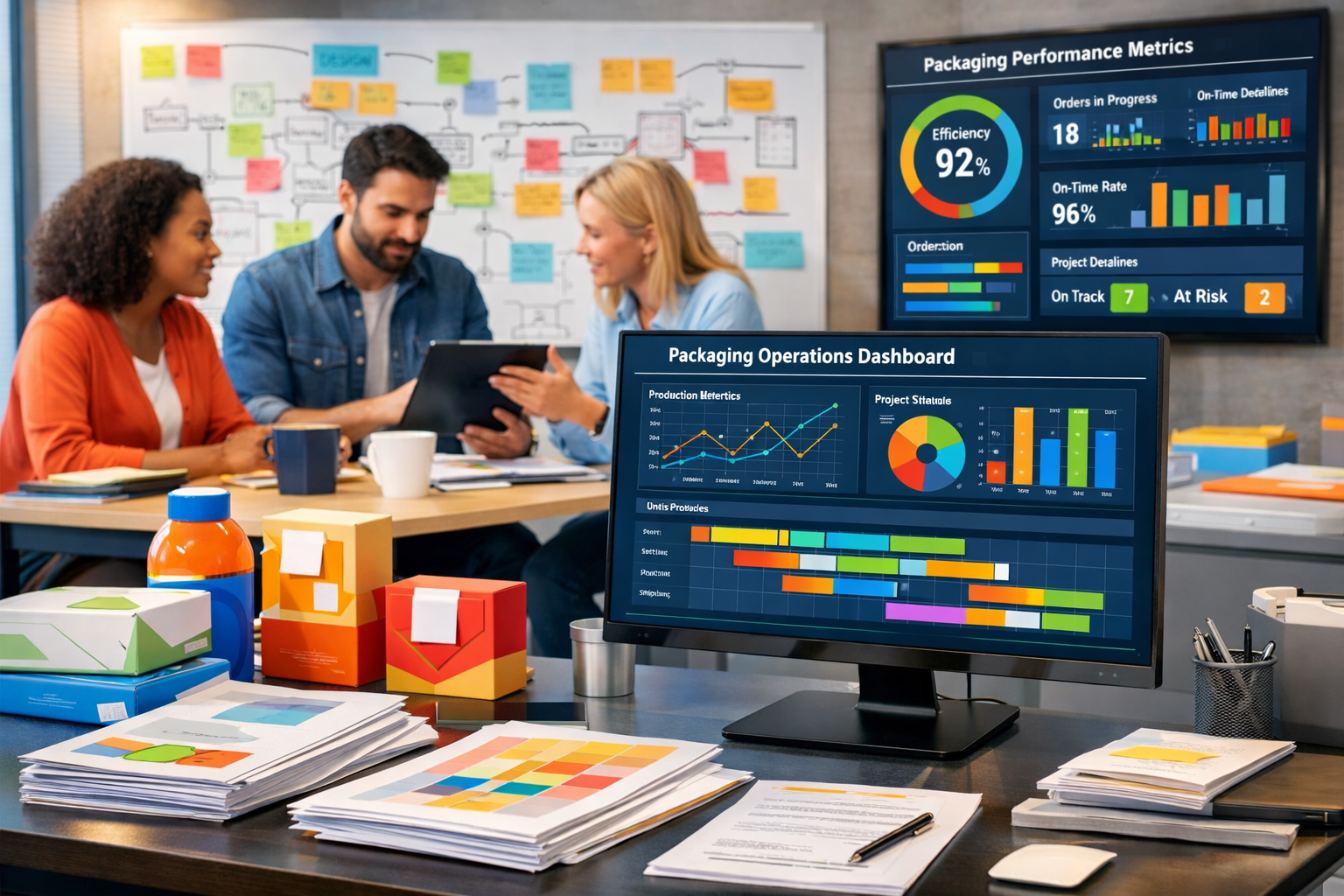
Cway provides workflow tracking and operational reporting that help teams monitor packaging performance and identify delays earlier.

Step 6: Enable Secure External Collaboration

Packaging execution involves many external partners:

  • agencies
  • printers
  • translators
  • suppliers
  • regulatory consultants

But uncontrolled collaboration creates governance risks.

A centralized system should allow secure external participation while maintaining:

  • permission controls
  • approval governance
  • file traceability
  • audit logs

Cway supports controlled collaboration with external stakeholders directly within packaging workflows.

Step 7: Establish Audit-Ready Traceability

For regulated industries, traceability is essential.

Organizations need to know:

  • who approved packaging
  • which version was released
  • when changes occurred
  • what content was modified

This becomes especially important during audits, recalls, or compliance investigations.

Cway maintains detailed version histories, approval logs, timestamps, and workflow records to support packaging governance and audit readiness. 

Step 8: Use Your Single Source of Truth to Improve Time-to-Market

The ultimate goal of centralized packaging operations is not only compliance — it’s speed.

Disconnected systems slow:

  • product launches
  • market rollouts
  • packaging updates
  • promotional campaigns

A governed packaging environment improves time-to-market optimization by reducing:

  • approval delays
  • manual coordination
  • artwork rework
  • version confusion
  • compliance corrections

When artwork, approvals, assets, and product information are connected in one system, packaging teams move faster with less operational risk.

What a Mature Packaging Single Source of Truth Looks Like

A mature packaging operation typically includes:

  • centralized artwork management
  • structured approval workflows
  • integrated product data management
  • governed digital asset management
  • workflow automation
  • operational analytics
  • secure collaboration

This is exactly the operational model platforms like Cway Software are designed to support through unified packaging workflow and product information management capabilities.

Final Thoughts

Building a packaging single source of truth is ultimately about operational control.

As packaging complexity grows across markets, brands need systems that connect:

  • people
  • workflows
  • artwork
  • product data
  • digital assets

Organizations that continue relying on fragmented tools often struggle with delays, rework, and rising compliance exposure.

By centralizing packaging artwork and product information management into one governed environment, teams can improve visibility, accelerate approvals, reduce risk, and scale packaging operations more effectively across global markets.

12 multi-market packaging risks and how to prevent them

12 multi-market packaging risks and how to prevent them

Expanding packaging across multiple markets sounds efficient in theory — until approvals stall, outdated files reach printers, or local compliance...

View Full Article
Managing 3,000 artworks a year: how FMCG brands stay in control

Managing 3,000 artworks a year: how FMCG brands stay in control

Three thousand packaging artworks a year. That's not an edge case — it's a realistic volume for any mid-to-large FMCG brand managing multiple product...

View Full Article
Why artwork lifecycle management is essential in 2025

Why artwork lifecycle management is essential in 2025

Delays, miscommunication, and costly packaging errors—sound familiar? These are just a few of the challenges companies face when managing product...

View Full Article