7 min read

13 packaging content breakdown points and how to fix them

13 packaging content breakdown points and how to fix them
12:24

When a product misses its launch window, most teams assume the delay came from manufacturing or logistics. Often, it didn't. The real culprit? A breakdown somewhere in the packaging content lifecycle—a missed approval, conflicting file versions, or regulatory copy that never made it to the final artwork. Cway helps teams fix these cross-functional breakdowns by unifying packaging artwork management, approvals, and product data into one platform.

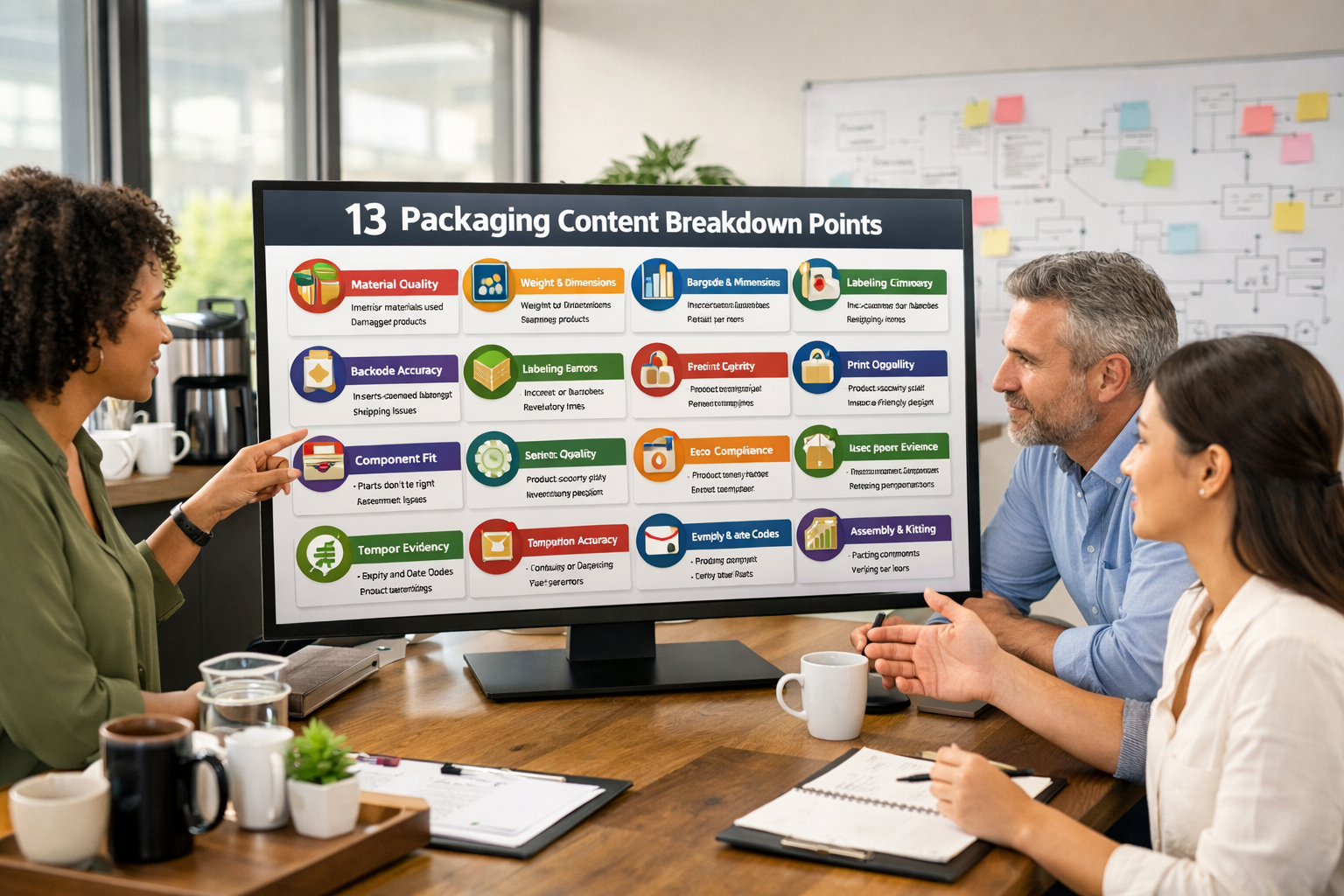
Below, you'll find 13 breakdown points that create risk across marketing, regulatory, and supply chain workflows. Each comes with clear symptoms, the business risk it creates, and a fix pattern tied to a single source of truth. If you've lived through a packaging recall, a delayed product launch, or a reprinting bill you weren't expecting, at least a few of these will look familiar.

1. Brief handoffs that lose critical context

Symptom: Design agencies receive incomplete or conflicting instructions. Copy changes from regulatory don't reach the designer. Marketing's updated claims arrive after the artwork is already in layout.

Risk: Rework. Revision rounds double. According to Cway's 2026 benchmark research, each additional revision round adds 2.3 days on average—time that compounds fast when you're managing hundreds of SKUs.

Fix: Centralize briefs in a structured workspace where regulatory, marketing, and design all contribute to the same document. When every stakeholder works from one living brief, agencies get the full picture on day one. Cway connects project briefs directly to artwork files, so nothing gets lost between departments.

2. Version confusion across departments

Symptom: Multiple "final" files exist in different locations. Printers receive outdated artwork. Someone asks, "Which version did we approve?" and nobody can answer quickly.

Risk: Printing errors. Reprinting costs. Worse, products shipped with the wrong label. A 2026 Esko report found that 77% of companies experiencing recalls estimated financial impacts of up to $30 million.

Fix: Auto-versioning with visual comparison. Every revision gets a unique version number, a full changelog, and side-by-side comparison tools so reviewers see exactly what changed. Cway gives teams full version control for every artwork file, keeping the audit trail intact and eliminating “which one is final?” debates.

3. Regulatory updates stuck in silos

Symptom: Regulatory affairs updates a claim or warning statement, but the change doesn't reach the artwork file. Teams only discover the gap at printer proofing—or worse, after production.

Risk: Compliance failures. Market withdrawal. In highly regulated categories like food or pharmaceuticals, a missing allergen statement or incorrect dosage instruction can trigger recalls. The US FDA reported over 400 food recalls by Q3 2025, with labeling and allergen errors among the leading causes.

Fix: Purpose-built packaging platforms outperform generic project management tools by creating clear audit trails across the entire artwork approval process. With Cway, teams can track every review, comment, approval, and file version in one place — reducing confusion, improving accountability, and making compliance reviews easier to manage.

4. Approval bottlenecks from unclear ownership

Symptom: Artwork files sit waiting for sign-off. Nobody knows whose turn it is. Deadlines pass while stakeholders assume someone else is handling it.

Risk: Delayed launches. Internal tension. According to Cway's benchmark data, 41% of FMCG packaging operations still rely on email-based approvals—a workflow structure that requires twice as many revision rounds compared to structured approval routing.

Fix: Cway helps teams bring structure to the artwork review process with clear ownership, dedicated review teams, automatic notifications, and deadline tracking. Every stakeholder knows when feedback is needed, who is responsible for the next action, and which approvals are still outstanding — helping marketing and regulatory teams stay aligned without endless follow-up.

5. External agency coordination gaps

Symptom: Agencies upload files to their own portals. Feedback lives in email threads. You can't trace who requested which change or when it was implemented.

Risk: Lost feedback. Duplicated effort. Compliance gaps when external partners work from outdated specifications.

Fix: Bring external agencies into the same platform. Give them controlled access to specific projects. All feedback, annotations, and approvals stay attached to the artwork—not scattered across email inboxes. Cway simplifies external collaboration by letting you share secure links to specific files or proofs, keeping all comments annotated directly on the artwork.

6. Product data and artwork disconnection

Symptom: Ingredients change in your product information management (PIM) system, but the artwork still shows the old formula. Nutritional values don't match the approved product record.

Risk: Mislabeling. Regulatory exposure. Consumer safety incidents. Research from Productsup highlights how poor product data quality creates downstream chaos across packaging, ecommerce, and retail operations.

Fix: Connect your packaging artwork to your master product data. When specifications change, affected artwork files get flagged for review automatically. This connection prevents artwork from drifting out of sync with your official product records. 

7. Multi-market regulatory complexity

Symptom: You're launching in six markets. Each has different regulatory requirements, language needs, and legal disclaimers. Local teams adapt designs independently, creating inconsistencies.

Risk: Compliance exposure in one or more markets. Brand inconsistency. Duplicated work across regional teams. Global packaging experts note that fragmented artwork ecosystems create significant regulatory and brand integrity risks as companies scale internationally.

Fix: Centralize artwork reviews and communication in one place so regional teams work from the latest approved files and feedback history. With Cway, teams can maintain clearer visibility across markets, reduce version confusion, track approvals more consistently, and keep stakeholders aligned during localization and regulatory reviews.

8. Proofing fatigue and missed errors

Symptom: Reviewers check the same elements repeatedly across dozens of artwork versions. Small errors—typos, misplaced symbols, incorrect barcodes—slip through because eyes glaze over.

Risk: Errors on shelf. Reprinting. Brand damage. According to GWP Packaging's industry guide, small artwork mistakes can result in unusable stock, wasted printing plates, delayed shipments, and harm to brand perception.

Fix: Digital proofing with zoom, markup, and comparison tools. Reviewers annotate directly on the artwork, and all comments stay attached to the specific version. Cway makes proofing structured and visual, so reviewers focus on content accuracy instead of hunting for files.

9. Print handoff errors

Symptom: Printers receive files with the wrong color profile. Bleed areas are missing. Fonts aren't outlined. The proof comes back looking nothing like the approved artwork.

Risk: Reprinting. Production delays. Strained supplier relationships.

Fix: Standardize how print-ready files are shared with external partners and keep a clear record of every export. Cway supports all major artwork file types — including PDFs, Photoshop, Illustrator, and multi-layer files — while giving teams full visibility into who exported files, when they were sent, and which version was shared with printers.

10. Missing audit trails during compliance checks

Symptom: An auditor asks who approved a specific label and when. You spend hours reconstructing the decision trail from email archives and file metadata.

Risk: Audit failures. Regulatory penalties. Inability to demonstrate compliance history when it matters most.

Fix: Capture every approval, comment, and version change in a structured audit log. When the auditor asks, you pull the report in minutes—not days. Cway records every decision throughout the artwork lifecycle, creating full traceability from brief to print-ready file.

11. Asset retrieval delays

Symptom: Someone needs the editable artwork file for a product that launched two years ago. Nobody knows where it is. The agency that created it may or may not still have it.

Risk: Delays when you need to update packaging. Recreating assets from scratch. Inconsistent branding when historical files are unavailable.

Fix: Store all approved artwork in a centralized media library with strong metadata and search capabilities. Historical files remain accessible, organized, and linked to their original projects. Digital asset management best practices from Canto confirm that centralization is essential for long-term asset findability. Cway combines media storage, versioning, and task tracking in one platform, so you always know where your files live.

12. SKU proliferation without workflow scaling

Symptom: Your SKU count doubled, but your artwork team size didn't. The same people now manage twice the workload with the same tools. Cycle times stretch. Errors increase.

Risk: Team burnout. Quality degradation. Launch delays becoming the norm rather than the exception.

Fix: Automate repetitive tasks. Build workflows that can handle volume without requiring proportional headcount increases. Cway handles real packaging complexity through scalable architecture designed for growing operations.

13. Last-minute changes that restart the entire workflow

Symptom: A legal team requests a small copy change one week before launch. The entire approval workflow restarts from the beginning. A 24-hour fix becomes a two-week delay.

Risk: Missed launch windows. Retailer penalties. Lost sales during peak season.

Fix: Design workflows that accommodate late-stage changes without full restarts. Minor revisions can follow abbreviated approval paths while major changes trigger full review. The system tracks which elements changed, so reviewers know exactly what needs re-evaluation. Cway enables early stakeholder involvement to reduce late-stage rework and supports flexible approval paths for different change types.

How a single source of truth fixes cross-functional breakdowns

These 13 breakdown points share a common thread: information scattered across systems, departments, and external partners. When artwork files, product data, regulatory copy, and approval decisions live in separate places, breakdowns become inevitable.

A single source of truth—one platform where all packaging content, approvals, and assets converge—eliminates the gaps where errors hide. You gain visibility into where every project stands. You create accountability for who owns what. You build audit trails that protect you during compliance reviews.

Cway unifies artwork workflows, asset management, product data, approvals, and insights into one platform. It's purpose-built for packaging and creative operations teams managing complexity across multiple brands, markets, and regulatory environments.

What makes Cway different from generic tools

Generic project management and digital asset management platforms can store files and track tasks. But they weren't built for the specific challenges of packaging content management.

Cway reduces artwork approval time by up to 70% and cuts revision rounds by 40%. It handles real packaging complexity—regulatory workflows, multilingual variants, external agency coordination, and print handoff requirements—in ways that general-purpose tools cannot.

The platform combines asset storage, approval automation, metadata organization, and version tracking with built-in analytics to identify bottlenecks before they become launch-day emergencies. You get a clean, intuitive interface tailored to packaging use cases—not a generic system requiring heavy customization.


FAQ


Managing 3,000 artworks a year: how FMCG brands stay in control

Managing 3,000 artworks a year: how FMCG brands stay in control

Three thousand packaging artworks a year. That's not an edge case — it's a realistic volume for any mid-to-large FMCG brand managing multiple product...

View Full Article
Proofing workflow: best practices for creative and packaging teams

Proofing workflow: best practices for creative and packaging teams

Getting packaging and design approvals right is critical—but too often, teams rely on outdated tools and disconnected processes. In this article,...

View Full Article
How to build a compliant and scalable approval workflow

How to build a compliant and scalable approval workflow

Creating packaging isn’t just about great design—it’s about building an approval workflow that ensures every step, from concept to shelf, is aligned,...

View Full Article