3 min read

Why nutrition labels don’t belong only in design files

Why nutrition labels don’t belong only in design files
Design vs compliance: who really owns the nutrition label?
5:39

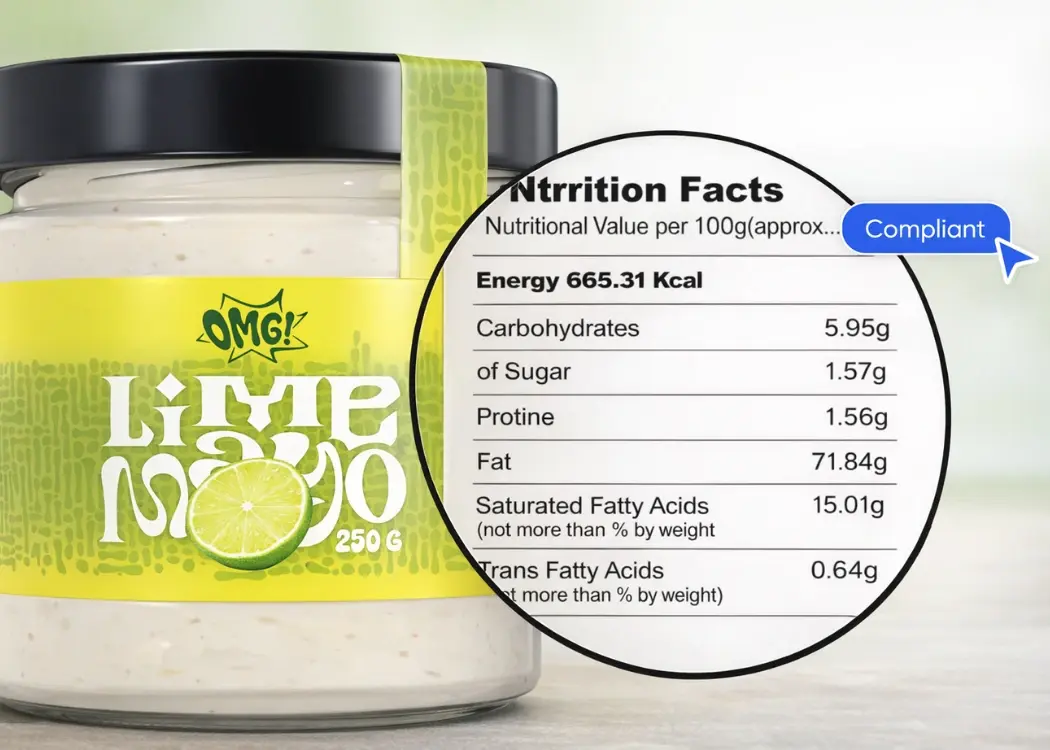
Nutrition labels are often treated as simple design elements — just another table placed on the back of packaging. Designers know how to build tables, and regulatory teams know the numbers. So why do nutrition labels cause so many packaging compliance issues?

Because nutrition labels sit at the intersection of design and compliance, and without a clear process, ownership becomes blurred.

The Common Assumption: “It’s Just a Table”

From a visual perspective, a nutrition label is a table. Rows, columns, values, headings — all easy to recreate in design software.

A typical workflow looks like this:

  • Nutrition data is shared via spreadsheet or email

  • A designer recreates the nutrition table in a design file

  • The label is reviewed visually during artwork approval

This approach seems efficient, but it quietly turns regulated packaging content into a manual design task — increasing the risk of error.

Why Nutrition Labels Are Regulated Content, Not Just Design Elements

Unlike logos, images, or marketing copy, nutrition labels are legally regulated.

Depending on the market, regulations define:

  • Which nutrients must be displayed

  • The order and naming of nutrients

  • Units of measurement

  • Rounding rules and thresholds

  • Serving size calculations

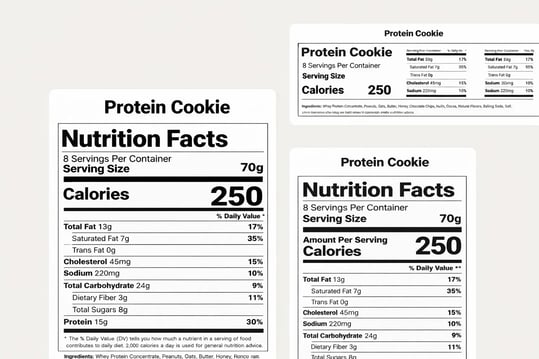
  • Market-specific formats (US, EU, UK, etc.)

A nutrition label can look correct and still be non-compliant.

Design tools are built for layout and typography — not for:

  • Validating nutrition calculations

  • Applying regulatory logic

  • Managing market-specific requirements

This is where many packaging teams run into trouble.

When Design Files Become the Source of Truth

Problems start when the design file becomes the primary source of truth for nutrition information, instead of being part of structured artwork approval workflows.

Common risks include:

  • Manual copy-paste errors

  • Outdated values after reformulation

  • Inconsistent updates across SKUs or markets

  • Late changes that bypass proper regulatory review

When nutrition data lives mainly inside design files, every update requires manual intervention across multiple stakeholders. This weakens artwork approval workflows and makes managing regulated content in packaging projects far more complex than it needs to be.

The result is a higher likelihood of mistakes, increased rework, and reduced confidence that the final packaging is fully compliant.

Design vs Compliance: Who Owns What?

The nutrition label should not be owned entirely by design or compliance. It requires shared ownership with clear boundaries.

Compliance teams own:

  • Nutrition data accuracy

  • Regulatory interpretation

  • Market-specific requirements

  • Approval of regulated content

Design teams own:

  • Visual layout and placement

  • Readability and hierarchy

  • Brand consistency across packaging

What neither team should own alone is the entire lifecycle of the nutrition label.

Why Nutrition Facts Label Makers Exist

A nutrition facts label maker exists for a simple reason: design tools are not built to manage regulated nutrition data.

nutrition facts label maker

While designers can visually recreate a nutrition table, they cannot reliably manage the calculations, rules, and compliance logic behind it. A nutrition facts label maker is designed to handle what design software cannot.

A nutrition facts label maker helps packaging teams:

  • Serve as a single source of truth for nutrition information

  • Apply regulatory and rounding rules automatically

  • Generate compliant nutrition label formats for different markets

  • Reduce manual handling of regulated, high-risk data

In mature packaging and artwork approval workflows, nutrition data is managed upstream using a nutrition facts label maker and similar tools. Only approved, validated content is then passed into design files, allowing designers to focus on layout while reducing compliance risk and rework.

The Real Problem Is Process, Not Capability

Designers are capable of creating tables.
Regulatory teams are capable of checking numbers.

The real issue is process design, not individual skill.

Without structured workflows:

  • Data changes late in the project

  • Responsibility becomes unclear

  • Errors are discovered too late

  • Packaging launches are delayed

Nutrition labels expose these weaknesses because they combine frequent changes with high compliance risk.

What This Means for Artwork and Packaging Workflows

Nutrition labels are a clear example of why regulated packaging content requires:

  • Version control

  • Approval history

  • Clear ownership

  • Traceability across markets and SKUs

For artwork management for packaging teams, these controls are essential. When regulated content is treated like ordinary design content, teams pay the price in packaging errors and rework, delayed launches, and increased compliance risk.

When regulated content is managed as a controlled asset — and then integrated into design — artwork management for packaging teams becomes more predictable. The result is reducing packaging errors and rework, faster approvals, and greater confidence that the final packaging is correct and compliant.


Conclusion: Clear Ownership Enables Faster, Safer Packaging

The nutrition label doesn’t belong solely to design or compliance.

It belongs to a structured packaging process that:

  • Separates regulated data from layout

  • Assigns clear responsibility

  • Reduces manual handling

  • Protects teams from compliance risk

Designing packaging is a creative challenge.
Managing regulated content is a governance challenge.

Treating them as the same thing is where most packaging errors begin.

2026 packaging trends

2026 packaging trends

For decades, packaging design has been treated as a largely visual discipline. Create the artwork, check compliance, send it to print, move on to the...

View Full Article
How to compare packaging design files without Adobe or design software

How to compare packaging design files without Adobe or design software

Comparing packaging designs is a critical part of brand, compliance, and regulatory work — but not everyone has access to Adobe or graphic design...

View Full Article
How to simplify packaging design processes with the right software

How to simplify packaging design processes with the right software

Packaging development is complex—endless revisions, scattered files, and slow approvals. This article shows how software that simplifies structural...

View Full Article