Packaging artwork approvals: common bottlenecks and solutions
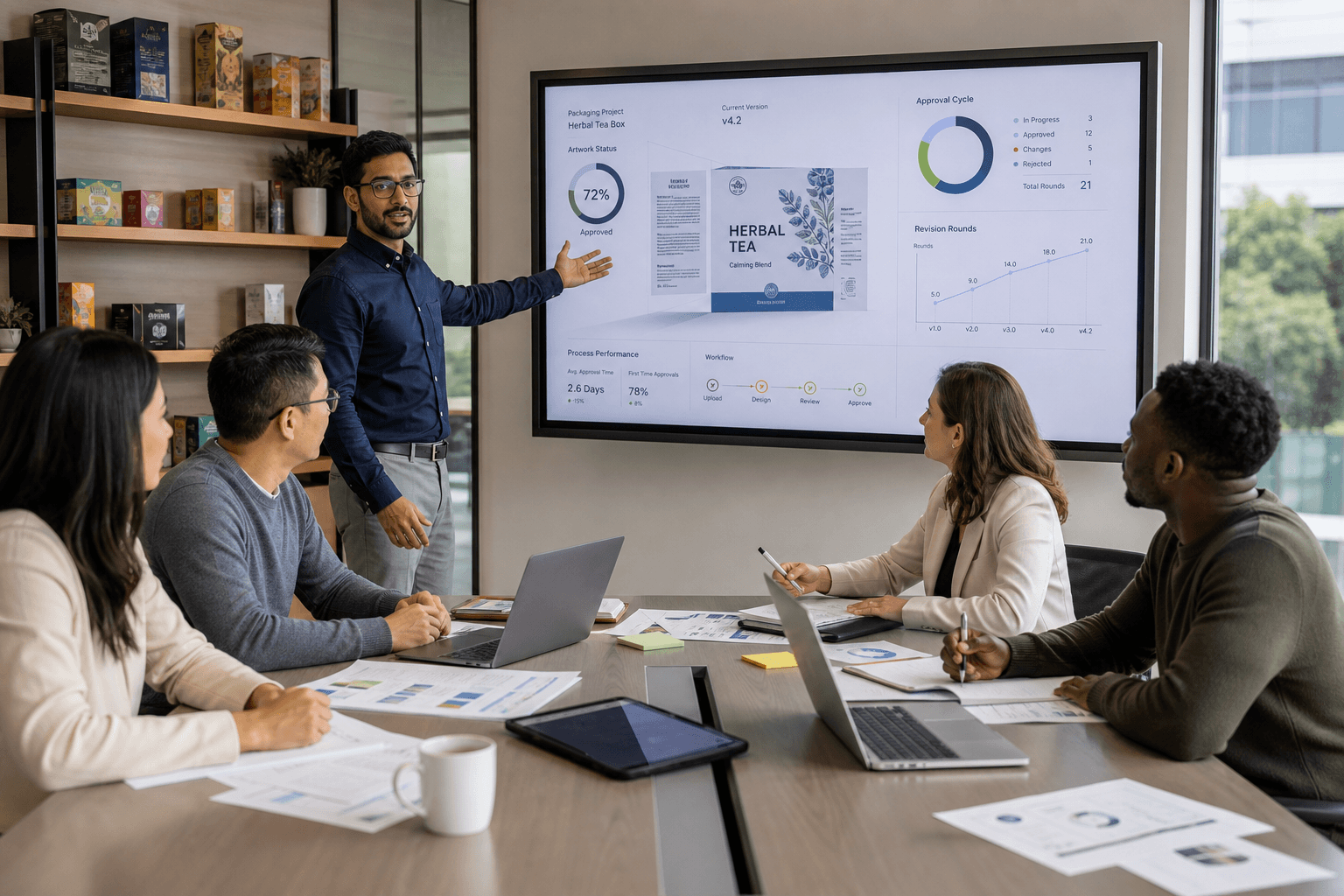
Getting packaging artwork approved shouldn't take weeks. Yet according to Cway's 2026 Benchmark, the average approval cycle takes 24 days, and 1 in 3...
Getting leadership to approve investment in a packaging artwork management system often comes down to one thing: proving it will pay off. If you work in packaging or artwork operations, you already know the hidden costs of fragmented workflows—missed deadlines, version errors, compliance gaps, and reprints that eat into margins. But translating those pain points into a business case that resonates with finance and executive teams requires a different approach.
This guide walks you through everything you need to build a decision-ready ROI framework for packaging artwork management systems. You will learn which costs to quantify, which benchmarks signal best-in-class operations, and how to connect platform capabilities to measurable outcomes. Cway helps packaging teams build these business cases by delivering trackable workflows, automated compliance gates, and real-time analytics that make ROI visible from day one.
Whether you are evaluating a new platform or justifying an upgrade from generic tools, this guide gives you the structure and data points to make your case confidently.
A packaging artwork management system is a specialized platform that centralizes all artwork files, approval workflows, compliance tracking, and version control for packaging operations. Unlike general-purpose digital asset management tools, these systems are built specifically for the complexity of packaging—multilingual variants, regulatory requirements, high SKU counts, and cross-functional approval chains.
At its core, the system serves as a single source of truth for every packaging asset your team touches. It replaces disconnected processes with structured workflows that track who approved what, when they did it, and which version went to print.
General file storage and approval tools were not designed for packaging complexity. They lack native support for regulatory compliance workflows, multi-layer artwork files, or the audit trail depth required for FMCG, pharmaceutical, and consumer goods industries.
When teams rely on generic solutions, they end up building workarounds—extra review stages, manual tracking in separate documents, and fragmented communication across multiple channels. These workarounds introduce the very risks and inefficiencies that dedicated artwork management systems eliminate.
Before you can calculate ROI, you need to map the costs embedded in your current workflows. Many of these costs are hidden or normalized—teams accept them as "how things work" rather than recognizing them as avoidable expenses.
Start with the costs that show up clearly on financial reports. These include:
Pull actual figures from your finance team or procurement records for the past 12-24 months. Even if the numbers are not perfectly tracked, estimates based on incident counts create a baseline.
Beyond direct financial outlays, consider the productivity losses from fragmented processes:
Convert these time losses into labor costs. If your artwork team spends 5 hours per week tracking down files and clarifying versions, multiply that by hourly rates and weeks per year. The cumulative figure often surprises stakeholders.
Every week a product launch slips represents lost revenue potential. For FMCG and consumer goods companies, seasonal windows and retailer shelf-set deadlines make speed critical.
Quantify opportunity cost by estimating the revenue per SKU per week and multiplying by average launch delays. If your current process adds 2-3 weeks to typical launch timelines, that delay has a real dollar value.
Benchmarking against best-in-class operations helps you set realistic targets and demonstrate the gap between current performance and what leading organizations achieve. These metrics also give you clear KPIs to track after implementation.
This measures the elapsed time from initial artwork submission to final approval. Best-in-class operations typically complete approval cycles in 3-5 business days for standard SKUs, compared to 10-15+ days for organizations relying on unstructured processes.
Cway's workflow analytics let you track approval cycle times in real-time, giving you baseline data before implementation and ongoing measurement after. Teams using Cway report up to 70% faster approval cycles compared to their previous processes.
This metric tracks how many correction cycles each artwork goes through before reaching approval. High revision counts signal unclear feedback processes, late-stage compliance catches, or version confusion.
Best-in-class operations average 1-2 revision rounds per artwork. Organizations without structured workflows often see 4-5+ rounds, with each round adding days to the timeline and hours of coordination effort.
This measures the percentage of artworks that pass regulatory and quality review on the first submission. Low first-pass rates indicate gaps in upfront guidance, unclear requirements, or insufficient checkpoints earlier in the workflow.
Leading organizations achieve 85-95% first-pass compliance rates by building automated compliance gates into their approval workflows—catching issues before they reach the formal review stage.
For regulated industries like pharmaceuticals, food and beverage, and cosmetics, audit preparedness directly impacts operational risk. This metric assesses whether your team can produce a complete audit trail for any artwork within a defined time window (typically 24-48 hours).
Best-in-class operations can retrieve full version history, approval records, and change documentation in minutes rather than days. Cway stores complete audit trails automatically, eliminating the scramble when auditors arrive.
Not all features deliver equal value. Understanding which capabilities have the highest ROI impact helps you prioritize requirements and evaluate vendors more effectively.
Structured workflows with role-based assignments, automatic notifications, and deadline tracking eliminate the coordination overhead that slows manual processes. When approvers receive tasks automatically with all context attached, review happens faster.
Version errors are among the most costly mistakes in packaging operations. A single wrong version reaching production can result in thousands of dollars in reprints—or worse, compliance violations.
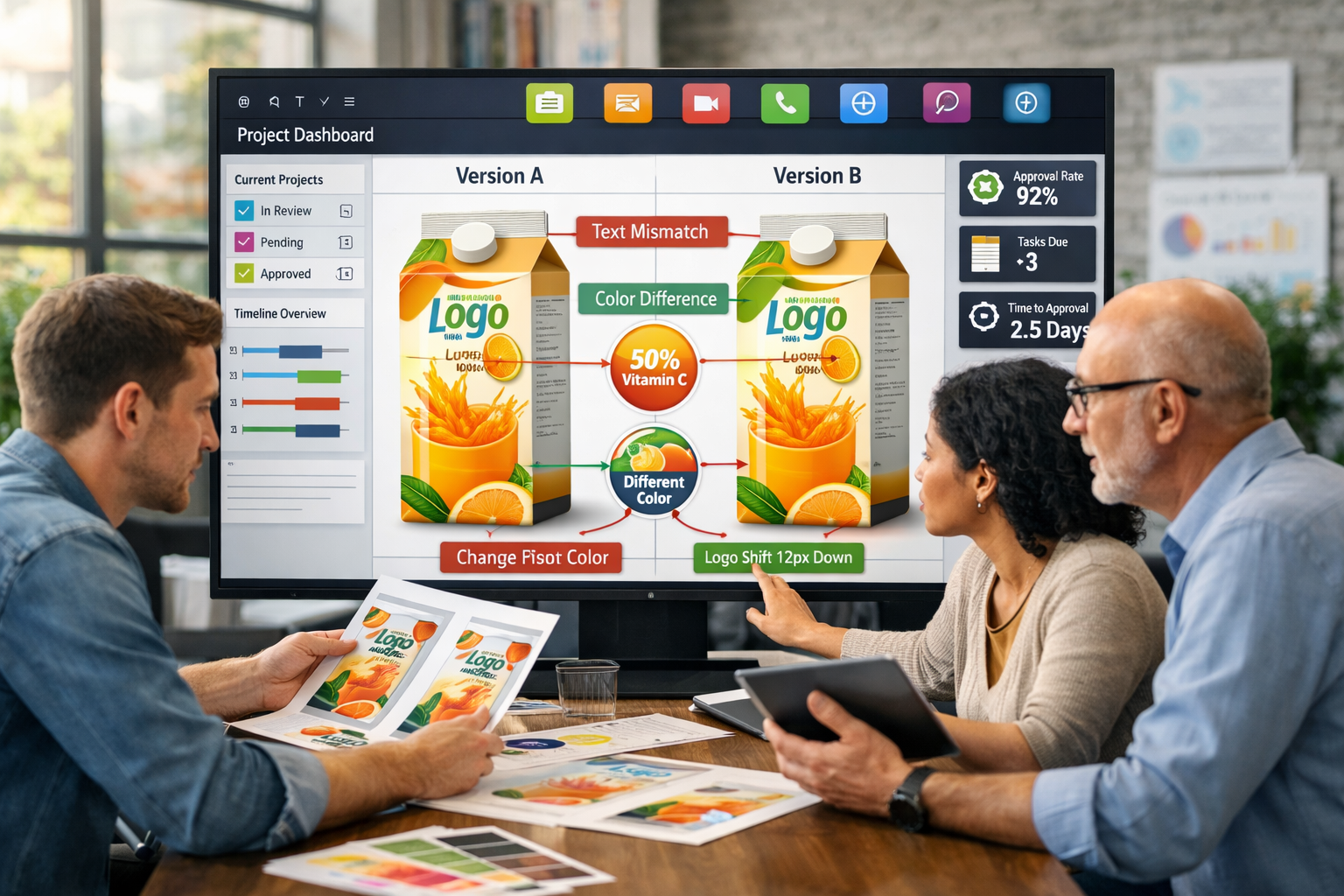
Purpose-built systems offer auto-versioning with side-by-side visual comparison, making differences between versions immediately visible. Cway's comparison tools highlight changes directly on the artwork, reducing the risk of errors slipping through review.
Building compliance checkpoints into workflows catches issues early, when they are cheapest to fix. Automated gates can verify that required approvals are complete, mandatory fields are populated, or specific reviewers have signed off before artwork advances.
These gates prevent the late-stage compliance catches that cause expensive rework. For regulated industries, they also create the documentation auditors require.
Centralized feedback collection eliminates the ambiguity of comments scattered across multiple channels. When all reviewers annotate directly on the artwork with visual markup, the design team knows exactly what changes are required.
Cway consolidates all feedback in one place, with visual annotations tied to specific locations on the artwork. This clarity reduces revision rounds by eliminating misinterpretation.
You cannot improve what you do not measure. Analytics dashboards that track cycle times, bottlenecks, and revision patterns give operations leaders the visibility to identify and address inefficiencies.
Cway's built-in analytics help you track ROI metrics after implementation, demonstrating the value delivered and identifying opportunities for further optimization.
TCO extends beyond the sticker price. Understanding all cost components prevents budget surprises and ensures your ROI model captures the full investment picture.
SaaS platforms typically charge per user per month or offer tiered packages based on features and usage. Get clarity on:
Most platforms require professional services for initial setup. This includes workflow configuration, user role definition, integration setup, and data migration. Implementation costs vary significantly based on complexity.
Ask vendors for typical implementation timelines and cost ranges for organizations similar to yours. Factor in internal labor for requirements gathering and testing.
Connecting your artwork management system to ERP, PIM, PLM, or creative tools adds value but also adds cost. Evaluate which integrations are essential versus nice-to-have, and get specific quotes for each.
User adoption determines whether you realize ROI. Budget for:
Vendors with strong onboarding support reduce the burden on your internal team. Cway offers simplified onboarding that gets teams productive quickly, reducing the training investment required.
Your TCO analysis should also quantify the cost of maintaining the status quo. Every year you delay investment, you continue paying the costs of inefficient processes. Over a 3-year horizon, these accumulated costs often exceed the entire TCO of a purpose-built system.
Organizations that implement purpose-built packaging artwork management systems consistently report measurable improvements across key operational metrics. Understanding what outcomes to expect helps you set appropriate targets and validate returns.
Structured workflows with automated routing and clear accountability eliminate the delays that plague manual processes. Teams using Cway report approval cycles completing up to 70% faster than their previous methods.
This speed translates directly to revenue. Products reach shelves sooner, seasonal windows are met, and retailer deadlines no longer create crisis mode.
When feedback is centralized, annotated directly on artwork, and accessible to all stakeholders, misunderstandings drop. Teams using structured proofing workflows see 40% fewer revision rounds, reducing both calendar time and labor costs.
Version control, visual comparison, and compliance gates catch issues before they become expensive. Organizations using dedicated artwork management platforms report near-elimination of version-related printing errors.
For industries where errors lead to recalls or regulatory action, this risk reduction alone can justify investment.
Complete, automatic audit trails change the audit experience from stressful document hunting to confident record retrieval. Cway stores every version, every approval, and every change with full documentation—available instantly when auditors request it.
Building a compelling ROI business case for packaging artwork management requires quantifying costs, benchmarking performance, and connecting platform capabilities to measurable outcomes. The investment pays off through faster approvals, fewer errors, lower rework costs, and confident compliance.
Cway delivers the structured workflows and real-time analytics that make ROI trackable from day one. With up to 70% faster approval cycles and 40% fewer revision rounds, the platform turns packaging management into a competitive advantage.
Start by mapping your current costs and performance metrics. Then build a model that shows leadership exactly what returns to expect and when. With a clear, defensible business case, you can secure the investment your packaging operations need.
Most organizations achieve full payback within 12-18 months. The timeline depends on current process inefficiencies, implementation speed, and user adoption rates.
Organizations with higher baseline costs from errors and delays often see faster payback. Cway's simplified onboarding helps teams realize value sooner by accelerating adoption.
Focus on approval cycle time, revision rounds per artwork, first-pass compliance rate, and audit trail retrieval time. These metrics directly connect to cost savings and risk reduction.
Cway's built-in analytics dashboards track these metrics automatically, giving you ongoing visibility into performance improvements.
Automated compliance gates verify that required approvals are complete before artwork advances. Complete audit trails document every change and approval for regulatory review.
Cway stores version history, approval records, and change documentation automatically, eliminating gaps that create audit findings or compliance violations.
Yes. Smaller teams often experience higher proportional impact from errors because they lack redundancy. Even modest reductions in rework and approval time can justify investment.
The key is accurate baseline measurement. Small teams with high error rates or long cycle times may see faster payback than larger organizations with more mature processes.
Purpose-built systems include native support for packaging-specific workflows: regulatory compliance gates, multi-layer artwork comparison, high SKU complexity, and audit trail depth required by regulated industries.
Cway combines artwork workflow automation, version control, compliance tracking, and approval management in one platform designed specifically for packaging complexity.
Getting packaging artwork approved shouldn't take weeks. Yet according to Cway's 2026 Benchmark, the average approval cycle takes 24 days, and 1 in 3...
1 min read
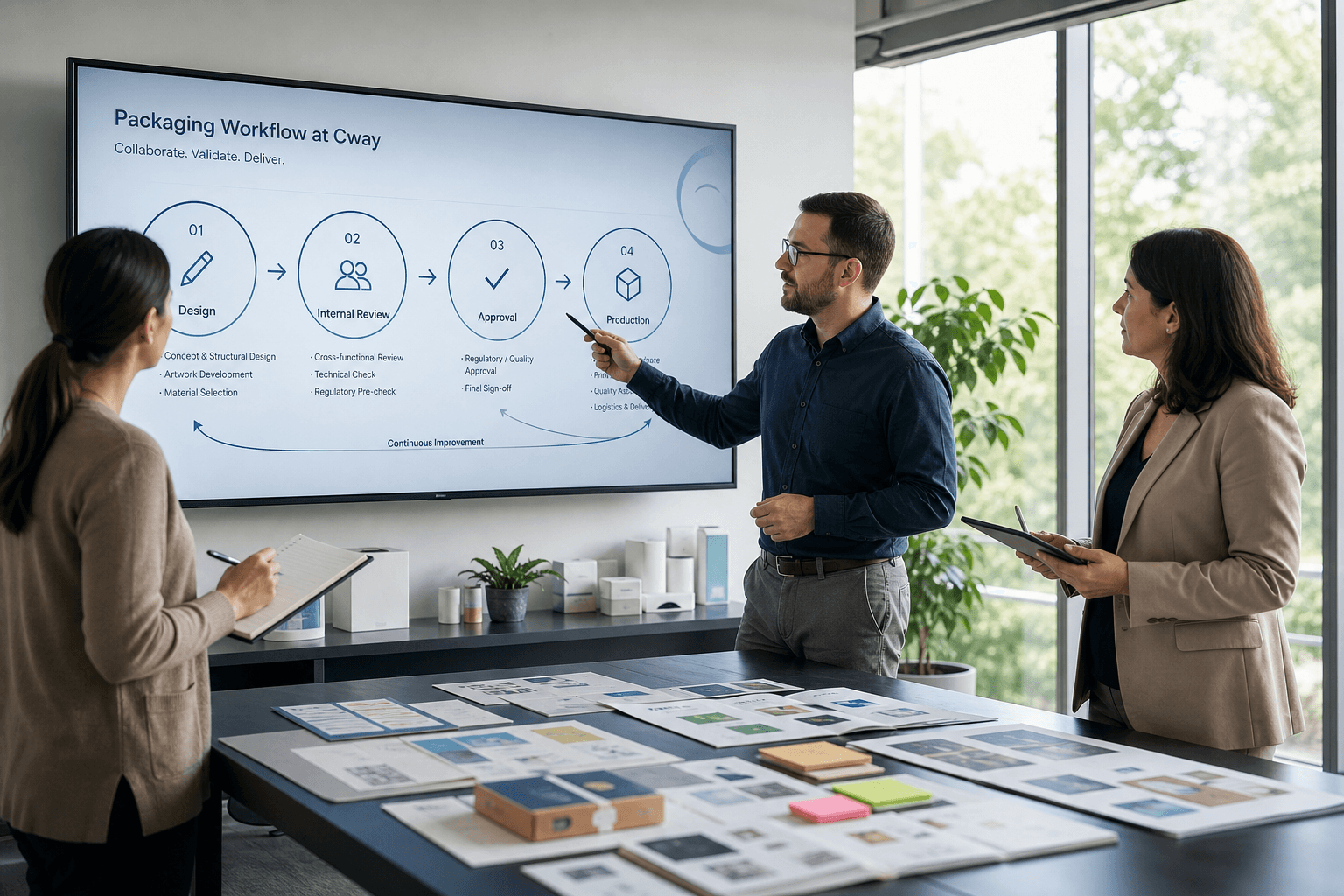
At first glance, packaging artwork projects may look similar to any other business project. They have deadlines, stakeholders, approvals, and...
If you work in a fast-moving consumer goods company, you already know that packaging is not a side project. It's a compliance requirement, a brand...