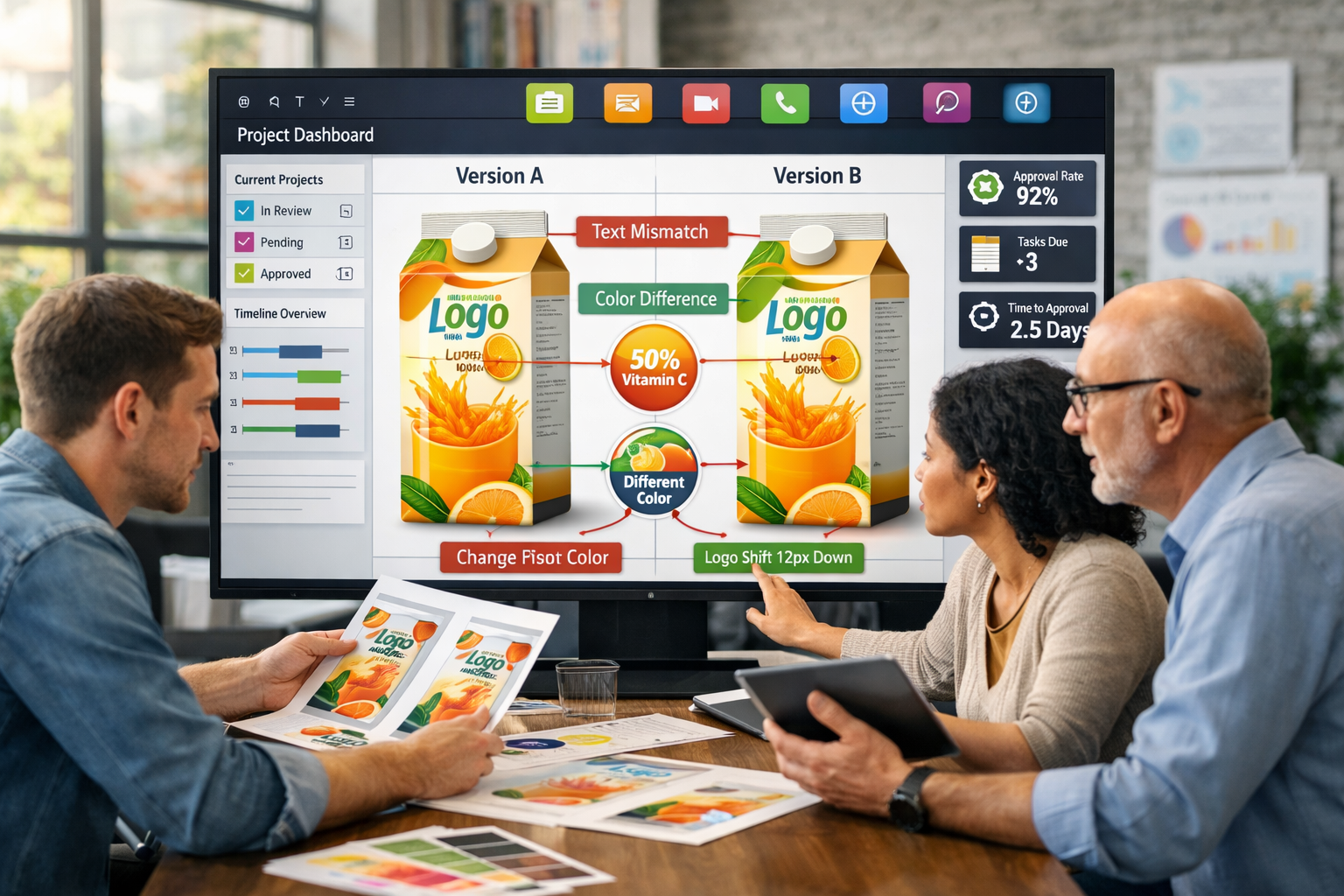
Managing 3,000 artworks a year: how FMCG brands stay in control
Three thousand packaging artworks a year. That's not an edge case — it's a realistic volume for any mid-to-large FMCG brand managing multiple product...
6 min read
William Janeway
:
May 28, 2026
Getting packaging artwork approved shouldn't take weeks. Yet according to Cway's 2026 Benchmark, the average approval cycle takes 24 days, and 1 in 3 projects miss their launch date. If you're managing multi-market packaging, the problem multiplies fast.
This article explores 10 ways Cway's artwork management platform helps packaging and operations leaders cut approval times, reduce revision rounds, and strengthen compliance traceability across markets. You'll also see how Cway compares to other options available today.
We evaluated artwork management platforms based on real-world needs from packaging operations leaders at mid-market and enterprise brands. Instead of feature checklists, we focused on outcomes that matter when you're managing regulatory requirements, multi-market variants, and tight launch deadlines.
Cway unifies artwork workflows, approvals, digital asset management, and product data in one connected platform. Rather than bolting together separate tools for project management, file storage, and approvals, Cway brings everything into a single environment built specifically for packaging operations.
For packaging and artwork operations leaders, this means fewer handoffs between systems and clearer visibility into what's happening across projects. Cway tracks every approval, comment, and version change automatically—creating the compliance traceability that regulated industries require.
Cway reduces approval cycles by up to 70%, according to customer benchmarks.
Pros:
Cons:
Bynder functions as a digital asset management system with brand portal capabilities. The platform includes templating features that let marketing teams create on-brand materials from approved assets. For organizations focused primarily on marketing asset distribution, Bynder offers file storage, metadata tagging, and sharing functionality.
That said, Bynder was built as a marketing DAM rather than a packaging-specific workflow tool. If your primary need is managing packaging artwork through complex approval sequences with regulatory oversight, you may find the workflow capabilities less structured than purpose-built packaging platforms.
Pros:
Cons:
Widen, now part of Acquia, offers digital asset management with workflow capabilities for creative teams. The platform includes review and approval features that route assets through stakeholder sign-offs before publishing. For teams managing creative content distribution across channels, Widen handles versioning and feedback collection in a shared workspace.
Widen's strength lies in creative asset workflows rather than packaging-specific operations. If you need structured approval routing for regulated packaging with compliance documentation, you'll want to evaluate how the platform handles audit trail requirements and multi-market variant management.
Pros:
Cons:
Pimcore is an open-source platform that combines digital asset management with product information management in one system. The platform allows organizations to manage both product data and associated digital assets from a unified interface. For teams with technical resources, Pimcore offers flexibility through its open architecture.
The open-source nature means you have control over customization, but it also requires development resources to configure and maintain. Packaging-specific approval workflows and compliance traceability would need to be built or configured rather than coming out of the box.
Pros:
Cons:
Loftware Smartflow offers artwork management with a focus on compliance and validation services for regulated industries like pharmaceuticals and medical devices. The platform includes browser-based proofing, workflow automation, and quality management features. Smartflow's DaVinci proofing tool allows annotation directly on files without downloads.
The platform includes eSignature capabilities that comply with FDA CFR 21 Part 11 requirements, making it relevant for pharmaceutical packaging. However, the focus on validation and regulatory compliance in healthcare industries may mean less emphasis on the speed and agility that FMCG packaging teams often prioritize.
Pros:
Cons:
| Platform | Packaging-Specific Workflows | Side-by-Side Comparison | Built-in Audit Trails |
|---|---|---|---|
| Cway | ✓ | ✓ | ✓ |
| Bynder | ✗ | ✗ | ✗ |
| Widen | ✗ | ✓ | ✗ |
| Pimcore | ✗ | ✗ | ✗ |
| Loftware Smartflow | ✓ | ✓ | ✓ |
Cway stands apart because it was built specifically for how packaging operations work. Generic DAM systems and creative workflow tools can store files and route approvals, but they weren't designed for the packaging project complexity.
Cway connects artwork workflows, digital assets, product data, and approvals in one platform. This integration means fewer handoffs between systems, less duplicate work, and clearer visibility into what's happening across your portfolio. When marketing, regulatory, and quality teams work from the same source of truth, projects move faster.
Cway gives packaging leaders confidence that artwork is accurate and traceable. If you're ready to reduce approval cycles and strengthen compliance, book a demo with Cway to see how the platform fits your operations.
According to Cway's 2026 Benchmark, the average packaging artwork approval cycle takes 24 days. Projects with 7+ stakeholders face 2.1× higher delay risk. Cway helps reduce this timeline by up to 70% through structured workflows and parallel approvals.
Compliance traceability means having documented records of every approval, comment, and version change throughout the artwork lifecycle. Cway creates automatic audit trails with timestamps and user attribution, so you can show regulators exactly who approved what and when.
A DAM (digital asset management) system focuses on storing, organizing, and distributing files. An artwork management platform like Cway goes further by adding packaging-specific workflows, compliance traceability, approval automation, and product data integration built for how packaging projects actually move from concept to shelf.
Cway is fully web-based and runs in standard browsers without special hardware or software. Teams can begin running projects after workflow configuration, which varies based on complexity. The platform supports 100+ file formats including PDF, AI, EPS, and multi-layer artwork files.
Three thousand packaging artworks a year. That's not an edge case — it's a realistic volume for any mid-to-large FMCG brand managing multiple product...

If you work in a fast-moving consumer goods company, you already know that packaging is not a side project. It's a compliance requirement, a brand...
If your team struggles to manage packaging artwork across multiple stakeholders, you’re not alone. In this article, we’ll explore how artwork...