3 min read

Version chaos is costing you more than you think

Version chaos is costing you more than you think
Packaging Version Chaos Is Costing FMCG Teams Time and Money
6:18

In FMCG companies, speed and accuracy aren’t optional — they’re critical.

New SKUs launch constantly. Packaging updates happen across regions. Regulatory changes require fast turnaround. And every single change depends on one thing:

Getting the right packaging artwork approved — on time and without errors.

But here’s the problem:

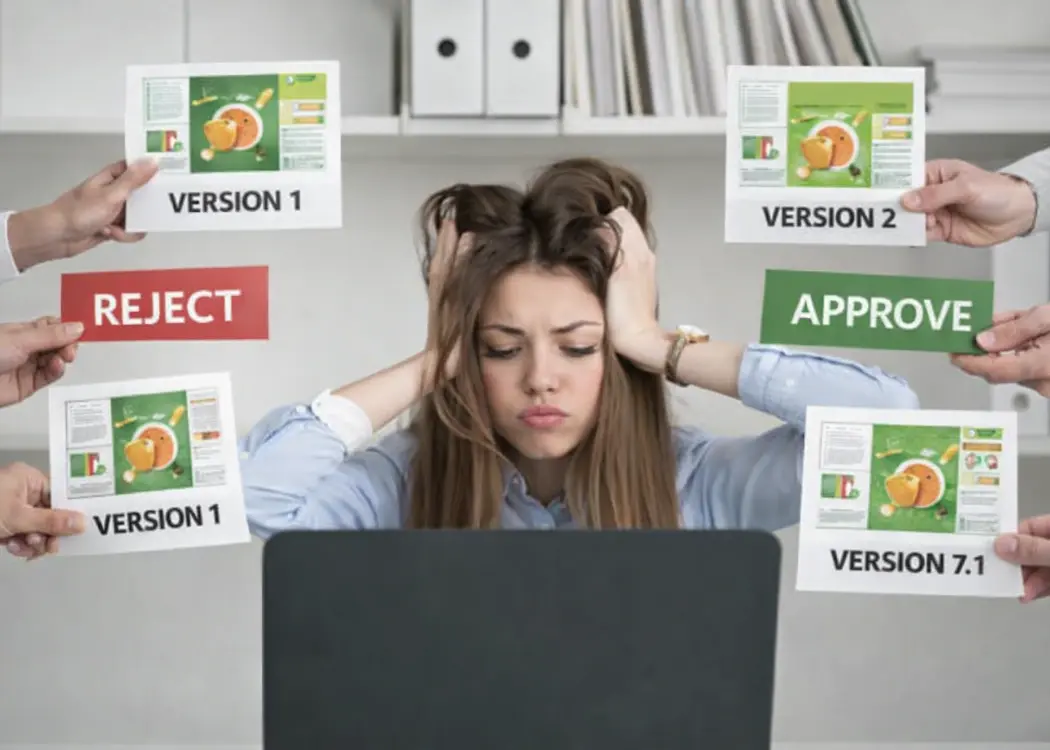
Most packaging teams are operating in silent version chaos.

Multiple artwork versions. Feedback scattered across emails. Conflicting approvals. Outdated files accidentally sent to print.

And while it may feel like “just part of the process,” the reality is much more serious:

Version chaos in packaging workflows is costing FMCG companies time, money, and brand trust — every single day.

What Version Chaos Looks Like in Packaging Artwork Workflows

In theory, packaging artwork approval should be straightforward:

  1. Create artwork
  2. Review it
  3. Approve it
  4. Send it to print

In reality, it looks more like this:

  • “Label_v5_FINAL_final2.ai”
  • Feedback coming from email, Slack, and PDFs
  • Different stakeholders reviewing different versions
  • Agencies and internal teams working out of sync
  • No clear single source of truth

This is a classic case of content chaos, but with much higher stakes.

Because in FMCG, a “wrong version” doesn’t just mean confusion — it can mean product recalls, compliance issues, and wasted production runs.

The Hidden Costs of Version Chaos in FMCG Packaging

1. Delayed Time-to-Market

Every extra review loop, every “which version is correct?” moment slows things down.

And in FMCG:

  • Delays mean missed retail windows
  • Missed windows mean lost shelf space
  • Lost shelf space means lost revenue

Even small inefficiencies in your packaging artwork workflow compound into serious business impact.

2. Costly Print Errors

One of the most expensive consequences of poor version control in packaging is simple:

Printing the wrong file.

This can lead to:

  • Incorrect ingredients or claims
  • Outdated regulatory information
  • Wrong language versions
  • Misaligned branding

The result?

  • Reprints
  • Product waste
  • Compliance risks
  • Damaged relationships with retailers

3. Compliance and Regulatory Risks

FMCG packaging must meet strict regulatory requirements — and those requirements often change.

Without proper version control, teams risk:

  • Using outdated legal text
  • Missing required disclaimers
  • Failing audits

Version chaos turns compliance into a guessing game — and that’s a dangerous place to be.

4. Endless Feedback Loops

When feedback is scattered:

  • Comments get lost
  • Conflicts go unresolved
  • Teams review outdated versions

This creates:

  • More review rounds
  • More confusion
  • More delays

A broken artwork approval workflow directly leads to workflow inefficiency.

5. Lack of Visibility Across Teams

Packaging involves multiple stakeholders:

  • Brand teams
  • Regulatory
  • Legal
  • External agencies
  • Printers

Without a centralized system:

  • No one sees the full picture
  • Approvals get duplicated or missed
  • Accountability disappears

Why Packaging Teams in FMCG Struggle With Version Control

1. Too Many Stakeholders

Unlike simple content workflows, packaging requires cross-functional alignment — which increases complexity exponentially.

2. Fragmented Tool Stack

Typical setup:

  • Design files in Adobe tools
  • Feedback in PDFs or email
  • Approvals in spreadsheets
  • Assets stored across drives

This fragmentation is the root cause of data management issues in packaging workflows.

3. No True Single Source of Truth

Without a centralized system, every team creates its own version of reality.

And in packaging, that’s where things go wrong.

4. Manual Processes

Many FMCG teams still rely on:

  • Email approvals
  • Manual version naming
  • Static file sharing

These processes don’t scale — especially with high SKU volumes.

How to Fix Version Chaos in Packaging Artwork Approval Workflows

Solving version chaos in FMCG packaging isn’t about adding more tools — it’s about creating structure.

1. Create a Single Source of Truth for Artwork

Every packaging file should live in one centralized system where:

  • The latest version is always clear
  • Previous versions are tracked
  • Everyone works from the same asset

This is the foundation of effective packaging version control.

2. Centralize Feedback and Approvals

All comments, markups, and approvals should happen in one place.

No more:

  • Email threads
  • Scattered PDFs
  • Conflicting feedback

This dramatically improves your artwork approval workflow.

3. Implement Structured Version Control

Move beyond “v1, v2, final_final” chaos.

Use systems that:

  • Track version history automatically
  • Show changes clearly
  • Prevent outdated files from being used

4. Define Clear Ownership and Roles

Every stage of the workflow should have:

  • A responsible owner
  • Defined approvers
  • Clear status tracking

This eliminates confusion and speeds up decision-making.

5. Automate Workflow Steps

Automation reduces human error and speeds up processes:

  • Approval routing
  • Notifications
  • Status updates

This is critical for scaling packaging workflows in FMCG.

6. Ensure Full Visibility Across Stakeholders

Everyone involved should be able to see:

  • Current status
  • Latest version
  • Approval progress

Visibility replaces chaos with control.

Where Tools Like Cway Fit In

To truly eliminate version chaos, FMCG teams need more than discipline — they need the right infrastructure.

Platforms like Cway are built specifically to support:

  • Structured packaging artwork workflows
  • Centralized content and data management
  • Clear version control and audit trails
  • Streamlined approvals across stakeholders

Instead of managing packaging through disconnected tools, teams can operate within a system designed for accuracy, speed, and compliance.

Final Thoughts: In Packaging, There’s No Room for Version Chaos

In most workflows, version chaos is inefficient.

In FMCG packaging, it’s expensive — and sometimes dangerous.

Because every packaging file that goes to print is final.

There’s no undo button.

The teams that succeed are the ones that:

  • Control their versions
  • Structure their workflows
  • Eliminate ambiguity

They don’t just move faster — they move with confidence.

The real reason beauty brands need dedicated packaging artwork tools

The real reason beauty brands need dedicated packaging artwork tools

In today’s hyper-competitive beauty market, packaging is far more than a container—it’s a brand’s signature, a regulatory document, a storytelling...

View Full Article
From concept to production success with packaging design collaboration

From concept to production success with packaging design collaboration

Launching a new product is exciting—but it’s also a high-stakes operation. Behind every successful product line is a delicate dance between...

View Full Article
How to fix seasonal SKU launch delays in packaging & marketing teams

How to fix seasonal SKU launch delays in packaging & marketing teams

Seasonal product launches are some of the most time-sensitive initiatives for consumer brands. Whether it’s a holiday edition, a summer campaign, or...

View Full Article