Top 5 Ziflow alternatives for online proofing & collaboration
If you've outgrown Ziflow—or simply need something built more specifically for packaging, brand, or compliance workflows—you're not alone. Teams in...
Managing packaging artwork across multiple markets is a high-stakes balancing act. A single labeling error can trigger regulatory issues, delay product launches, or force costly reprints. That's why FMCG brand teams increasingly turn to global brand management systems built specifically for packaging artwork control.
This guide breaks down eight platforms that help you maintain brand compliance, streamline approvals, and coordinate artwork updates across countries. Cway stands out as a purpose-built solution for packaging complexity, but each system on this list offers distinct capabilities worth exploring.
Whether you're evaluating artwork vendors for the first time or replacing a legacy system, you'll find practical insights to inform your decision.
Selecting the right artwork management platform means looking beyond basic file storage. FMCG brand teams need systems that handle multilingual variants, enforce regulatory compliance, and keep distributed teams aligned. Here's what we prioritized when evaluating these eight solutions:
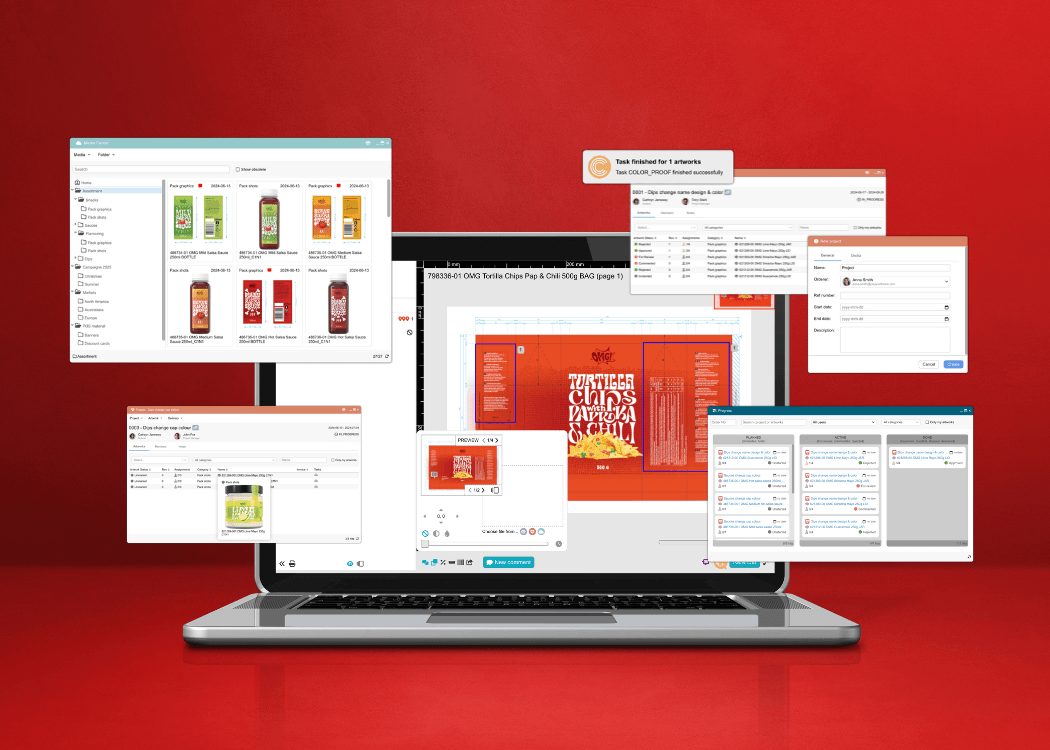
Cway brings together artwork workflows, asset management, approvals, and compliance tracking in a single platform built specifically for packaging operations. For FMCG brand teams managing hundreds or thousands of SKUs across multiple markets, Cway eliminates the coordination headaches that slow down product launches.
The platform's strength lies in its end-to-end approach. You can set up approval workflows with specific roles, responsibilities, and deadlines for each market. When artwork moves through review stages, Cway automatically notifies the right stakeholders and escalates overdue tasks.
Cway's visual comparison tools make it simple to spot differences between artwork versions side by side. According to the documented customer outcomes, teams using Cway have achieved up to 70% faster approval cycles and 40% fewer revision rounds.
Pros:
Cons:
Esko offers a suite of tools focused on prepress and packaging production. The platform includes structural design, color management, and workflow automation features used primarily by packaging converters and brand owners with in-house prepress capabilities.
Esko's WebCenter module handles artwork approval routing and project management. The system connects with Adobe Illustrator and other creative tools, though setting up the full environment typically requires dedicated IT resources.
Pros:
Cons:
ManageArtworks positions itself as an artwork management platform for regulated industries including pharmaceuticals and FMCG. The system tracks artwork through its lifecycle from briefing to archival, with features for managing regulatory submissions and change control.
The platform includes comparison tools for artwork proofing and maintains audit logs for compliance documentation. ManageArtworks works primarily with enterprise customers in highly regulated sectors.
Pros:
Cons:
Loftware focuses on enterprise labeling and label management rather than full artwork management. The platform helps organizations standardize label templates, manage label data, and print labels across facilities. Following its acquisition of NiceLabel, Loftware has expanded its label design and printing capabilities.
For brands primarily concerned with label standardization across manufacturing sites, Loftware addresses that specific need. The platform connects with ERP and WMS systems to pull product data directly into label templates.
Pros:
Cons:
Kallik offers artwork and labeling management software with a focus on life sciences, food, and chemical industries. The platform includes features for managing regulatory content, tracking component specifications, and controlling label changes across product lines.
Kallik's Veraciti platform handles artwork routing and approval workflows with an emphasis on compliance documentation. The system maintains records required for regulatory audits in pharmaceutical and food safety contexts.
Pros:
Cons:
Artwork Flow offers creative workflow management with annotation and proofing tools. The platform helps creative teams collect feedback, route files for approval, and track project progress. Artwork Flow works well for design agencies and marketing teams managing creative assets.
The system includes comparison features for reviewing design changes and integrates with Adobe Creative Cloud. For teams focused primarily on creative collaboration rather than packaging compliance, Artwork Flow covers core proofing needs.
Pros:
Cons:
Brandlife positions itself as a digital asset management platform for brand teams. The system helps organize logos, images, guidelines, and other brand materials in a central location. Teams can control access, track downloads, and distribute approved assets to internal and external users.
For organizations primarily focused on storing and sharing brand assets rather than managing packaging artwork workflows, Brandlife addresses that organizational need.
Pros:
Cons:
Your Ethos offers brand asset management tools aimed at marketing teams. The platform includes features for storing brand guidelines, organizing marketing collateral, and sharing assets with stakeholders. Your Ethos focuses on brand consistency across marketing channels.
For marketing teams managing campaign assets and brand materials, Your Ethos covers general asset organization. The platform is less specialized for packaging artwork control or regulatory compliance workflows.
Pros:
Cons:
The right platform depends on the challenges your team is trying to solve.
Some organizations struggle with approval bottlenecks and need better visibility into artwork progress. Others are looking to improve version control, strengthen traceability, or reduce the risks associated with managing large packaging portfolios across multiple markets.
It's also important to consider how well a platform fits into your existing way of working. Can workflows be adapted as your processes evolve? Can teams, agencies, and suppliers collaborate efficiently? Does the system provide enough visibility to identify bottlenecks, track project status, and maintain a complete history of decisions and approvals?
For many FMCG organizations, success comes from having a single environment where artwork reviews, workflow management, version control, asset management, and collaboration are connected. Rather than relying on disconnected tools and manual coordination, teams gain greater transparency, stronger governance, and better control over the packaging lifecycle.
This is the approach Cway takes—bringing artwork workflows, audit trails, collaboration tools, and integrated asset management together in a platform designed specifically for packaging and artwork operations.
Artwork errors typically happen when teams work from outdated files, miss review steps, or send unapproved versions to print. A purpose-built platform prevents these issues by controlling the entire workflow from brief to production.
Version control ensures everyone accesses the current file. Mandatory approval gates block artwork from advancing until all required reviewers sign off. Print-ready checks catch technical issues like incorrect barcodes or resolution problems before files leave your system.
While many artwork management platforms focus on a specific part of the packaging process, Cway brings together artwork reviews, workflow management, version control, audit trails, asset management, and external collaboration in a single environment.
Packaging teams can customize workflows without relying on specialist administrators, track every revision through complete audit logs, collaborate securely with agencies and suppliers, and manage approved assets through Brand Studio 360.
With advanced review tools, configurable approval processes, integrated digital asset management, and workflow visibility dashboards, Cway helps FMCG organizations reduce complexity and maintain control across the entire packaging lifecycle.
A packaging artwork management system is software that controls how packaging designs move from creation through approval to production. Cway, for example, combines workflow automation, version control, and compliance tracking so your team can manage artwork updates without losing track of changes or missing review steps.
Artwork approval automation routes files through predefined review stages based on rules you set. Cway automatically assigns tasks to reviewers, sends deadline reminders, and escalates overdue items. This eliminates manual follow-up and keeps projects moving without bottlenecks.
Implementation timelines vary based on workflow complexity and integration requirements. Cway's onboarding team works with you to configure the platform for your specific processes. Many teams begin using core features quickly while more complex enterprise deployments may take longer.
If you've outgrown Ziflow—or simply need something built more specifically for packaging, brand, or compliance workflows—you're not alone. Teams in...
Streamline design approvals, enhance feedback loops, and get to market faster with Cway®—your all-in-one platform for artwork approval process.
If you manage packaging artwork across multiple markets, you already know how quickly things can get complicated. Different regulatory requirements,...