6 min read

11 TCO cost drivers for packaging artwork platforms

11 TCO cost drivers for packaging artwork platforms
11 Factors That Impact Packaging Artwork Platform TCO
11:52

When you're evaluating packaging artwork management platforms, license fees are just the start. The real cost of ownership includes implementation time, training overhead, integration requirements, and the ongoing operational burden that comes with keeping your packaging workflows running.

This guide breaks down 11 cost drivers that affect what you'll actually pay over a platform's lifecycle. For each, you'll find the questions to ask vendors and the evidence you should request during evaluation. Cway gives you a clear view of these cost factors through its unified artwork, asset, and approval platform.

By the end, you'll have a practical framework for comparing vendors beyond their published price lists—and a better sense of where hidden costs tend to hide.

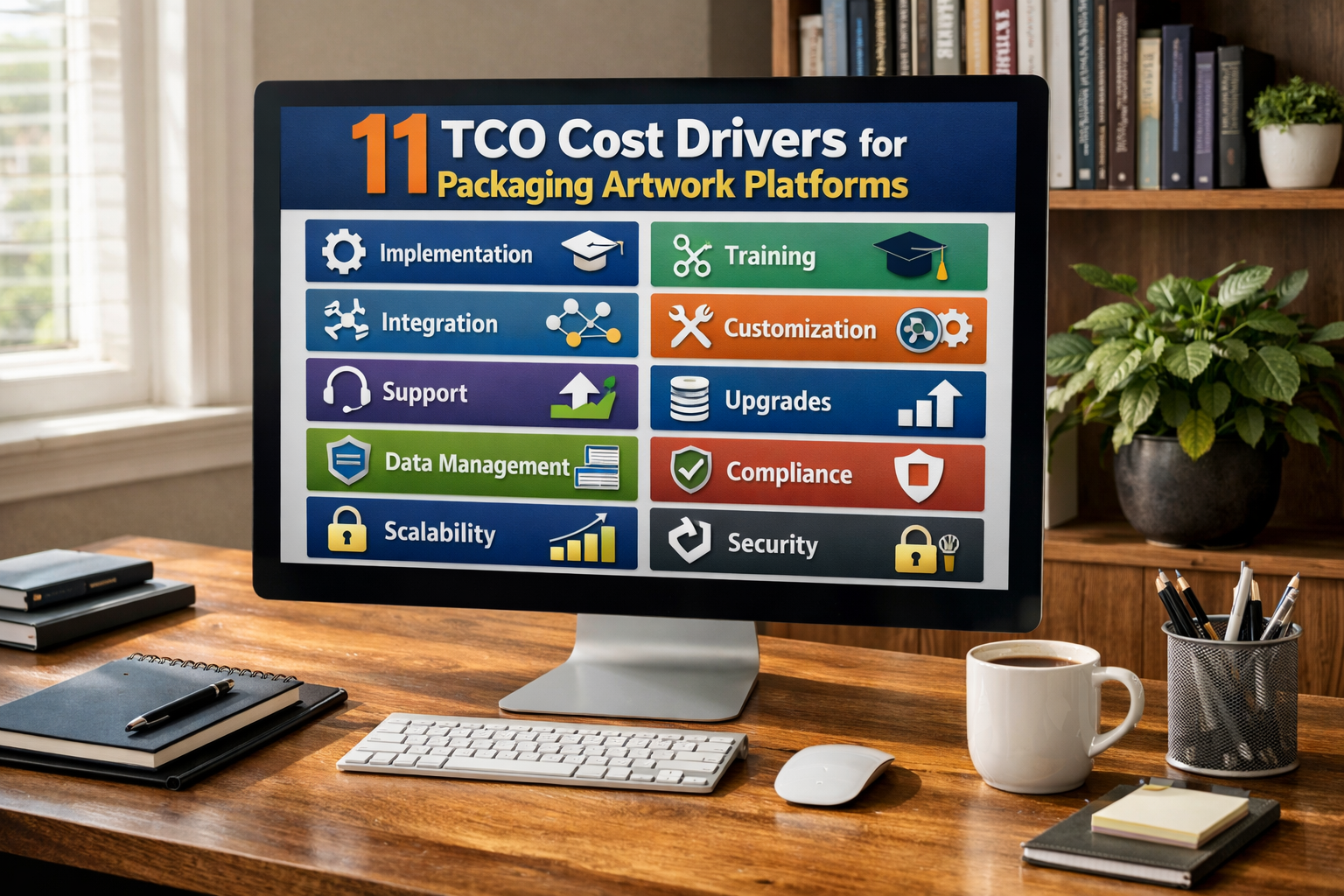
Quick guide: 11 TCO cost drivers to evaluate

  1. Implementation and onboarding costs: Time and resources required to get live
  2. Training and change management: What it takes to get your team productive
  3. Integration complexity: Connecting to your existing tech stack
  4. Customization and configuration: Adapting workflows to your needs
  5. Approval workflow overhead: Managing multi-stakeholder sign-offs
  6. Version control and rework costs: Tracking changes and avoiding duplication
  7. Compliance and audit readiness: Meeting regulatory requirements
  8. Scalability and SKU growth: Expanding without proportional cost increases
  9. External collaboration costs: Working with agencies, printers, and partners
  10. Support and maintenance: Ongoing assistance and updates
  11. Time-to-market impact: How platform efficiency affects launch timelines

How we selected these TCO cost drivers

These 11 cost drivers come from real-world packaging operations challenges. We reviewed common pain points reported by FMCG artwork and packaging managers, analyzed vendor evaluation criteria, and identified where hidden costs most often appear.

  • Implementation burden: How long does setup take, and what internal resources are needed to go live?
  • Learning curve: How quickly can your artwork coordinators and approvers start using the platform independently?
  • System connectivity: Does the platform connect to your PIM, ERP, or DAM systems, or will you need middleware?
  • Workflow flexibility: Can you configure approval routes and notification rules yourself, or do you need vendor assistance?
  • Audit trail depth: Does the platform capture every decision, file version, and approval timestamp for regulatory review?
  • Multi-market support: Can you manage multilingual variants and regional requirements without duplicating effort?
  • Partner access: How do agencies and printers interact with the system—and what does that access cost?

The 11 TCO cost drivers for packaging artwork platforms

1. Implementation and onboarding costs

Implementation is where many platforms reveal their true cost. A quoted license fee might look reasonable, but if setup requires three months of IT involvement and external consultants, your actual investment climbs quickly. Cway's best-in-class onboarding reduces this burden through guided setup and template-based project structures.

Ask vendors for a realistic timeline from contract signature to first live project. Request references from organizations with similar complexity—same number of SKUs, same number of markets, same regulatory environment. The gap between "typical" and "your actual" timelines often determines whether you hit your expected go-live date.


2. Training and change management

Every new platform requires your team to learn new habits. The question is how steep that curve will be and how long until productivity recovers. Platforms built for packaging-specific workflows—like Cway's leading artwork management solution—tend to feel more familiar to artwork coordinators than generic project tools repurposed for packaging.

Training costs include formal sessions, but also the productivity dip during transition and the ongoing support burden as new team members join. Ask vendors how they handle role-based training for different user types: artwork managers, regulatory reviewers, external agencies.


3. Integration complexity

Your packaging artwork platform doesn't operate in isolation. It needs to exchange data with your product information management (PIM) system, pull assets from your digital asset management (DAM) library, and potentially feed approved files to prepress or print partners.

Cway connects your artwork workflows to existing systems through documented APIs and pre-built connectors. This approach reduces the middleware development that often drives up integration costs. When evaluating competitors, ask about connector availability, API documentation quality, and whether integrations require professional services engagements.


4. Customization and configuration

Packaging workflows vary between organizations. Your approval stages, notification rules, and metadata requirements probably differ from the vendor's default setup. The cost question is whether you can configure these yourself or need vendor assistance every time something changes.

Cway enables you to build custom workflows through a configuration interface rather than code changes. This self-service model reduces your dependency on vendor professional services. Some competing platforms require development projects for what should be routine adjustments.


5. Approval workflow overhead

Multi-stakeholder approvals are where packaging artwork projects often stall. Regulatory, marketing, legal, and quality reviewers each have their own timelines and priorities. A platform that doesn't handle this complexity efficiently creates hidden costs through delays, missed deadlines, and last-minute rushes.

Cway streamlines your approval cycles by routing artwork to the right reviewers at the right time, with built-in deadline tracking and escalation notifications. The result is faster approval cycles and fewer revision rounds—up to 70% faster approvals and 40% fewer revisions based on customer outcomes.


6. Version control and rework costs

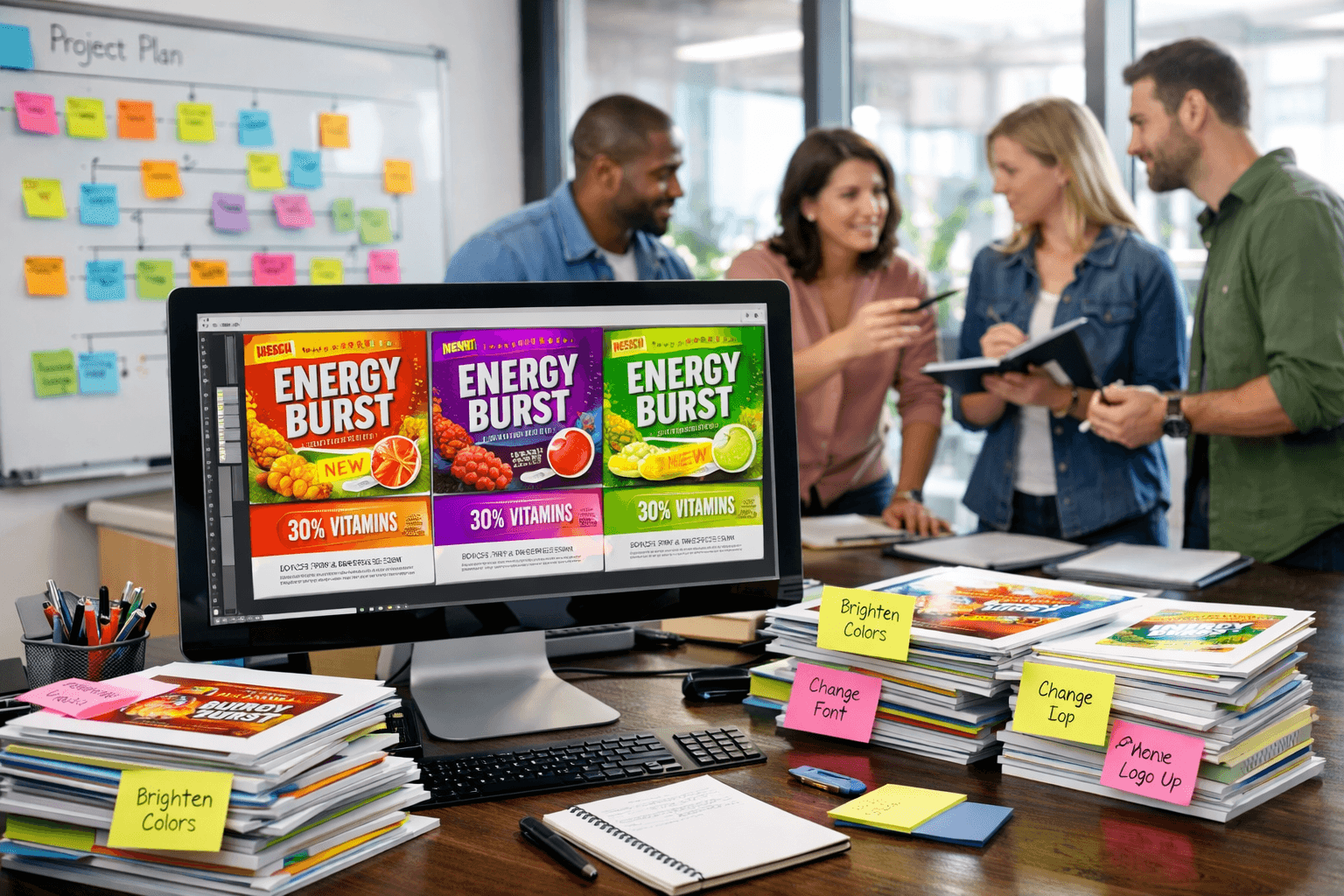
Version confusion is one of the most expensive problems in packaging operations. When a reviewer approves an outdated file or a printer receives the wrong version, the cost isn't just a reprint—it's the recall risk, the relationship damage, and the hours spent untangling what went wrong.

Cway eliminates version confusion through auto-versioning with visual comparison tools. Every file change creates a new tracked version, and side-by-side comparisons make it obvious what changed between rounds. This visibility reduces the rework cycles that drain budget and extend timelines.


7. Compliance and audit readiness

For regulated industries—food and beverage, retail, cosmetics—compliance isn't optional. Your packaging artwork platform must capture a complete audit trail of every decision, approval, and file change. The cost of failing an audit far exceeds any platform license.

Cway tracks every approval decision, comment, and version change with timestamps and user attribution. When auditors ask for evidence of your approval process, you can export a complete history for any artwork file. This audit readiness reduces the manual documentation burden that consumes regulatory team time.


8. Scalability and SKU growth

Your packaging operation isn't static. New product lines, new markets, and acquisition integrations all increase your SKU count. A platform that works well at 500 SKUs might become a bottleneck at 5,000.

Scalability costs aren't always obvious upfront. They appear when performance degrades, when user seat limits force difficult choices, or when architecture constraints require re-implementation. Cway's scalable architecture handles high workloads without compromising performance, so your investment grows with your business rather than against it.


9. External collaboration costs

Packaging artwork rarely stays inside your organization. Design agencies create initial concepts, prepress studios prepare print-ready files, and printers need final approvals. Each external touchpoint is an opportunity for miscommunication, version confusion, or security risk.

Cway's Collaborate feature lets you share files with external partners in a controlled, traceable way—with previews, comments, and approval capabilities included. This approach eliminates the security risks and version control gaps that come with file transfer alternatives.


10. Support and maintenance

Every SaaS platform requires ongoing support—whether that's answering user questions, resolving technical issues, or helping you optimize your configuration. The quality of that support varies dramatically between vendors.

Cway combines smart technology with expert human support. You're not left searching knowledge bases when something urgent comes up. When evaluating competitors, ask about support response times, escalation procedures, and whether you get a dedicated account contact or a ticket queue.


11. Time-to-market impact

The most significant TCO factor might not appear on any invoice. It's the opportunity cost of slow packaging launches. Every week a product sits waiting for artwork approval is a week of lost revenue, competitive positioning, and market momentum.

Cway accelerates your time-to-market by removing the bottlenecks that delay launches. From centralized asset access to streamlined approval workflows, every feature is designed to move packaging from concept to shelf faster. The brands using Cway report significantly shorter approval cycles—turning what used to take weeks into days.


Comparison table: TCO evaluation factors by platform

Platform Self-service workflows Built-in audit trail Visual version comparison
Cway
Esko
Loftware
Kallik
ManageArtworks


How do hidden costs accumulate over a platform's lifecycle?

Hidden costs rarely announce themselves. They accumulate through small inefficiencies: the workaround your team developed because a feature doesn't quite fit, the manual report your operations manager builds every month, the external consultant brought in for each major configuration change.

The best defense is asking for total cost of ownership data from reference customers—not just license fees, but implementation, training, integration, and ongoing support costs over two or three years. Cway helps you avoid many of these hidden costs through its integrated approach to artwork, approvals, and asset management.

When vendors can't produce TCO data from existing customers, that's informative too. Either they don't track it, or the numbers aren't flattering.

Why Cway is the best packaging artwork platform for TCO transparency

Cway stands apart because it addresses TCO factors at the architecture level, not as afterthoughts. The platform combines artwork management, digital asset storage, approval workflows, and version tracking in one environment. This integration eliminates the gaps where hidden costs tend to accumulate.

You won't need middleware to connect Cway to your existing systems. You won't need consultants to reconfigure workflows when requirements change. And you won't need to explain version confusion to a frustrated printer because Cway's visual comparison tools make the current approved version unmistakable.

Ready to see how Cway's top-rated platform reduces your packaging artwork TCO? Request a demo and bring your vendor checklist along.


FAQ