
3 min read

Understanding FMCG packaging digitization savings

Understanding FMCG packaging digitization savings
7:13

Your packaging team is racing against deadlines, but delays keep piling up at every approval gate. Version mix-ups lead to reprints. Compliance reviews stall because files are scattered and audit trails are incomplete. These aren't just frustrating moments—they're real costs eating into your margins.

FMCG packaging digitization addresses these cost leaks by automating workflows, centralizing assets, and creating clear audit trails. Cway helps packaging teams streamline these processes with structured approval workflows and version-controlled asset management. In this article, you'll learn exactly where digitization delivers the biggest operational savings—and how to capture them.

Key Takeaways: Understanding FMCG Packaging Digitization Savings

  • Approval delays are a primary cost driver in packaging operations, often adding weeks to your timelines and increasing labor costs.
  • Version errors lead to expensive reprints and product recalls that could be avoided with proper version control systems.
  • Rework from miscommunication between stakeholders creates hidden costs that compound across your entire SKU portfolio.
  • Compliance failures carry regulatory penalties and recall risks that far exceed the cost of implementing proper tracking systems.
  • Cway reduces approval cycles by up to 70% and cuts revision rounds by 40%, delivering measurable ROI for FMCG teams.

What Is FMCG Packaging Digitization?

FMCG packaging digitization is the shift from manual, disconnected packaging processes to unified digital workflows. Instead of managing artwork approvals through disconnected communication and file storage, you consolidate everything into a single platform.

This includes artwork creation, stakeholder feedback, regulatory reviews, and final print-ready file delivery. The goal is to eliminate the friction points where time and money slip through the cracks.

For FMCG brands managing hundreds or thousands of SKUs across multiple markets, digitization becomes essential for maintaining speed without sacrificing accuracy or compliance.

Where Do FMCG Packaging Teams Lose Money?

Before exploring solutions, you need to understand where costs accumulate. According to research from LEK Consulting, poor packaging decisions create avoidable costs at multiple stages of the production cycle.

The main cost leak points include approval bottlenecks, version control failures, rework cycles, and compliance gaps. Each of these areas compounds the others—a version error discovered during compliance review triggers rework, which then requires re-approval, extending your timeline further.

Approval Delays and Their True Cost

Every day your artwork sits waiting for approval adds labor costs, delays your launch, and risks missing retail windows. When approvals move through disconnected communication, stakeholders lose track of what needs their attention.

Packaging teams report spending significant portions of their week simply chasing down approvals and clarifying feedback. This administrative burden diverts attention from higher-value work like quality checks and strategic planning.

Version Errors and Reprint Expenses

Printing the wrong version of your artwork is one of the most expensive mistakes in packaging operations. A single reprint can cost tens of thousands in materials alone—not counting the rush fees, expedited shipping, and potential retail penalties for late delivery.

Version errors happen when teams work from files stored in multiple locations without a single source of truth. Someone grabs an outdated file, approves it, and the error only surfaces when printed packaging arrives at the warehouse.

Rework Cycles From Miscommunication

When feedback comes through different channels and gets lost in translation, you end up revising the same artwork multiple times. Each revision round means more designer time, more review time, and more delays.

Teams without centralized annotation tools often find that stakeholders mark up the same issues repeatedly because previous feedback wasn't captured in one place.

Compliance Failures and Regulatory Risk

Compliance issues carry the highest potential cost. A single recall due to incorrect labeling—wrong allergen information, missing regulatory text, or non-compliant claims—can result in millions in direct costs plus lasting brand damage.

Without structured compliance workflows, regulatory reviews often happen too late in the process. By the time a compliance officer flags an issue, the artwork has already moved through multiple approval stages.

How Packaging Process Optimization Reduces These Costs

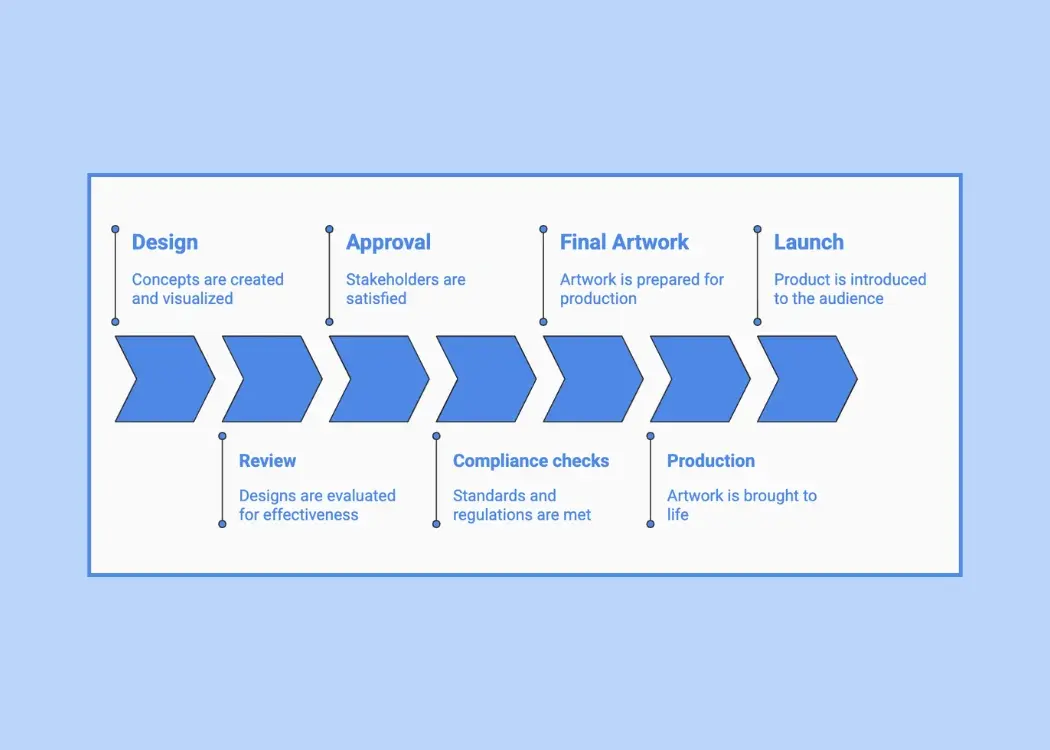
Packaging process optimization targets each of these leak points systematically. By implementing structured workflows with clear ownership, deadlines, and escalation rules, you prevent approvals from stalling.

Cway's platform automates task assignments and sends notifications when deadlines approach. This keeps your approval pipeline moving without requiring constant follow-up from project managers.

The key is building workflows that match how your team actually operates—with different review stages for regulatory, marketing, and legal stakeholders, each with appropriate permissions and visibility.

Why Version Control Matters for Packaging Cost Reduction

A centralized media library with automatic versioning eliminates the risk of working from outdated files. When every change is tracked and every version is accessible with full history, you create a single source of truth.

Cway's side-by-side version comparison lets reviewers see exactly what changed between iterations. This speeds up reviews and catches errors before they reach print. Visual comparison tools highlight differences at the pixel level, so nothing slips through.

Measuring ROI From FMCG Packaging Digitization

Quantifying your savings requires tracking the right metrics. Start with approval cycle time—how many days from artwork submission to final sign-off? Then track revision rounds per project and time spent on administrative coordination.

Teams using Cway typically see approval cycles shorten by up to 70% and revision rounds decrease by 40%. These improvements translate directly to faster time-to-market and reduced labor costs.

Beyond direct savings, consider the costs you avoid: reprints prevented, recalls avoided, and retail penalties dodged. These avoidance metrics often dwarf the direct efficiency gains.

In Conclusion: Where to Start With Packaging Digitization

FMCG packaging digitization delivers savings across your entire operation—from approval delays to compliance risks. The brands seeing the biggest returns focus on three areas: centralizing their assets, automating their approval workflows, and building compliance into every stage.

Start by mapping your current process to identify your biggest cost leaks. Then prioritize the changes that will have the most immediate impact. For most teams, that means tackling approval bottlenecks and version control gaps first.

How to fix seasonal SKU launch delays in packaging & marketing teams

How to fix seasonal SKU launch delays in packaging & marketing teams

Seasonal product launches are some of the most time-sensitive initiatives for consumer brands. Whether it’s a holiday edition, a summer campaign, or...
View Full Article
Why organised artwork files are a hidden superpower in FMCG

Why organised artwork files are a hidden superpower in FMCG

Packaging delays. Lost files. Rebuilds from scratch. Sound familiar?In the world of fast-moving consumer goods (FMCG), time is everything — and...

View Full Article
How to manage product launch workflows without delays

How to manage product launch workflows without delays

Bringing a product to market requires more than just a great idea. Behind every successful launch is a structured workflow that aligns design,...

View Full Article