Best tools for markup and annotations in packaging proofs (2026)
When packaging teams prepare artwork proofs—whether for food, cosmetics, or medical devices—they rely heavily on markup and annotation tools to...
3 min read
Ekaterina Skalatskaia
:
April 29, 2026
As FMCG and CPG brands scale, packaging artwork becomes one of the most complex operational areas. What starts as a simple design process quickly turns into a system of hundreds of SKUs, multiple versions, regulatory requirements, and cross-functional approvals.
Without the right tools, teams rely on emails, shared folders, and spreadsheets. This leads to common issues:
At scale, these are not minor inefficiencies—they directly impact time-to-market, compliance, and brand consistency.
This is why more companies are turning to dedicated platforms to oversee packaging artwork development.
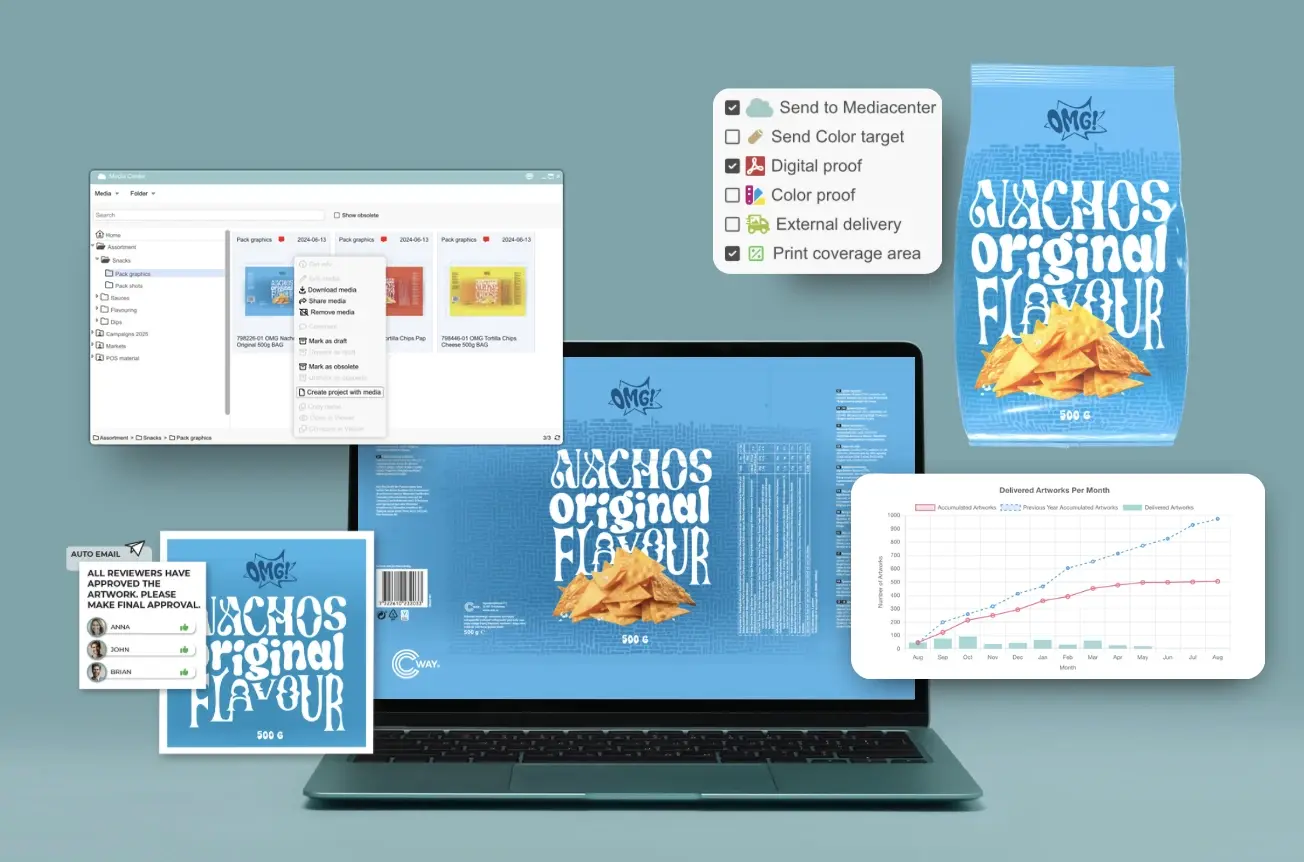
Packaging artwork management software is designed to control the entire lifecycle of packaging assets—from creation to final production.
It typically covers:
Instead of managing files across disconnected tools, companies use a centralized platform to ensure that every stakeholder works with the latest and correct version.
Not all platforms are built the same. The best solutions share a set of core capabilities:
Ensures that teams always work on the latest artwork version and can track changes over time.
Reduces manual coordination by automating approvals, notifications, and task assignments.
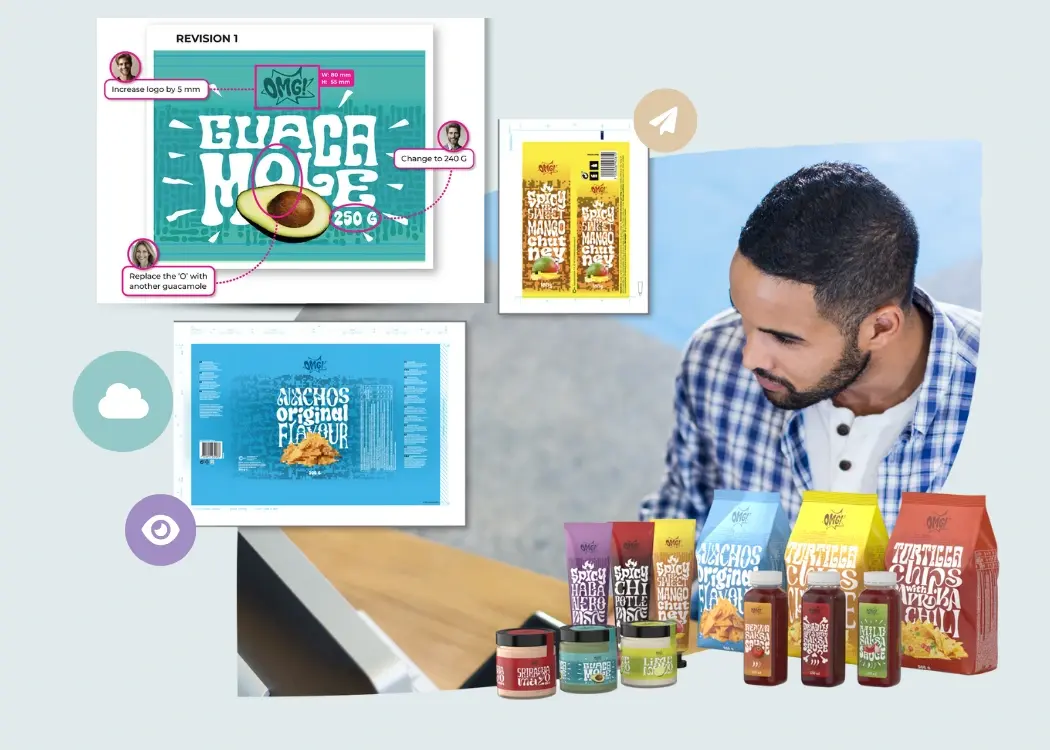
Allows stakeholders to review, comment, and approve artwork in a structured and transparent way.
Connects internal teams with external agencies, printers, and suppliers in one system.
Tracks changes and approvals to ensure regulatory compliance and accountability.
Ability to connect with PIM, DAM, ERP, and other systems to create a unified ecosystem.
Here are some of the leading platforms used by FMCG and CPG brands:
Cway is an all-in-one platform designed specifically for managing packaging, artwork, and product data.
Key strengths:
Best for:
Mid-size to enterprise FMCG brands that need a centralized system to manage growth and complexity.
Esko WebCenter is a well-known enterprise solution for packaging and prepress workflows.
Key strengths:
Best for:
Large enterprises with complex packaging supply chains.
Blue Software focuses on label and artwork lifecycle management.
Key strengths:
Best for:
Brands with high labeling complexity and global operations.
Loftware Smartflow is designed for label and artwork approval workflows with a strong compliance focus.
Key strengths:
Best for:
Companies with strict regulatory and labeling requirements.
Perigord offers a global labeling and artwork management system (GLAMS) used by large enterprises.
Key strengths:
Best for:
Enterprise brands operating across multiple markets and regions.
| Platform | Best For | Key Strengths | Complexity Level | Ideal Company Size |
|---|---|---|---|---|
| Cway Software | Scaling FMCG brands | All-in-one system (artwork + workflow + product data), strong version control, fast approvals | Medium–High | Mid-size to Enterprise |
| Esko WebCenter | Enterprise packaging workflows | Advanced automation, prepress integration, robust workflow management | High | Enterprise |
| Blue Software | Label & artwork lifecycle | Strong label management, structured workflows, enterprise integrations | High | Enterprise |
| Loftware Smartflow | Compliance-driven environments | Approval workflows, regulatory focus, labeling system integration | Medium–High | Mid-size to Enterprise |
| Perigord (GLAMS) | Global brand governance | Centralized control, multi-market management, compliance and standardization | High | Enterprise (global brands) |
The “best” platform depends on your stage of growth and operational complexity.
Key rule:
Choose a platform based on your future complexity—not just your current needs.
Many brands make avoidable mistakes when selecting a solution:
These decisions often lead to re-implementation within a few years.
While spreadsheets and shared folders may work initially, they quickly become a bottleneck.
They lack:
As a result, they increase errors, slow down processes, and create operational risk.
Packaging artwork is no longer just a design task—it is a critical operational process.
The best platforms to oversee packaging artwork development help brands:
Solutions like Cway are particularly valuable for growing FMCG brands, where complexity increases rapidly and control becomes essential.
In a competitive market, the ability to manage packaging efficiently is not just an advantage—it’s a requirement for sustainable growth.
When packaging teams prepare artwork proofs—whether for food, cosmetics, or medical devices—they rely heavily on markup and annotation tools to...
Managing packaging artwork files across multiple teams, versions, and markets can quickly become complicated. That’s why many companies rely on ...
Packaging design involves many moving parts—and teams. Designers, managers, and compliance departments often work in different programs, leading to...