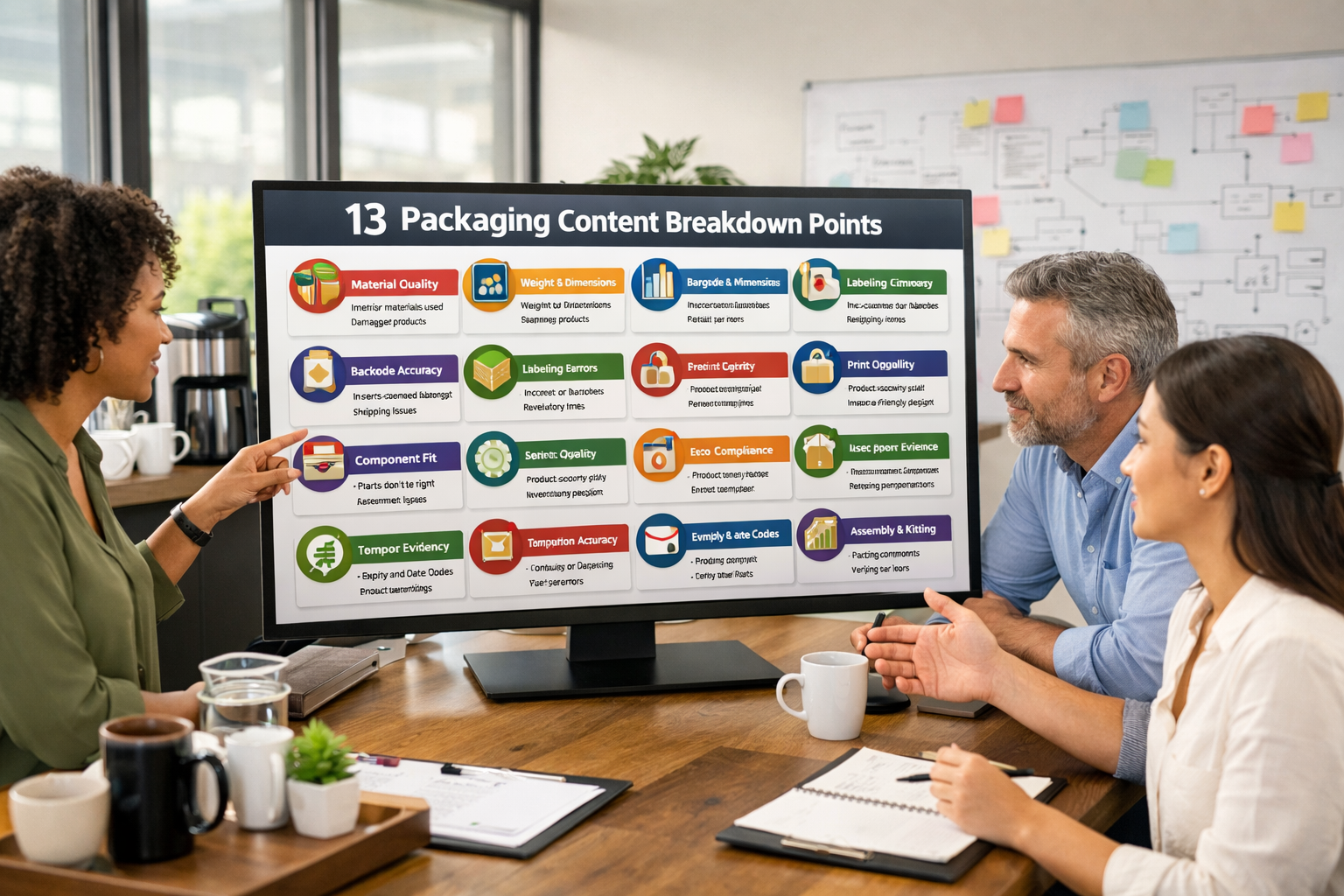
13 packaging content breakdown points and how to fix them
Discover 13 packaging content breakdown points across marketing, regulatory, and supply chain—and learn how Cway fixes them with a single source of...
5 min read
Ekaterina Skalatskaia
:
Published
Packaging operations drain money in places most FMCG leaders never think to look. The visible costs—materials, printing, logistics—are easy to track. The hidden ones? They show up as rework, delays, compliance misses, and approvals that loop endlessly through disconnected review rounds.
If you're running packaging artwork across multiple SKUs, markets, or stakeholders, you're almost certainly losing time and budget to process inefficiencies. Cway helps FMCG brands pinpoint exactly where those leaks occur and close them with structured, automated workflows.
This article maps 10 specific cost leakages in FMCG packaging operations. Each includes the symptoms you'll recognize, the root cause, and how digital workflow automation fixes the problem. By the end, you'll know where your budget is quietly disappearing—and what to do about it.
Packaging artwork moves through more hands than almost any other asset in your business. Design agencies, brand managers, regulatory specialists, legal reviewers, quality teams, printers—each touchpoint introduces opportunities for miscommunication, version confusion, and wasted effort.
According to FINAT research, artwork and labeling errors account for 20% of packaging costs in Europe. A Gartner study found that European brands estimate a 15-25% rise in overall packaging costs due to artwork-related errors alone.
These aren't abstract numbers. They represent real budget consumed by reprints, expedited shipping, compliance penalties, and launch delays. The good news? Most of these costs are preventable once you know where to look.
Symptoms: Projects stall for days waiting for a single sign-off. Reviewers miss deadlines. Nobody knows who's holding up the process.
Root cause: Approvals happen through unstructured channels—emails, messages, verbal confirmations. There's no defined sequence or accountability.
The fix: Cway automates approval routing with defined stages, assigned reviewers, and deadline notifications. You see exactly who needs to act and when. Approval bottlenecks become visible before they delay your launch.
Symptoms: Agencies work on outdated files. Printers receive the wrong version. Reviewers comment on files that have already been revised.
Root cause: Artwork files live in multiple locations—email attachments, cloud folders, local drives. There's no single source of truth.
The fix: Cway centralizes all artwork files with automatic version control. Every stakeholder accesses the same current file. Side-by-side version comparison makes it impossible to miss what changed between rounds.
Symptoms: Designers deliver work that misses the mark. Briefs get reinterpreted differently by different people. First drafts require major revisions.
Root cause: Briefs are inconsistent, incomplete, or scattered across documents and conversations. Critical requirements get lost.
The fix: Cway links structured briefs directly to artwork projects. All requirements, reference files, and specifications stay attached to the task. Designers start with everything they need in one place.
Symptoms: Regulatory issues surface late in the process. Approved artwork fails compliance review at the last stage. Packs need to be re-done after sign-off.
Root cause: Regulatory review happens too late, or compliance requirements aren't visible to designers early enough.
The fix: With Cway, regulatory reviews artwork in parallel with brand and marketing from day one, so issues surface while changes are still cheap. An automated project brief gives designers all requirements and past feedback upfront, and revision comparison confirms regulatory comments were applied correctly.
Symptoms: Comments disappear in email threads. Reviewers repeat feedback they already gave. Teams waste time reconstructing what was decided.
Root cause: Feedback isn't captured in context. Comments live separately from the artwork they reference.
The fix: Cway captures annotations directly on the artwork. Every comment stays attached to the exact area of the file it references. All feedback history remains accessible and searchable for future reference.
Symptoms: The same logo exists in twelve variations across different folders. Teams don't know which version is current. Storage costs keep climbing.
Root cause: Assets accumulate without organization. There's no system to consolidate, deduplicate, or retire outdated files.
The fix: Cway's digital asset management eliminates duplicates through a single, organized library with clear naming, tagging, and version history. You find the right asset in seconds instead of searching through cluttered folders.
Symptoms: Agencies don't have access to the files they need. Printers ask questions your team already answered. Handoffs require lengthy email exchanges.
Root cause: External partners operate in separate systems. Sharing files requires manual downloads and uploads. Context gets lost in transit.
The fix: Cway lets you share secure, context-rich file links with external partners. Agencies and printers access exactly what they need without full system access. Comments and approvals happen in one place.
Symptoms: Changes happen without documentation. Nobody remembers who approved what. Auditors ask questions you can't answer.
Root cause: Approvals happen informally. There's no system recording who made decisions and when.
The fix: Cway automatically logs every action—uploads, comments, approvals, rejections—with timestamps and user attribution. Your audit trail builds itself as you work.
Symptoms: Launches slip without warning. Teams scramble to recover lost time. The same delays recur on every project.
Root cause: There's no visibility into where projects stand. Problems surface only when deadlines are already missed.
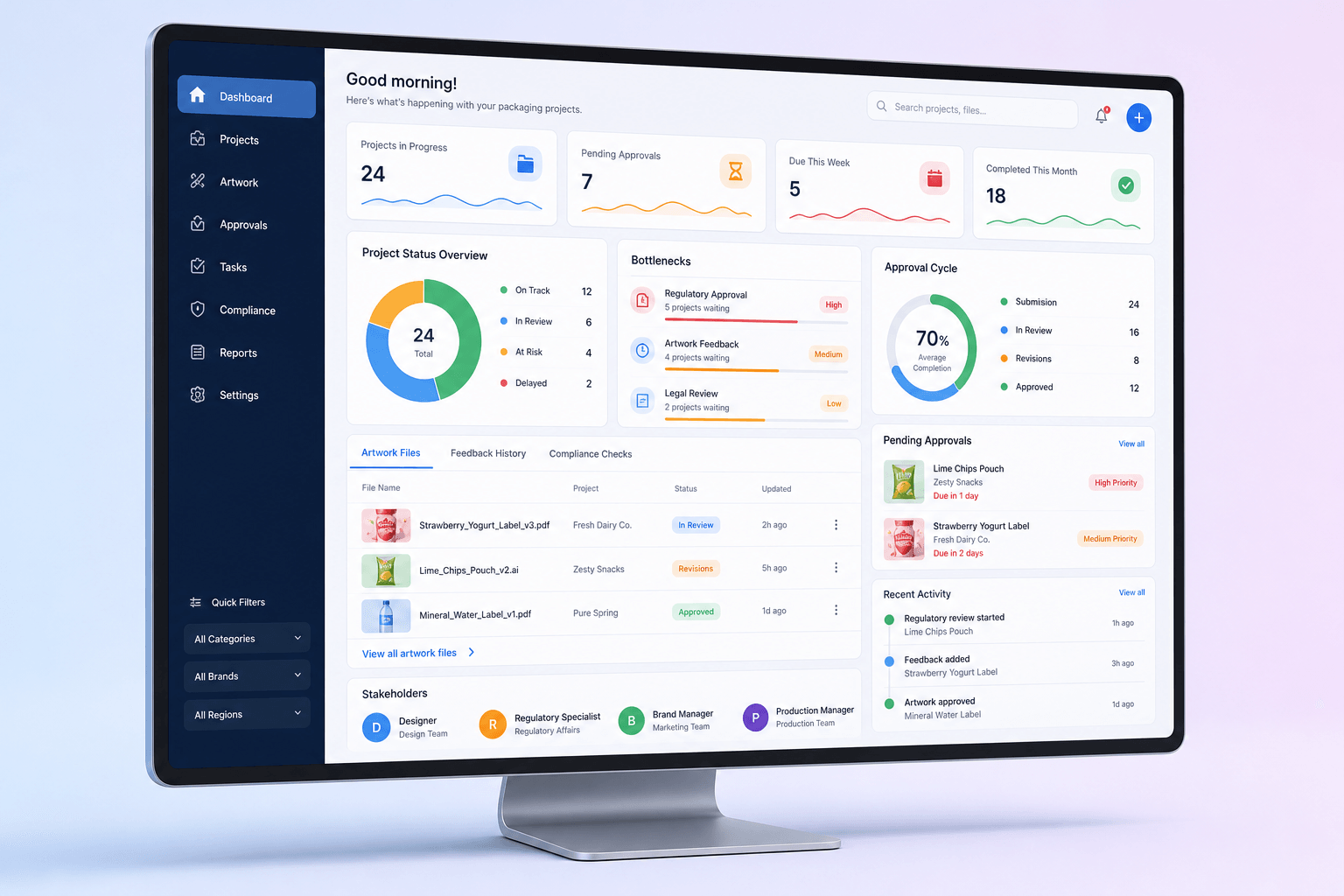
The fix: Cway dashboards show real-time project status across your portfolio. Built-in analytics reveal recurring bottlenecks so you can address patterns, not just incidents.
Symptoms: New team members can't find past decisions. Institutional knowledge walks out the door. Teams repeat research and negotiations.
Root cause: Project history lives in personal inboxes and memory. Nothing is centralized or searchable.
The fix: Cway preserves complete project history—files, comments, approvals, decisions—in a searchable archive. New team members can trace the full context of any past project.
Each of these 10 leakages shares a common thread: disconnected processes that create gaps where money escapes. Digital workflow automation closes those gaps by replacing fragmented handoffs with structured, visible, accountable workflows.
The math is straightforward. According to the Packaging Artwork Approval Benchmark 2026, the average FMCG artwork approval cycle takes 24 calendar days with 6.2 revision rounds. One in three packaging projects misses its intended launch date.
Cway customers report approval cycles up to 70% faster and 40% fewer revision rounds. Those aren't just efficiency gains—they translate directly to reduced costs, faster market launches, and lower risk of compliance penalties.
You might wonder whether general project management or file-sharing tools can solve these problems. The answer is almost always no.
Generic tools weren’t built for the specific complexity of packaging artwork: multi-layer files, endless versions, hundreds of SKUs and a long chain of teams and partners. Artwork ends up scattered across shared drives, email threads and project boards, with no single place to find the latest approved file. These tools create workarounds rather than solutions. Packaging teams need one connected ecosystem where artwork, feedback and product data live together: a single source of truth from first brief to final print.
Cway is purpose-built for packaging. The platform combines digital asset management, artwork proofing, approval automation, and project tracking in a single interface designed for how packaging teams actually work. You're not adapting generic software to fit your process—you're using a tool built for exactly this job.
Start by mapping your current workflow from brief to print-ready file. Note every handoff, every approval stage, every system where files move or feedback happens. Then ask:
The answers point to your highest-impact opportunities. Focus on the leaks that cost the most before addressing smaller inefficiencies.
Cway gives FMCG brands a single platform that combines everything packaging operations need: asset storage, approval workflows, proofing tools, compliance tracking, and real-time visibility. Instead of stitching together disconnected tools, you work from one unified system.
Cway tracks every file, every comment, every decision with complete audit trails. The platform handles multilingual variants, multi-market rollouts, and high SKU counts without losing control. Your team, your agencies, and your printers all work from the same source of truth.
If you're tired of watching budget disappear into preventable inefficiencies, Cway offers a clear path forward. Book a demo to see how the platform closes the specific cost leaks in your packaging operations.
Discover 13 packaging content breakdown points across marketing, regulatory, and supply chain—and learn how Cway fixes them with a single source of...
10 strategic-fit criteria for FMCG artwork platforms—Cway helps teams evaluate beyond TCO with clear, practical scorecard insights.
Discover 13 artwork approval bottlenecks that slow packaging launches—and the KPI gains you can expect when Cway helps eliminate each one.