3 min read

Revision control: a complete guide to version control and tracking

Revision control: a complete guide to version control and tracking
Revision control explained: systems, software, and version tracking
6:21

Revision control is often associated with software development, but in reality, it plays a critical role far beyond code. Marketing teams, packaging managers, regulatory specialists, and suppliers all rely on revision control to manage changes, avoid errors, and ensure accuracy.

As assets multiply and collaboration becomes more complex, understanding revision control — and how it differs from version control and version tracking systems — becomes essential for modern business teams.

This article explains revision control from the ground up, why version control is important, and how revision control systems and software help teams work faster and more accurately.

What Is Revision Control?

Revision control is the practice of managing changes to files, documents, or assets over time, ensuring that every update is tracked, documented, and recoverable.

In simple terms, revision control answers three key questions:

  • What changed?

  • Who changed it?

  • When was the change made?

Revision controlling is especially important in environments where files are updated frequently, reviewed by multiple stakeholders, or used for regulated outputs such as packaging artwork, product documentation, or marketing materials.

Without revision control, teams risk overwriting files, using outdated versions, or losing visibility into decision history.

Version Control vs Revision Control

Version control and revision control are closely related terms and are often used interchangeably — but there is a subtle distinction.

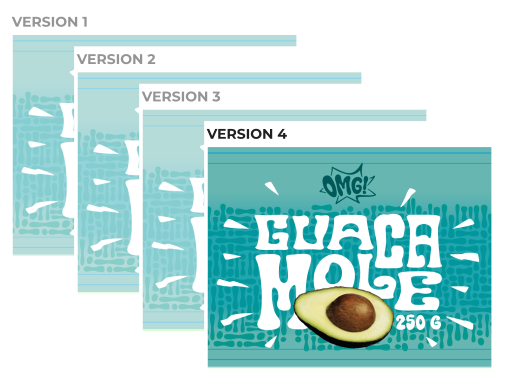
Version control typically refers to the broader concept of managing multiple versions of an asset over time.
Revision control focuses more specifically on tracking individual changes and iterations within those versions.

In practice:

  • Version control helps teams understand which version is current

  • Revision control helps teams understand how that version came to be

For business teams working with artwork, packaging, and documents, both concepts are essential and usually work together.

Why Is Version Control Important?

use correct versionsUnderstanding why version control is important starts with understanding risk.

Without version control:

  • Teams work on outdated files

  • Errors reach production

  • Approvals become unclear

  • Compliance becomes difficult to prove


With proper version control in place, teams gain confidence that:

  • The correct file is being used

  • All changes are traceable

  • Accountability is clear

  • Mistakes can be corrected quickly

In regulated or brand-sensitive environments, version control is not a convenience — it’s a necessity.

Benefits of Version Control for Business Teams

The benefits of version control extend well beyond file organization.

Key benefits of version control include:

  • Reduced errors by eliminating duplicate or outdated files

  • Improved collaboration across teams and external partners

  • Clear audit trails for compliance and quality assurance

  • Faster approvals through structured workflows

  • Greater trust in final outputs sent to production

For teams managing packaging artwork or marketing assets, these benefits directly impact speed, cost, and brand consistency.

What Is a Revision Control System?

compliance-in-design-projects-softwareA revision control system is a structured framework that governs how revisions are created, reviewed, approved, and stored.

Unlike basic file storage, a revision control system:

  • Enforces rules for updates

  • Tracks every revision automatically

  • Preserves historical versions

  • Creates transparency across teams

A version tracking system focuses on monitoring changes across versions over time, giving teams visibility into the full lifecycle of an asset.

Version tracking systems allow teams to:

  • See how assets evolve

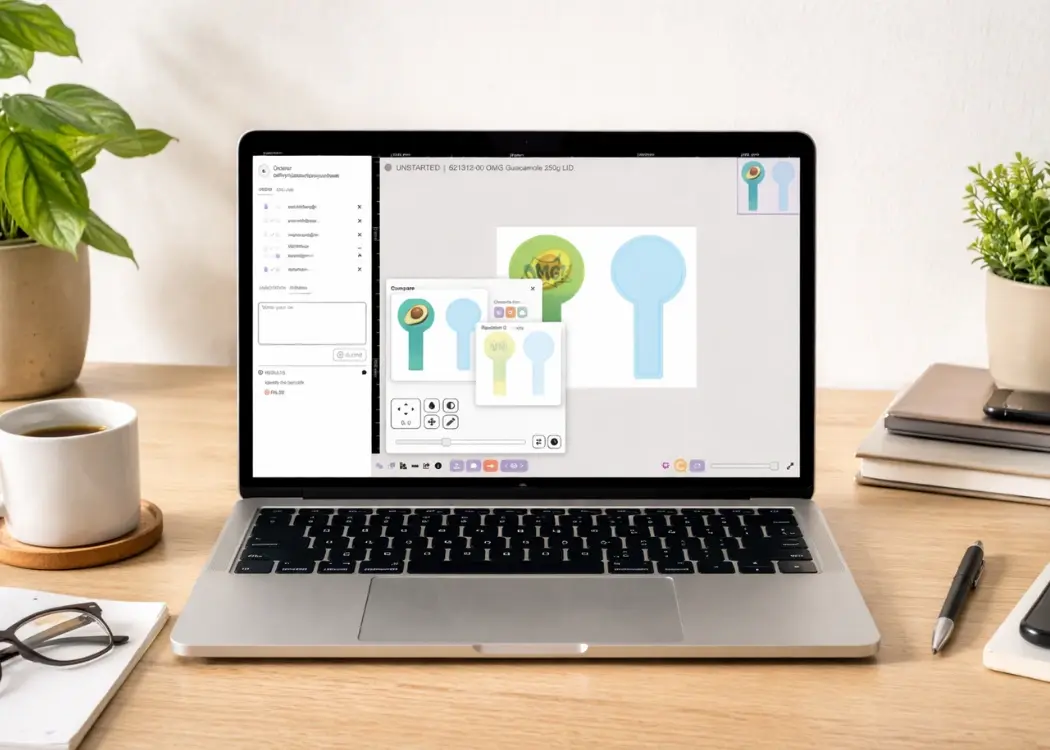
  • Compare versions

  • Roll back to previous states

  • Understand approval history

In fast-moving environments, version tracking systems help prevent confusion and ensure everyone is aligned on the current, approved version.

How a Version Tracking System Works in Practice

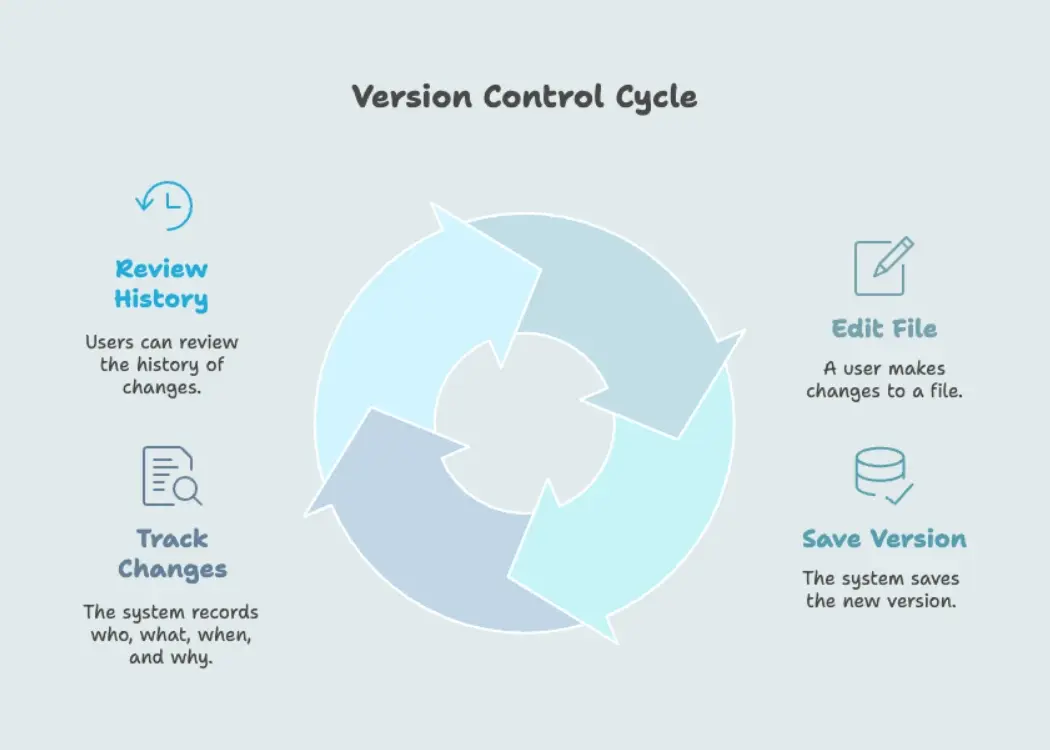
In real-world workflows, a version tracking system typically:

  • Creates a new version whenever a file is updated

  • Logs who made the change and why

  • Routes revisions for review and approval

  • Locks approved versions for production use

For packaging and artwork teams, this prevents outdated or unapproved files from reaching printers or suppliers.

Version Tracking Software vs Manual Revision Control

Many teams still rely on manual revision control using spreadsheets, email threads, or file naming conventions like “final_v7”.

Compared to version tracking software, manual revision control:

  • Is error-prone

  • Lacks visibility

  • Doesn’t scale

  • Relies heavily on human discipline

Version tracking software automates change tracking, removes guesswork, and creates a reliable system that teams can trust.

What Is Revision Control Software?

Revision control software is designed to manage revisions automatically, ensuring every change is documented and governed by predefined rules.

Unlike generic storage tools, revision control software:

  • Tracks revisions at a system level

  • Supports structured approvals

  • Maintains complete version histories

  • Reduces dependency on manual processes

For organizations handling regulated, branded, or high-risk assets, revision control software becomes essential as scale increases.

When Do Teams Need Revision Control Software?

Teams typically reach a tipping point where revision control software becomes necessary when:

  • Multiple stakeholders edit the same files

  • Changes happen frequently

  • External suppliers are involved

  • Compliance or regulatory requirements apply

  • Errors become costly or visible

At this stage, relying on manual processes creates unnecessary risk — and limits scalability.

Final Thoughts: Revision Control Is About Accuracy and Trust

Revision control is not just a technical concept. It’s a foundation for accuracy, collaboration, and trust.

Whether managing packaging artwork, marketing materials, or regulated documents, teams that invest in proper version control, version tracking systems, and revision control software gain clarity and control over their work.

In the end, revision control isn’t about tracking files — it’s about ensuring the right version reaches the right place, every time.

How artwork proofing tools improve packaging workflow

How artwork proofing tools improve packaging workflow

Artwork proofing is a critical step in packaging development, ensuring brand consistency and accuracy before printing. In this article, we’ll explore...

View Full Article
Why online artwork approval software is a game-changer for brands

Why online artwork approval software is a game-changer for brands

Online artwork approval software transforms how teams manage feedback and collaboration during the packaging design process. In this article, we’ll...

View Full Article
How to simplify packaging design processes with the right software

How to simplify packaging design processes with the right software

Packaging development is complex—endless revisions, scattered files, and slow approvals. This article shows how software that simplifies structural...

View Full Article