Artwork management for FMCG brands: why generic tools don't cut it
If you work in a fast-moving consumer goods company, you already know that packaging is not a side project. It's a compliance requirement, a brand...
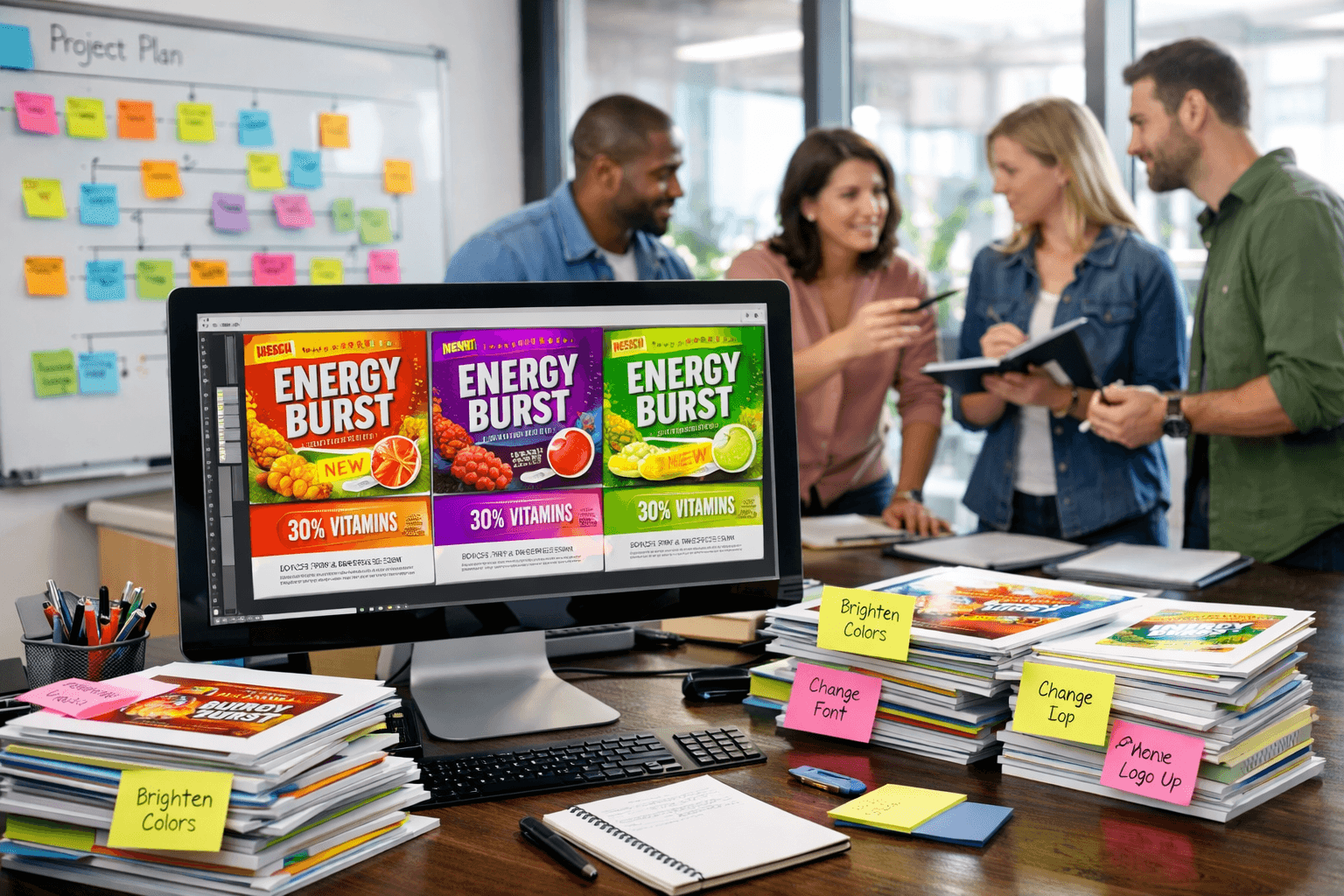
Most FMCG packaging and marketing operations leaders know the feeling: a new SKU is about to launch, the deadline is two days away, and nobody can confirm which artwork file is final. The regulatory reviewer hasn't signed off. The printer is waiting. And somewhere in a long email thread, critical feedback got buried.
This guide walks you through how to move from that reality to a structured, digitized packaging operation. You'll learn where money leaks out of packaging processes, how to design automated artwork workflows, and how to build compliance gates that stop errors before they reach the printer. Cway helps FMCG brands centralize artwork, approvals, and product data in one platform—so you can replace guesswork with governance.
By the end, you'll have a clear roadmap for digitizing your packaging operations, complete with practical steps, KPIs to track, and questions to ask when evaluating software.
Packaging digitization means replacing disconnected tools and informal handoffs with a structured, software-driven operating model. Instead of tracking artwork in file shares and managing approvals through email, you move everything into a centralized platform where tasks, files, and feedback are linked.
For FMCG brands, this shift is especially important. High SKU counts, frequent regulatory updates, and tight retail deadlines create complexity that informal processes can't handle. Digitization gives you a single source of truth for every artwork version, every comment, and every approval decision.
The goal isn't to add more technology for its own sake. It's to build an operating model where your packaging team spends less time chasing files and more time on high-value work—like improving design quality or accelerating launches.
Packaging cost leaks rarely show up as a single line item. They hide in rework, rush fees, delayed launches, and compliance failures. Understanding where these leaks occur is the first step toward fixing them.
When multiple versions of an artwork file circulate through email, reviewers often comment on outdated files. The result: designers incorporate feedback that was already addressed, or they miss feedback entirely. Each unnecessary revision round adds time and cost.
A case study from PBI Ltd found that addressing upstream issues in one FMCG line reduced rework by 72% and saved the equivalent of 160 production days annually. While that example focused on manufacturing, the same principle applies to artwork: fixing problems at the source prevents costly downstream corrections.
Traditional packaging approval follows a sequential path: design waits for brand, brand waits for regulatory, regulatory waits for legal. When one stakeholder is slow, the entire timeline slips. According to a survey cited by Packaging Digest, 89% of CPG executives said approval delays are the top barrier to product launches.
These delays compound quickly. A single address change can add four to eight weeks if it triggers a full review cycle. And when deadlines slip, you pay for rush printing, expedited shipping, or missed shelf windows.
Catching a missing allergen statement or incorrect recycling symbol after artwork is printed is expensive. You face reprinting costs, disposal fees, and potential regulatory penalties. Worse, if the error reaches store shelves, you risk product recalls and reputational damage.
The hidden cost here isn't just the mistake itself—it's the lack of a system that would have caught it earlier. When compliance checks happen informally, through individual expertise or ad-hoc checklists, errors slip through.
How much time does your team spend looking for the right artwork file, the latest approved version, or the feedback from a specific reviewer? In organizations without centralized asset management, this search time adds up to hours per week per person.
That time has a real cost. Every hour spent searching is an hour not spent on creative work, strategic planning, or stakeholder coordination.
Automated artwork workflows replace informal handoffs with structured, rule-based processes. Instead of sending an email and hoping for a response, you assign tasks with deadlines, route files through predefined approval paths, and track status in real time.
In an automated workflow, each artwork project follows a defined path. When a designer uploads a new version, the system automatically notifies the next reviewer. When that reviewer approves, the file moves to the next stage. No manual forwarding required.
This structure eliminates the "who's responsible?" confusion that plagues email-based processes. Everyone knows their role, their deadlines, and the current status of every project.
Many approval steps can happen simultaneously. Regulatory, legal, and brand reviewers can all review the same artwork version at once, rather than waiting for each other. Automated workflows make parallel reviews easy to manage by consolidating feedback in one place.
When reviewers comment directly on the artwork—rather than in separate email threads—you see all feedback in context. This reduces misunderstandings and speeds up the revision process.
Automated workflows can send reminders before deadlines and escalate overdue tasks to managers. This accountability changes behavior: reviewers know their delays are visible and tracked.
Cway supports custom approval workflows with roles, responsibilities, deadlines, and notifications. This means you can design processes that match how your organization works, rather than forcing your team to adapt to rigid software.
With automated workflows, you can see exactly where every artwork project stands. Which files are awaiting review? Who is holding up the process? How many revision rounds has a project gone through? This visibility lets you identify bottlenecks and intervene before deadlines slip.
FMCG packaging involves external stakeholders: printers, design agencies, co-manufacturers, and retail partners. Bringing these parties into your approval process without compromising security or losing version control requires careful design.
External collaborators need access to specific files and projects—not your entire asset library. Secure external approval workflows let you share exactly what's needed, with permissions that limit what partners can view, download, or edit.
This controlled access also protects your brand. You can share artwork for review without giving agencies access to confidential product formulations or pricing information stored elsewhere in your system.
When printers or agencies provide feedback through email, their comments often lack context. Which file version are they referring to? Which specific area of the artwork? Secure approval workflows capture external feedback directly on the artwork, with annotations tied to specific locations.
This contextual feedback reduces back-and-forth and ensures nothing gets lost when files move between internal and external teams.
External partners often work from files they've downloaded to their local systems. When you update the artwork, they may continue working from an old version. Secure approval workflows solve this by ensuring external parties always access the current version through a controlled portal—never from a disconnected copy.
Cway's Quick Share App and Collaboration tool enables context-rich file sharing with previews, comments, and approvals, so your external partners stay aligned without cluttering your asset library.
Measuring the right metrics helps you prove the value of digitization and identify areas for improvement. Here are the KPIs that matter most for FMCG packaging operations.
How long does it take from initial artwork upload to final print approval? Track this metric across different project types and markets to identify patterns. Reducing cycle time directly accelerates time-to-market.
More revision rounds mean more rework and longer timelines. Track the average number of rounds per project. If this number is high, investigate whether it's caused by unclear briefs, incomplete compliance checks, or stakeholder miscommunication.
What percentage of artworks pass compliance checks on their first submission? A low pass rate indicates problems upstream—perhaps briefs lack required information, or designers aren't aware of market-specific rules. Improving this metric prevents late-stage rework.
Measure how long team members spend searching for files. In a well-organized digital asset management system, this number should drop significantly. If it doesn't, your metadata, folder structure, or search functionality may need attention.
What percentage of packaging projects meet their launch deadlines? Track this metric to understand overall process reliability. If on-time delivery is inconsistent, drill into which stages cause the most delays.
Many organizations already use digital asset management or project management software. Why would you need a dedicated packaging workflow platform? The answer lies in packaging-specific complexity.
Generic DAM systems store files. Generic project tools track tasks. But packaging requires both—plus compliance logic that enforces regulatory requirements at specific workflow stages. A purpose-built platform connects assets, tasks, and rules in a single system.
Packaging artwork goes through many iterations, often with subtle changes that are hard to spot visually. Dedicated platforms offer side-by-side version comparison, visual markup tools, and automatic versioning that generic tools lack.
Cway supports auto-versioning with visual comparison and an integrated viewer with markup and comments. This makes it easy to see exactly what changed between versions—and why.
Sharing files with printers and agencies involves brand protection and compliance risk. Packaging-specific platforms offer secure sharing with granular permissions, controlled portals, and feedback tied to specific artwork regions. Generic file-sharing tools can't provide this level of control.
Packaging files need metadata for SKU, market, language variant, regulatory status, and approval history. Generic DAM systems may not support this level of structured metadata out of the box, requiring extensive customization that introduces cost and complexity.
Digitization projects fail for predictable reasons. Avoiding these common mistakes increases your chances of success.
Buying software before mapping your current workflows leads to poor fit. The technology should support your process—not the other way around. Start by documenting how work flows today, then select tools that match.
New systems require new behaviors. If stakeholders aren't trained, supported, and held accountable, they'll revert to old habits. Budget time and resources for training, communication, and ongoing reinforcement.
Your packaging process includes printers, agencies, and partners. If they can't or won't use your new system, you'll end up with parallel processes—one digital, one via email. Design your workflows to include external parties from the start.
Complex workflows with too many gates and approvals slow things down. Start simple, with the minimum viable process that meets compliance and quality requirements. Add complexity only when you have evidence it's needed.
Digitization is a journey, not a destination. If you don't track metrics and adjust your workflows based on data, your initial setup will calcify—even if it's no longer optimal. Build measurement and refinement into your operating model.
Digitizing FMCG packaging operations isn't about adopting technology for its own sake. It's about building an operating model that reduces rework, accelerates launches, ensures compliance, and gives you visibility into every project.
The path forward starts with understanding where your current process leaks money and creates risk. From there, you design workflows that address those gaps—automated task routing, compliance gates, secure external collaboration, and structured version control.
Cway gives you a purpose-built platform for this work: combining artwork management, digital asset management, approvals, and product data in one workspace. If you're ready to move from fragmented tools to a controlled, auditable packaging operation, the guide above gives you the framework to get started.
If you work in a fast-moving consumer goods company, you already know that packaging is not a side project. It's a compliance requirement, a brand...
As FMCG organizations manage growing product portfolios, faster launch cycles, and increasing regulatory complexity, artwork management platforms...
Three thousand packaging artworks a year. That's not an edge case — it's a realistic volume for any mid-to-large FMCG brand managing multiple product...