4 min read
Why packaging approvals become a bottleneck as FMCG portfolios grow
Ekaterina Skalatskaia
:
June 17, 2026
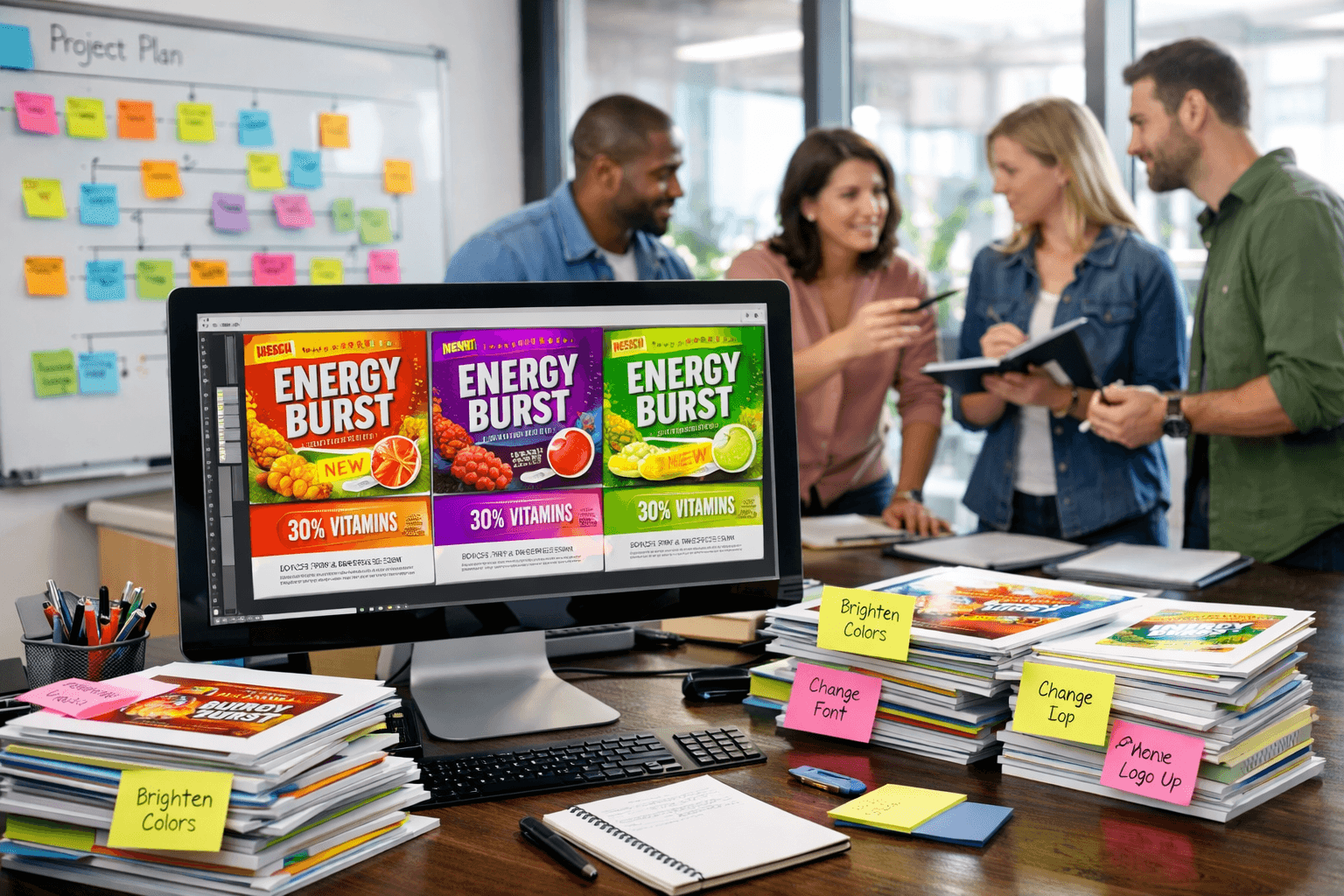
As FMCG brands expand, packaging complexity increases much faster than most teams expect. What starts as a manageable approval process for a handful of products can quickly evolve into a web of regional variants, compliance reviews, stakeholder feedback loops, and launch deadlines.
For many organizations, packaging approvals become one of the least visible yet most costly operational bottlenecks.
A delayed approval doesn't just affect artwork. It can disrupt production schedules, delay product launches, create rework, increase supplier costs, and introduce compliance risks. The larger the product portfolio becomes, the more difficult it is to manage packaging efficiently using email chains, spreadsheets, and disconnected file storage systems.
This article explores why packaging approvals become increasingly challenging as FMCG portfolios grow and how leading brands are addressing these challenges through more structured packaging operations.
Key Takeaways
- Packaging complexity grows exponentially as SKU counts increase.
- Manual approval processes create hidden costs through delays, rework, and compliance risks.
- Multiple stakeholders and regional variants increase the likelihood of version confusion.
- Packaging bottlenecks can impact manufacturing schedules, inventory planning, and product launches.
- Structured workflow systems help organizations improve visibility, accountability, and speed across packaging operations.
Why Packaging Complexity Increases Faster Than Product Growth
Many FMCG teams assume that adding products increases packaging workload in a predictable way. In reality, complexity often grows exponentially.
A single product may require:
- Multiple package sizes
- Different languages
- Country-specific regulatory content
- Retailer-specific requirements
- Seasonal promotions
- Sustainability labeling updates
What appears to be one product can quickly become dozens of packaging variants requiring separate reviews and approvals.
As portfolios expand, packaging teams often find themselves managing hundreds or even thousands of artwork files simultaneously. Without clear workflows, maintaining visibility across these projects becomes increasingly difficult.
Where Packaging Approvals Start Breaking Down
Most approval delays occur at handoff points between teams.
Packaging projects typically involve:
- Brand managers
- Marketing teams
- Regulatory reviewers
- Legal departments
- Packaging engineers
- Design agencies
- Print suppliers
Each stakeholder plays an important role, but every additional reviewer introduces another opportunity for delays, missed feedback, or communication breakdowns.
When approvals are managed through email, shared folders, and spreadsheets, teams often struggle to answer basic questions:
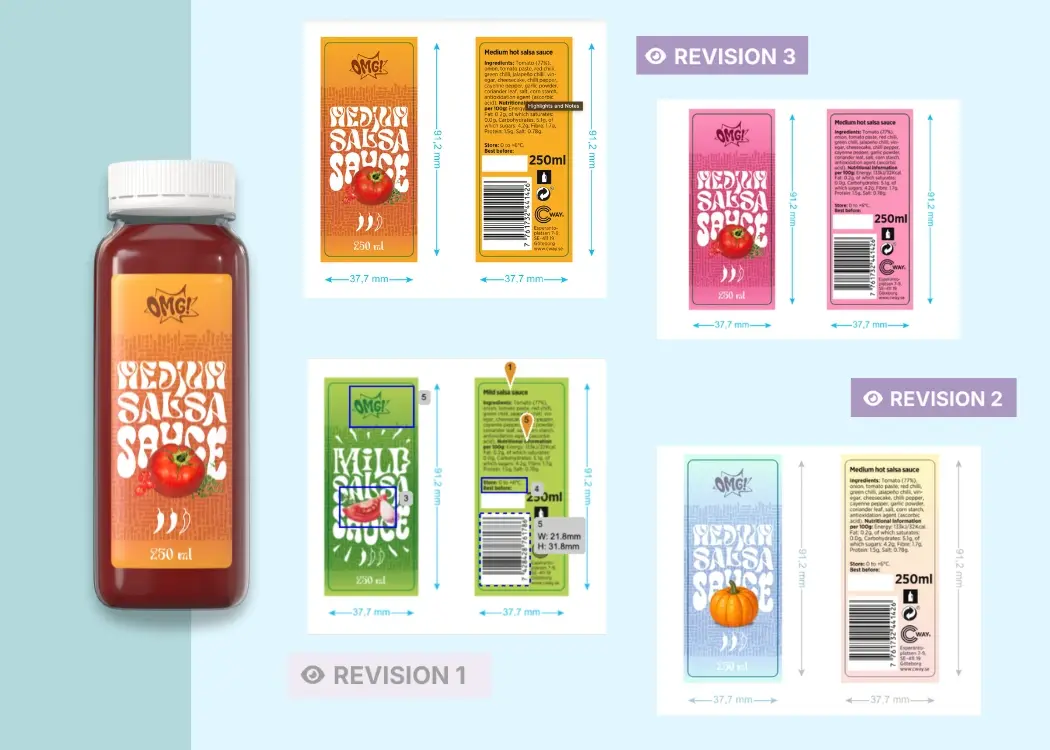
- Which file is the latest version?
- Who still needs to approve?
- What changes were made?
- Why was artwork rejected?
- Is the file ready for production?
Without clear visibility, projects slow down and bottlenecks multiply.
The Hidden Cost of Packaging Approval Delays
Packaging delays rarely appear as a standalone line item in operational reports, but their impact can be significant.
A delayed approval can trigger:
- Production schedule disruptions
- Rush printing fees
- Additional design revisions
- Expedited shipping costs
- Product launch postponements
- Increased inventory carrying costs
The financial impact often extends far beyond the packaging department itself.
For growing FMCG organizations, packaging inefficiencies can gradually become a constraint on business agility and speed-to-market.
Why Version Control Becomes Critical at Scale
One of the most common causes of packaging errors is version confusion.
As files move between stakeholders, multiple versions often circulate simultaneously. Reviewers may comment on outdated files, suppliers may receive incorrect artwork, and teams may unknowingly approve superseded versions.
The consequences can include:
- Costly reprints
- Packaging recalls
- Compliance violations
- Delayed launches
As SKU counts increase, the probability of these errors rises dramatically.
Strong version control practices help ensure every stakeholder works from the same source of truth throughout the approval process.
How Packaging Bottlenecks Impact the Supply Chain
Packaging is often viewed as a design or marketing function, but its influence extends across the entire supply chain.
Packaging approvals affect:
Production Planning
Manufacturing cannot begin until final artwork is approved and released.
Procurement
Packaging suppliers require accurate specifications and sufficient lead times.
Inventory Management
Launch delays can create inventory imbalances and forecasting challenges.
Distribution
Late packaging approvals can compress distribution windows and reduce flexibility.
Retail Execution
Promotional campaigns and retailer commitments often depend on packaging readiness.
When packaging approvals become unpredictable, the effects ripple throughout the organization.
What High-Performing Packaging Operations Do Differently
Leading FMCG organizations recognize that packaging is not simply a creative process. It is a business-critical workflow that requires structure, visibility, and accountability.
Successful teams typically focus on five operational capabilities.
Centralized Artwork Management
All files, comments, approvals, and project information are stored in a single location.
This eliminates duplicate files and reduces time spent searching for information.
Automated Approval Workflows
Review tasks are assigned automatically with clear responsibilities and deadlines.
Stakeholders know exactly what requires their attention and when action is needed.
Version Control and Change Tracking
Every revision is recorded automatically.
Teams can quickly identify what changed, who made the change, and when it occurred.
Compliance Integration
Regulatory review becomes part of the workflow rather than a separate process.
This reduces compliance risk and improves audit readiness.
Performance Analytics
Organizations track cycle times, approval delays, revision frequency, and bottlenecks.
These insights help teams continuously improve operational performance.
The Role of Packaging Workflow Platforms
As packaging complexity increases, many organizations reach a point where manual coordination is no longer sustainable.
Packaging workflow platforms provide a structured environment for managing artwork approvals, version control, stakeholder collaboration, and compliance activities.
Rather than relying on email chains and spreadsheets, teams gain a centralized system that tracks every file, review, and decision throughout the packaging lifecycle.
Solutions such as Cway are designed specifically for packaging operations, helping FMCG teams manage high SKU volumes, artwork variants, regulatory reviews, and multi-stakeholder approval processes from a single platform.
Building More Scalable Packaging Operations
Packaging complexity is unlikely to decrease.
Consumer expectations continue to evolve, regulatory requirements become more demanding, and product portfolios grow increasingly fragmented.
Organizations that continue relying on manual approval processes often find that packaging becomes a limiting factor in operational performance.
By introducing greater visibility, accountability, and process automation, FMCG teams can reduce approval bottlenecks, improve launch readiness, and create more predictable packaging operations at scale.
Conclusion
Packaging approvals often become a bottleneck not because teams lack expertise, but because growing portfolios introduce complexity that manual processes cannot efficiently manage.
As SKU counts increase, organizations must coordinate more stakeholders, more packaging variants, and more compliance requirements than ever before.
The companies that successfully scale packaging operations are those that treat packaging as a strategic workflow rather than a collection of disconnected tasks. With structured processes, centralized visibility, and stronger control over approvals, FMCG teams can reduce delays, minimize risk, and bring products to market faster.
FAQ
-
Why do packaging approvals become slower as product portfolios grow?
As portfolios expand, organizations manage more SKUs, packaging variants, regulatory requirements, and stakeholder reviews. This increases coordination complexity and creates more opportunities for delays.
-
What are the biggest causes of packaging approval bottlenecks?
Common causes include manual workflows, unclear responsibilities, version confusion, fragmented communication, and limited visibility into project status.
-
How does version control improve packaging operations?
Version control ensures stakeholders always review the correct artwork file, reducing approval errors, rework, and production risks.
-
How do packaging delays affect product launches?
Packaging approvals are often linked directly to production schedules. Delays can postpone manufacturing, distribution, and retail launch dates.
-
What metrics should packaging teams monitor?
Key metrics include approval cycle time, revision frequency, stakeholder response time, first-pass approval rate, and overall project completion time.
-
How can workflow automation improve packaging efficiency?
Workflow automation assigns tasks automatically, sends reminders, tracks approvals, and provides visibility into project progress, helping teams reduce delays and improve accountability.