8 min read

8 ROI metrics to track in packaging artwork management

8 ROI metrics to track in packaging artwork management
Track These 8 ROI Metrics in Packaging Artwork Management
14:45

Measuring the return on your packaging artwork management system is no longer optional—it's how you prove value to leadership and guide smarter decisions. But what exactly should you track? This article lists eight measurable ROI metrics that packaging and artwork operations managers can monitor after implementing an artwork management system.

Each metric ties directly to speed, cost, and compliance improvements. Cway gives you built-in analytics to track these KPIs in real time, so you can quantify gains and spot issues early. Let's walk through the metrics that matter most.

Quick guide: 8 ROI metrics for packaging artwork management

  1. Cycle time reduction: The best overall indicator of workflow speed
  2. Revision rounds: Shows brief quality and stakeholder alignment
  3. First-time approval rate: Signals clarity in design briefs and feedback
  4. Error rate reduction: Tracks accuracy improvements across artwork files
  5. Compliance incidents: Measures regulatory risk exposure
  6. Reprint costs avoided: Quantifies direct savings from catching errors early
  7. Stakeholder response time: Identifies review bottlenecks
  8. Version accuracy rate: Confirms print-ready files match approved versions

How we identified the right metrics for packaging artwork ROI

Selecting meaningful ROI metrics requires a focus on what moves the needle in packaging operations. We analyzed the KPIs that high-performing FMCG and regulated-industry teams track most closely—based on industry benchmarks and real feedback from artwork managers.

Here's what guided our selection:

  • Direct tie to cost or revenue: Each metric connects to measurable financial outcomes, whether that's reduced rework, faster launches, or fewer recalls
  • Actionable at the team level: You can influence these metrics through workflow changes, not just executive decisions
  • Trackable in modern artwork systems: These KPIs can be monitored in real time with purpose-built platforms like Cway
  • Relevant across industries: FMCG, pharma, cosmetics, and food brands all benefit from tracking these indicators
  • Clear baseline and target: You can establish before-and-after benchmarks to measure improvement over time

The 8 ROI metrics for packaging artwork management

1. Cycle time reduction: The best indicator of workflow efficiency

Cycle time measures how long it takes from initial artwork brief to final approved file. Shorter cycles mean faster product launches and quicker responses to regulatory changes or seasonal campaigns. According to Cway's Packaging Artwork Approval Benchmark 2026, the average approval cycle takes 24 days, with high-performing teams hitting 40% faster times.

Cway tracks your cycle times automatically, breaking them down by project type, brand, or market. This visibility helps you identify where delays occur and target specific stages for improvement. Teams using structured workflows typically see approval times drop from weeks to days.

To calculate cycle time reduction, compare your average days-to-approval before and after implementing an artwork management system. A reduction of even five days per project adds up significantly across hundreds of SKUs per year.

Cway features for cycle time tracking

  • Real-time project dashboards: See exactly where each artwork sits in the approval pipeline, with timestamps for every stage transition
  • Automated deadline alerts: Notifications remind stakeholders before due dates, reducing delays caused by missed reviews
  • Historical trend analysis: Compare cycle times across quarters or years to demonstrate improvement trajectories to leadership
  • Bottleneck identification: Pinpoint which review stages or stakeholders consistently cause delays, enabling targeted process fixes

Cway pros and cons

Pros:

  • Built specifically for packaging artwork workflows, not adapted from generic project tools
  • Combines asset storage, proofing, approvals, and analytics in one platform
  • User-friendly interface that reduces onboarding time for new team members

Cons:

  • Focused on packaging and artwork—if you primarily need social media asset management, a broader DAM may suit certain content types better
  • Advanced analytics features are most valuable for teams managing higher volumes of SKUs
  • Initial workflow configuration takes some upfront planning to match your existing processes

2. Revision rounds: Shows brief quality and team alignment

Revision rounds count how many times an artwork goes back for changes before approval. According to Cway's benchmark research, the average project involves 6.2 revision rounds. Each additional round adds an average of 2.3 days to your cycle time.

High revision counts often signal unclear briefs, inconsistent feedback, or misaligned expectations between creative, marketing, and regulatory teams. Tracking this metric helps you address root causes rather than symptoms.

Revision rounds features to track

  • Version history logs: Every revision is timestamped and attributed to specific feedback, creating accountability
  • Revision reason tagging: Categorize why revisions happen—brief changes, stakeholder additions, or errors—to spot patterns
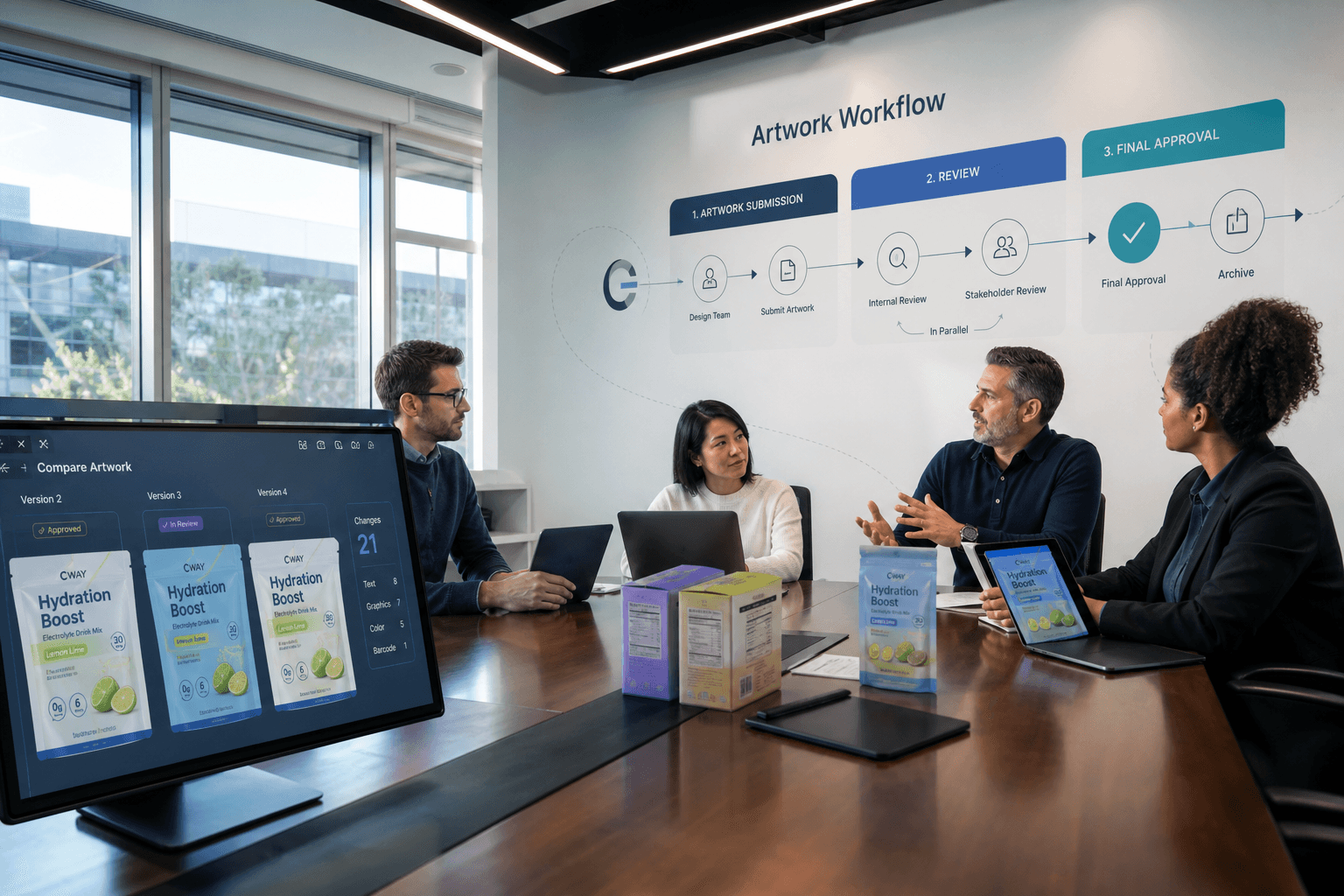
  • Comparison tools: Side-by-side version comparisons show exactly what changed between rounds

3. First-time approval rate: A signal of clear communication

First-time approval rate measures the percentage of artworks approved without any revisions. High rates indicate that briefs are clear, stakeholder expectations are aligned, and creative teams understand requirements from the start.

Industry data suggests that teams using artwork management platforms can achieve first-time approval rates above 60%, compared to 30-40% for teams relying on unstructured processes. This metric directly reduces cycle time and workload.

First-time approval rate features to track

  • Approval status dashboards: Track approval outcomes across projects and time periods
  • Brief completeness scoring: Ensure all required information is submitted before creative work begins
  • Feedback consolidation: Centralized comments reduce contradictory feedback from multiple reviewers

4. Error rate reduction: Tracking accuracy improvements

Error rate measures how often artwork files contain mistakes—whether that's incorrect text, wrong barcodes, missing regulatory symbols, or color inconsistencies. Industry research from Collabra studies suggests a 70-80% reduction in artwork errors when using dedicated management tools.

Errors caught before print cost almost nothing to fix. Errors caught after production can trigger expensive reprints, regulatory fines, or even product recalls. This metric has one of the clearest financial impacts.

5. Compliance incidents: Measuring regulatory risk

Compliance incidents measure how often packaging artwork creates regulatory risk, audit issues, or approval inconsistencies. In regulated industries, missing documentation or incomplete approval records can delay product launches, trigger investigations, or increase exposure during audits.

This metric is especially important for pharma, food, cosmetics, and medical device companies where traceability and documentation accuracy are critical. Tracking compliance incidents over time helps teams evaluate whether their artwork management system improves audit readiness and reduces regulatory exposure.

Compliance incidents features to track

  • Audit trail documentation: Centralized records of approvals, version history, reviewer actions, and timestamped changes for full traceability during audits
  • Approval history visibility: Clear documentation of who reviewed, approved, rejected, or modified artwork files throughout the lifecycle
  • Version control tracking: Access to historical artwork versions and change comparisons to support inspections and investigations

6. Reprint costs avoided: Quantifying direct savings

Reprint costs measure the money saved by catching errors before production. According to industry data, reprinting costs can range from 2-10% of total production costs for large-scale packaging runs. Avoiding even one reprint per month creates substantial annual savings.

This metric translates workflow improvements into financial language that resonates with finance teams and executives. Track both the number of reprints avoided and the estimated cost savings.

7. Stakeholder response time: Identifying review bottlenecks

Stakeholder response time tracks how long reviewers take to submit feedback after artwork is shared. Slow responses are a major cause of missed deadlines—often accounting for more delay than actual creative or revision work.

Measuring response times by reviewer, department, or role reveals where bottlenecks exist. This data supports conversations about review priorities and deadline accountability.

Stakeholder response time features to track

  • Individual reviewer metrics: See average response times by person or team
  • Automated reminders: Escalating notifications for overdue reviews

8. Version accuracy rate: Confirming print-ready files

Version accuracy rate measures how often the files sent to print match the final approved artwork. Discrepancies happen when outdated versions are accidentally used, or when last-minute changes aren't properly documented.

This metric guards against one of the most frustrating packaging failures: printing the wrong version. Cway's centralized asset management and version control help maintain accuracy across complex product portfolios.

Version accuracy rate features to track

  • Single source of truth: One location for approved, print-ready files eliminates version confusion
  • Download tracking: Know which version was sent to each printer and when
  • Lock controls: Prevent unauthorized changes to approved files 

Comparison table: ROI metrics for packaging artwork management

ROI metric What it measures Business impact Typical benchmark or outcome Key tracking features
Cycle time reduction Time from artwork brief to final approval Faster product launches and reduced workflow delays Average approval cycle: 24 days; high-performing teams are 40% faster Real-time dashboards, deadline alerts, bottleneck tracking, trend analysis
Revision rounds Number of revision cycles before approval Reveals unclear briefs and stakeholder misalignment Average project: 6.2 revision rounds; each extra round adds 2.3 days Version history, revision reason tagging, side-by-side comparisons
First-time approval rate Percentage of artworks approved without revisions Reduces workload, accelerates approvals, improves alignment Structured workflows can achieve 60%+ first-pass approvals vs. 30–40% with manual processes Approval dashboards, brief validation, centralized feedback
Error rate reduction Frequency of artwork errors before production Prevents reprints, recalls, and regulatory issues Dedicated artwork systems can reduce errors by 70–80% Proofing workflows, automated checks, version validation
Compliance incidents Frequency of audit issues, missing records, or approval inconsistencies Improves audit readiness and reduces regulatory risk Lower exposure to investigations, launch delays, and documentation gaps Audit trails, approval history visibility, version control tracking
Reprint costs avoided Money saved by catching issues before print Direct cost savings and waste reduction Reprints can represent 2–10% of production costs Print approval tracking, error prevention workflows, approval verification
Stakeholder response time Time reviewers take to provide feedback Identifies workflow bottlenecks and approval delays Faster reviewer response improves overall cycle time Reviewer metrics, automated reminders, SLA tracking
Version accuracy rate Accuracy of print-ready files compared to approved versions Prevents outdated or incorrect files reaching production Reduces risk of wrong-version printing incidents Single source of truth, download tracking, file lock controls

How do you calculate ROI for packaging artwork management?

Calculating ROI for your artwork management system combines cost savings with time value. Start by establishing baseline measurements for each metric before implementation—average cycle time, revision rounds, error rates, and reprint costs.

After implementation, track these same metrics over three to six months. Calculate savings by multiplying improvements by their financial value:

  • Time savings: (Hours saved per project × Hourly labor cost) × Number of annual projects
  • Error reduction: (Reprints avoided × Average reprint cost) + (Compliance incidents avoided × Estimated incident cost)
  • Faster launches: (Days saved × Estimated daily revenue impact for delayed products)

Compare total annual savings against your system cost. Many packaging teams see positive ROI with just three to four months of operation. As noted in McKinsey research, packaging decisions increasingly drive both margin and revenue gains for consumer companies.

What benchmarks should you target for artwork approval cycles?

Benchmark targets vary by industry and packaging complexity. Based on Cway's 2026 research across FMCG teams:

  • Average cycle time: 24 days (target 15-18 days for high performers)
  • Revision rounds: 6.2 average (target 3-4 rounds)
  • On-time delivery: 67% (target 85%+ for structured workflows)
  • Stakeholder count: 6-8 per project (higher counts correlate with 2.1× delay risk)

Your targets should reflect your starting point. If your current cycle time is 35 days, a 20% reduction to 28 days is a meaningful first milestone. Tracking progress toward incremental targets builds momentum and demonstrates ongoing value.

Why Cway is the best platform for packaging artwork ROI tracking

Cway was built specifically for packaging artwork management—not adapted from generic project management or DAM tools. This focus means every feature is designed around how packaging teams actually work, from initial brief through final print file delivery.

The platform's built-in analytics track all eight ROI metrics automatically. You don't need to export data to create reports or manually calculate KPIs. Real-time dashboards show cycle times, revision patterns, stakeholder response rates, and version history at a glance.

Cway gives you the visibility to prove ROI and the tools to improve it. Automated workflows, centralized approvals, and visual comparison features address the root causes of delays and errors—not just the symptoms. For packaging and artwork operations managers who need to demonstrate value while delivering results, Cway offers the measurement framework and operational capabilities in one platform.

Start a free trial and see how Cway tracks your packaging artwork ROI from day one.


FAQ