8 min read

How to manage packaging changes in 2026

How to manage packaging changes in 2026
16:37

Every packaging revision carries risk. A missed label update can delay a product launch by weeks. An outdated SKU design can end up at the printer—and on store shelves. When your team handles hundreds of packaging changes each quarter, the margin for error shrinks fast.

This guide walks you through everything you need to know about packaging change management in 2026. You'll learn how to set up structured workflows, track revisions across SKUs and labels, manage approvals efficiently, and build compliance safeguards that protect your brand. Cway helps design teams centralize these processes, giving you version control and audit trails in one platform.

By the end, you'll have a clear system for handling frequent packaging updates—without the version confusion that leads to costly reprints.

Key Takeaways: How to Manage Packaging Changes in 2026

  • Packaging change management requires structured workflows that define roles and responsibilities for every revision.
  • Version tracking prevents design teams from working on outdated files or accidentally reverting approved changes.
  • Cway centralizes artwork revisions, approvals, and compliance checks so teams can manage SKU updates from one platform.
  • Compliance safeguards built into your workflow catch regulatory issues before artwork reaches the printer.
  • Measuring cycle times and revision rounds helps you identify bottlenecks and improve time-to-market.

What Is Packaging Change Management?

Packaging change management is the process of controlling how design revisions move through your organization—from the first edit request to final print-ready approval. It covers everything: ingredient updates, regulatory text changes, promotional copy, SKU variations, and multilingual label adaptations.

Good change management means every stakeholder knows their role, every revision is tracked, and no update reaches production without proper approval. It's the difference between a smooth product launch and a recall.

Why Does Packaging Change Management Matter in 2026?

Product portfolios are growing. The average FMCG company manages thousands of SKUs across multiple regions, each with its own regulatory requirements. A single product might need ten different label versions for different markets.

Meanwhile, launch cycles are getting shorter. Brands want faster time-to-market, which puts pressure on packaging teams to process more changes in less time. Without a structured approach, revisions pile up, approvals stall, and errors slip through.

The Cost of Poor Change Management

When packaging changes go wrong, the consequences are expensive. Reprints cost money and delay launches. Compliance violations can trigger regulatory action. Brand inconsistency erodes customer trust.

According to research from Packaging World, companies that implement structured packaging workflows see fewer revision rounds and faster approval cycles. The key is building a system that catches problems early—before they become costly mistakes.

How to Build a Packaging Change Management Workflow

A packaging change management workflow is the step-by-step process your team follows when handling revisions. It defines who does what, when, and how changes move from request to approval.

Building an effective workflow requires understanding your current process, identifying gaps, and designing a system that scales with your product portfolio. Here's how to do it.

Step 1: Map Your Current Process

Before you can improve your workflow, you need to understand how changes currently move through your organization. Start by documenting every step in your existing process.

Identify who initiates change requests. Track how revisions are communicated to designers. Note where files are stored and how approvals are collected. This mapping exercise reveals bottlenecks you might not have noticed.

Pay attention to handoff points. These are moments when responsibility shifts from one person or team to another. Handoffs are where changes often get lost or delayed.

Step 2: Define Roles and Responsibilities

Every effective workflow clearly defines who is responsible for each stage. Ambiguity creates delays. When no one owns a task, it doesn't get done.

Common roles in packaging change management include:

  • Change requestor: The person initiating the revision (marketing, regulatory, brand management)
  • Project coordinator: The person managing the workflow and ensuring deadlines are met
  • Designer: The person executing the artwork changes
  • Reviewer: Stakeholders who check specific elements (copy, compliance, brand)
  • Approver: The person with final sign-off authority

Document these roles clearly. Make sure everyone understands their responsibilities and the deadlines attached to their tasks.

Step 3: Implement Version Control

Version control ensures your team always works on the correct file. Without it, designers might accidentally edit outdated artwork, or approved changes might get overwritten.

Effective version control includes:

  • Automatic versioning: Every save creates a new version, preserving the complete revision history
  • Version comparison: Side-by-side views that highlight exactly what changed
  • Access controls: Only authorized users can edit or approve files
  • Audit trails: A complete record of who changed what and when

Cway's auto-versioning feature captures every revision with visual comparison tools, making it easy to spot differences between versions and roll back if needed.

Step 4: Automate Compliance and Keep Reviews Moving

Compliance and regulatory reviews are critical, but they shouldn't become bottlenecks that slow down packaging changes.

Instead of relying on rigid approval gates, define clear reviewer responsibilities, access permissions, and approval requirements for each type of change. Regulatory, quality, legal, and product teams can review content in parallel while maintaining full visibility and accountability.

A modern approval system should actively drive the process forward by:

  • Assigning the right reviewers based on roles and responsibilities
  • Restricting access to relevant files, content, or workflow actions
  • Automatically notifying stakeholders when their input is required
  • Sending reminders for overdue reviews and upcoming deadlines
  • Tracking approvals, comments, and outstanding actions in real time
  • Maintaining a complete audit trail for compliance and regulatory reporting

With Cway, compliance management is built directly into the review process. Automated notifications, role-based permissions, and real-time status tracking help teams stay compliant while ensuring approvals continue moving forward without unnecessary delays.

How to Manage SKU and Label Updates at Scale

Managing one packaging change is straightforward. Managing hundreds—or thousands—requires different strategies. Here's how to handle high-volume SKU and label updates without losing control.

Standardize Your Change Request Process

Every change should start with a standardized request. This means using a consistent format that captures all the information designers and reviewers need.

Your change request form should include:

  • SKU or product identifier
  • Type of change (regulatory, promotional, design refresh)
  • Description of the change
  • Affected markets and languages
  • Deadline and priority level
  • Reference files or source content

Standardized requests reduce back-and-forth communication and help project coordinators prioritize work effectively.

Group Related Changes

When you're updating the same element across multiple SKUs, batch the changes together. For example, if a regulatory change affects all products in a category, process them as a single project rather than separate requests.

Grouping related changes reduces duplicate effort and ensures consistency. All affected products get the same update, applied the same way.

Create Reusable Assets and Templates

Many packaging changes involve repeated elements: legal text, nutritional information panels, brand assets. Instead of recreating these from scratch each time, build a library of validated, reusable assets.

Cway's DAM center stores all your approved assets with full version history. Designers can pull validated components directly into new artwork, confident they're using the correct version.

Handle Multilingual Variants Efficiently

Global brands need packaging in multiple languages—often with different regulatory requirements for each market. Managing multilingual variants requires careful coordination.

Best practices include:

  • Separating translatable content from fixed design elements
  • Using consistent file naming conventions that identify language and market
  • Assigning market-specific reviewers for each language variant
  • Tracking which base artwork each translation derives from

When the source artwork changes, you need a system that identifies all affected translations so nothing gets overlooked.

What Are the Key Roles in Packaging Change Management?

Successful packaging change management depends on clear ownership. Each role in the process has specific responsibilities that keep revisions moving forward.

The Project Coordinator

The project coordinator is the central point of contact for all packaging changes. They receive requests, assign tasks, track progress, and ensure deadlines are met.

Key responsibilities include:

  • Triaging incoming change requests
  • Assigning work to designers and reviewers
  • Monitoring workflow progress
  • Escalating stalled tasks
  • Reporting on cycle times and bottlenecks

The Design Team

Designers execute the actual artwork changes. They need clear briefs, access to the correct source files, and feedback that's specific enough to act on.

Effective design processes include:

  • Working from the latest approved version
  • Documenting all changes made
  • Using annotation tools to respond to reviewer comments
  • Submitting work through defined approval gates

The Compliance Reviewer

Regulatory and compliance reviewers ensure packaging meets all legal requirements. Their sign-off is mandatory before any artwork goes to print.

Compliance reviewers check:

  • Ingredient and allergen declarations
  • Nutritional information accuracy
  • Regulatory claims and certifications
  • Market-specific labeling requirements

The Final Approver

The final approver has authority to release artwork for production. This role typically sits with brand management, packaging leadership, or a designated quality assurance function.

Final approvers should only see artwork that has passed all prior gates. Their review focuses on overall quality and brand alignment rather than detailed copy or compliance checks.

How Does Version Tracking Prevent Packaging Errors?

Version tracking is one of the most critical components of packaging change management. It creates a complete audit trail of every revision and prevents teams from working on outdated files.

The Problem with Uncontrolled Versions

Without proper version control, packaging files multiply across storage locations. Team members save local copies. Reviewers send feedback that gets applied to different files. Designers work on versions that have already been superseded.

The result: confusion about which file is current, approved changes getting lost, and outdated artwork reaching the printer.

How Automated Version Control Works

Modern packaging workflow platforms automatically version every file save. Each version is timestamped and attributed to a specific user. The system maintains a complete history that you can browse and compare.

Cway's version control includes visual comparison tools that show exactly what changed between versions. You can overlay files, view them side-by-side, or highlight differences—making review faster and more accurate.

Rolling Back When Needed

Sometimes changes need to be undone. Maybe a regulatory update was later revised, or a promotional element needs to revert to the original design.

With proper version control, rolling back is simple. You can retrieve any previous version, compare it to the current file, and restore it if needed. The system maintains the complete history, so you never lose work.

What Tools Do You Need for Packaging Change Management?

Effective packaging change management requires the right technology. Here's what to look for in a packaging workflow platform.

Centralized Asset Storage

All packaging files should live in one place. Centralized storage eliminates version confusion and makes it easy to find the correct artwork.

Look for platforms that support all your file types—PDFs, Illustrator, Photoshop, video, and multi-layer artwork. Preview support lets reviewers examine files without downloading specialized software.

Configurable Workflows

Your approval process should reflect how your organization works, not force teams into a predefined workflow model.

With Cway, you can configure reviewer and approver roles, define team responsibilities, manage access permissions, set review deadlines, and automate reminders to keep projects moving forward. Multiple stakeholders can review and approve in parallel while maintaining full visibility, accountability, and control.

Automated task routing, deadline tracking, and notifications ensure the right people are involved at the right time, helping teams accelerate approvals without sacrificing compliance or governance.

Visual Proofing and Annotation

Feedback should be specific and contextual. Visual proofing tools let reviewers mark up artwork directly, placing comments exactly where changes are needed.

Effective proofing features include:

  • On-file markup with drawing and text tools
  • Comment threads for discussion
  • Task assignment from comments
  • Version comparison during review

Integration with Existing Systems

Packaging change management doesn't happen in isolation. Your workflow platform should integrate with other systems your team uses—ERP, PIM, print management, and collaboration tools.

Cway connects with existing tools and systems, enabling data flow between platforms and reducing duplicate data entry.

How Can Cway Help Your Team Manage Packaging Changes?

Cway is purpose-built for packaging complexity. It brings together artwork workflows, asset management, approvals, and compliance tracking in one platform.

Unified Workflow Management

Cway gives your team a single place to manage all packaging changes. From the initial request to final approval and production release, every change, comment, decision, and approval is tracked in one centralized system.

Instead of relying on disconnected emails, spreadsheets, and file-sharing tools, teams can collaborate in a shared environment with complete visibility into project status, outstanding actions, and approval progress. Automated notifications, reminders, and task routing help keep reviews moving forward, while comprehensive audit trails ensure accountability at every stage of the process.

Version Control That Prevents Errors

Cway's auto-versioning captures every revision automatically. Visual comparison tools show exactly what changed, making review faster and more accurate.

With a complete audit trail, you always know who changed what and when. Rolling back to previous versions is simple when needed.

Compliance Built Into the Workflow

Cway supports regulatory and compliance reviews by providing full visibility into the approval process. Every change, comment, approval, and decision is recorded, creating a complete history of how packaging artwork was reviewed and approved.

Comprehensive audit trails and centralized documentation make it easy to demonstrate compliance, support regulatory reviews, and provide the evidence required during internal or external audits.

Analytics That Drive Improvement

Built-in analytics track cycle times, revision rounds, and approval rates. You can identify bottlenecks, measure improvement, and demonstrate the value of your packaging operations.

In Conclusion: Managing Packaging Changes Successfully in 2026

Packaging change management isn't just about moving files through approvals. It's about building a system that protects your brand, ensures compliance, and scales with your product portfolio.

The fundamentals remain constant: define clear roles, implement version control, build compliance safeguards, and measure your performance. The tools have evolved to make these fundamentals easier to execute.

Start by mapping your current process. Identify where changes get stuck, where errors creep in, and where visibility breaks down. Then build a workflow that addresses those gaps—with the right technology to support it.

With structured workflows and the right platform, your team can handle even the most complex SKU and label updates with confidence.


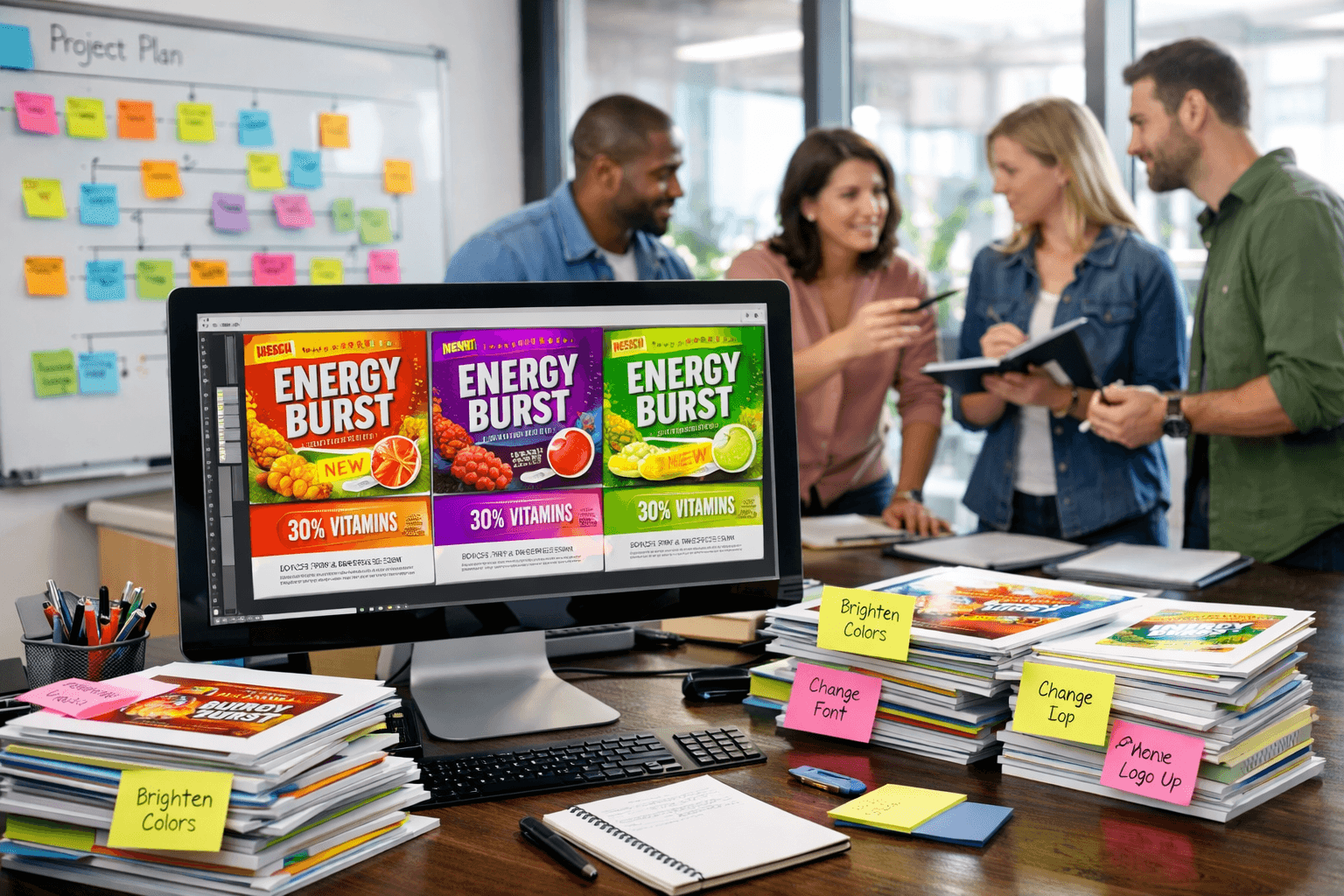
Managing 3,000 artworks a year: how FMCG brands stay in control

Managing 3,000 artworks a year: how FMCG brands stay in control

Three thousand packaging artworks a year. That's not an edge case — it's a realistic volume for any mid-to-large FMCG brand managing multiple product...
View Full Article
10 strategic-fit criteria for FMCG artwork platforms

10 strategic-fit criteria for FMCG artwork platforms

As FMCG organizations manage growing product portfolios, faster launch cycles, and increasing regulatory complexity, artwork management platforms...

View Full Article
How to build a compliant and scalable approval workflow

How to build a compliant and scalable approval workflow

Creating packaging isn’t just about great design—it’s about building an approval workflow that ensures every step, from concept to shelf, is aligned,...

View Full Article