3 min read
Private label artwork management for contract manufacturers
Ekaterina Skalatskaia
:
August 17, 2026
For companies operating in private label and contract manufacturing, managing packaging artwork across multiple customers is one of the most complex operational challenges.
A single contract manufacturer may produce dozens or even hundreds of products for different brands — from cosmetics and food to household goods, supplements, and consumer products. Each brand comes with its own packaging requirements, design guidelines, regulatory standards, approval processes, and market-specific labeling rules.
As a result, coordinating artwork for multiple brand clients simultaneously requires more than traditional email communication and shared folders. Manufacturers need structured workflows, version control, and digital tools to manage artwork efficiently at scale.
In this article, we explore:
- why artwork management is becoming a critical challenge for private label manufacturers;
- the risks of managing multiple packaging projects at the same time;
- best practices for improving artwork approval workflows;
- how digital solutions help contract manufacturers scale operations.
What Is Artwork Management in Private Label Manufacturing?
Artwork management is the process of creating, reviewing, approving, storing, updating, and distributing packaging-related design files throughout the product lifecycle.
For contract manufacturers, artwork typically includes:
- packaging designs;
- labels and cartons;
- technical print files;
- product instructions;
- barcodes;
- regulatory information;
- multilingual versions;
- brand-specific visual elements.
In a private label manufacturing model, the manufacturer is responsible not only for producing the product but also for ensuring that each customer’s packaging artwork is accurate, approved, and ready for production.
For example, one factory may manufacture the same product for five different brands. Each brand may require:
- unique packaging;
- different claims and product information;
- different languages;
- separate approval processes.
Without an effective artwork management system, managing these variations becomes increasingly difficult.
Why Artwork Coordination Is Challenging for Contract Manufacturers
1. Managing Multiple Brands and Projects at Once
The biggest challenge for contract manufacturers is scale.
A single manufacturer may work with:
- global consumer brands;
- retail chains;
- emerging startups;
- distributors;
- e-commerce companies.
Each customer may have its own:
- design requirements;
- approval process;
- communication style;
- documentation standards.
Teams often struggle with questions such as:
- Which artwork version is the latest?
- Has the client approved this design?
- Who approved the final file?
- Can this artwork be sent to production?
Without a clear workflow, small mistakes can create significant production delays.
2. Version Control Risks
One of the most common artwork management problems is using outdated files.
Typical examples include:
- printing an old packaging version;
- using incorrect translations;
- missing updated regulatory information;
- applying incorrect barcodes;
- producing packaging that does not meet market requirements.
These mistakes can lead to:
- production delays;
- costly reprints;
- wasted materials;
- compliance issues;
- damaged customer relationships.
A professional artwork workflow must provide complete visibility into every file version and approval stage.
3. Collaboration Between Multiple Teams
Packaging artwork usually involves several stakeholders:
- Brand owner
- Marketing team
- Design agency
- Regulatory department
- Quality assurance team
- Manufacturing team
- Printing supplier
Each additional participant increases the risk of communication gaps.
An effective artwork approval process ensures that every stakeholder can:
- review files;
- provide feedback;
- track changes;
- approve final versions.
4. Managing Global Markets and Different Regulations
Private label products are often sold across multiple countries and regions.
This creates additional artwork complexity, including:
- different languages;
- country-specific labeling requirements;
- local regulatory information;
- different packaging formats.
A single product may require dozens of artwork variations.
Without centralized control, managing these versions becomes extremely time-consuming.
How to Improve Artwork Management for Multiple Brand Clients
1. Create a Standardized Digital Workflow
The first step toward better artwork management is replacing manual processes based on emails and spreadsheets.
A modern workflow should include:
- centralized file storage;
- automated notifications;
- project status tracking;
- version history;
- approval management.
This allows manufacturers, brands, and suppliers to work from the same source of truth.
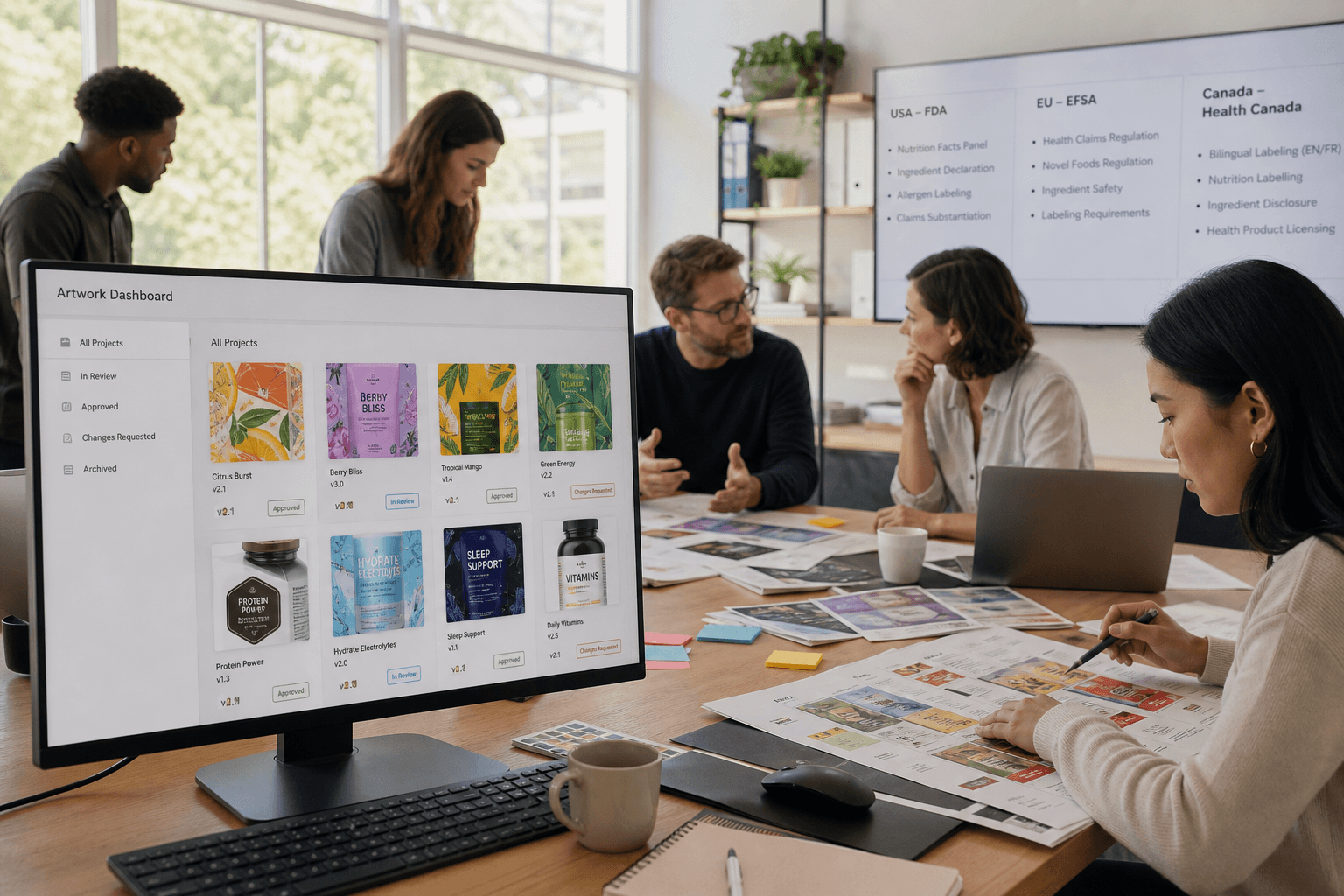
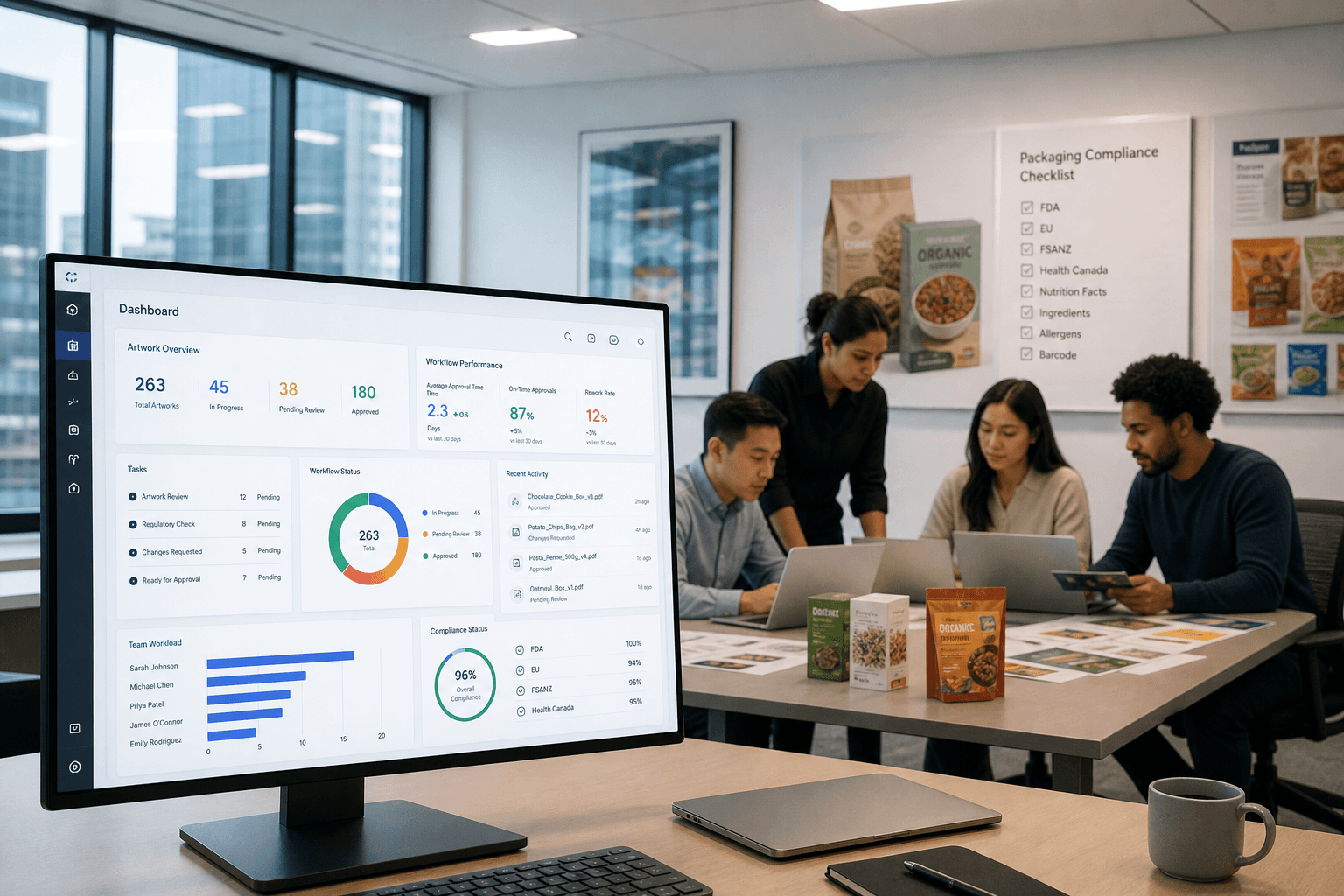
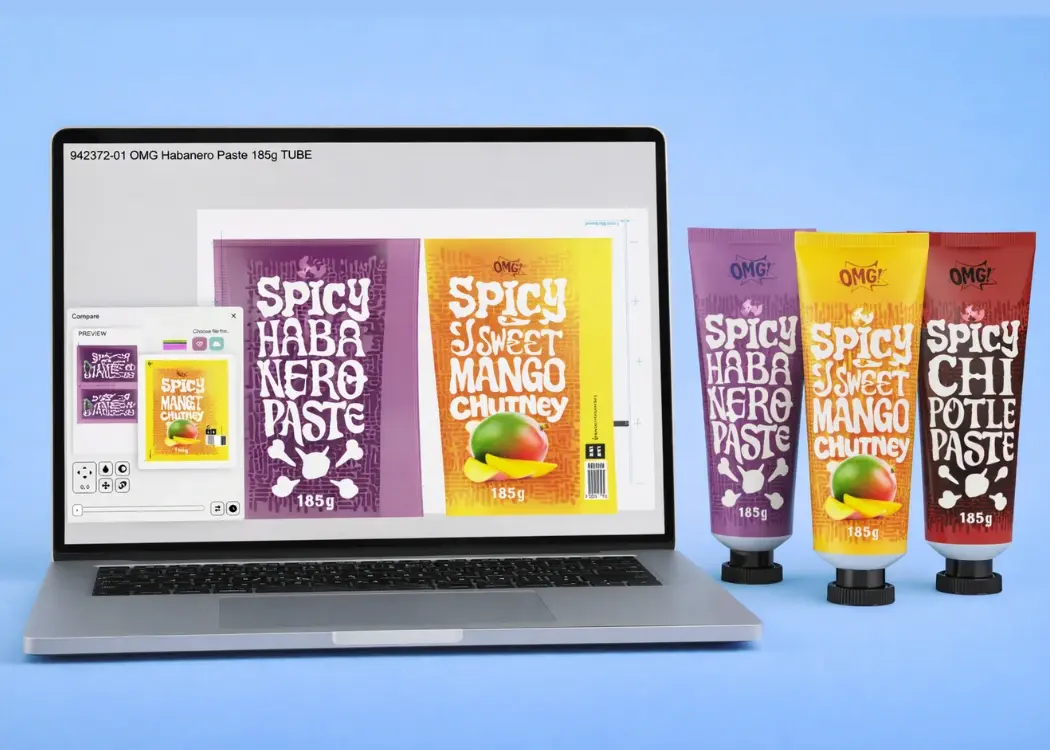
2. Use an Artwork Management System
A dedicated artwork management platform helps companies control the entire packaging lifecycle.
Key capabilities include:
Version Control
Every change is recorded automatically.
Teams can see:
- who updated the file;
- when changes were made;
- which version was approved;
- what was sent to production.
This eliminates confusion and prevents outdated artwork from being used.
Online Approval Workflow
Instead of exchanging multiple email attachments, brands can:
- review artwork online;
- add comments directly;
- request changes;
- approve final designs.
This significantly reduces approval cycles.
Centralized Artwork Database
All project information can be stored in one place:
- packaging files;
- specifications;
- regulatory documents;
- approval history;
- customer requirements.
This creates transparency across the entire supply chain.
Why Email-Based Artwork Management No Longer Works
Many manufacturers still rely on email as the main tool for artwork approvals.
However, email creates several challenges:
| Traditional Email Workflow | Digital Artwork Workflow |
|---|---|
| Files are spread across multiple emails | All files are stored centrally |
| Difficult to identify the latest version | Automatic version tracking |
| Limited process visibility | Complete approval history |
| Slow communication | Faster collaboration |
| Higher risk of human error | Controlled workflows |
For manufacturers managing multiple brands, digital artwork management is becoming essential.
How Cway Helps Private Label Manufacturers Manage Artwork
Cway helps companies improve packaging workflow management by creating better visibility and coordination between brands, manufacturers, and internal teams.
With a structured digital workflow, companies can:
- centralize artwork processes;
- reduce manual communication;
- improve collaboration;
- minimize production errors;
- accelerate product launches.
For contract manufacturers, efficient artwork management directly impacts customer satisfaction, production speed, and operational scalability.
Best Practices for Contract Manufacturing Artwork Management
Standardize Approval Stages
Define clear steps for every packaging project:
- Artwork creation
- Internal review
- Customer review
- Regulatory approval
- Final approval
- Production release
A standardized process reduces confusion and improves accountability.
Assign Clear Ownership
Every artwork project should have defined responsibilities:
- Who manages the artwork?
- Who checks compliance?
- Who approves the final version?
- Who releases files for production?
Clear ownership prevents delays.
Automate Repetitive Tasks
Automation can help manufacturers:
- send approval reminders;
- track deadlines;
- monitor project status;
- reduce manual follow-ups.
This allows teams to focus on higher-value activities.
Conclusion
For private label and contract manufacturing companies, artwork management is becoming a critical business process.
As the number of customers and products grows, traditional methods such as email attachments and spreadsheets become inefficient and risky.
A digital artwork workflow enables manufacturers to:
- manage multiple brand clients efficiently;
- accelerate packaging approvals;
- reduce production errors;
- improve customer relationships;
- scale operations faster.
In today’s competitive manufacturing environment, effective artwork coordination is no longer just an operational task — it is a strategic advantage.