1 min read
Align packaging artwork, assets, and data without delays
Packaging operations have become far more complex than simply managing label design files. Today’s packaging teams must coordinate: artwork revisions
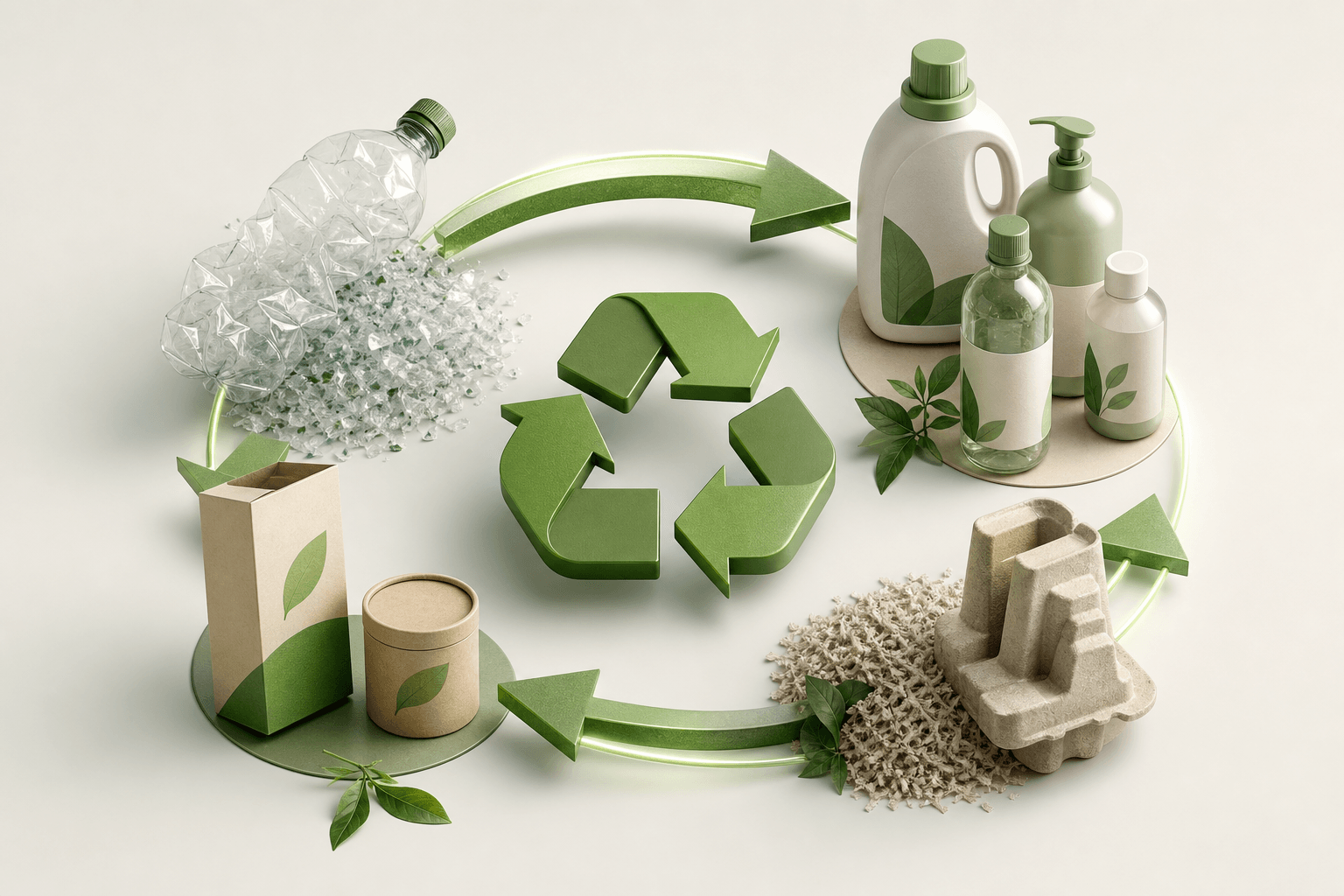
Recyclable packaging is packaging that can be collected, sorted, processed, and converted into new materials through existing recycling systems.
For FMCG brands, recyclability is not only about choosing a recyclable material. It depends on the complete packaging system, including the container, label, adhesive, ink, coatings, and local recycling infrastructure.
Packaging and label teams need to design solutions that work throughout the entire product lifecycle — from manufacturing and shelf use to recycling after consumption.
A package is considered recyclable when it can successfully complete four key stages:
The packaging must be accepted by existing waste collection systems.
Recycling facilities must be able to identify and separate the material.
The material must be technically suitable for recycling.
The recycled material should have a practical application in new products.
Important: A recycling symbol does not automatically mean that packaging will actually be recycled.
FMCG packaging has multiple roles:
This creates a challenge: packaging must be both functional and recyclable.
The goal of sustainable packaging design is not simply to replace plastic or reduce materials. The goal is to create packaging that performs well and fits into a circular economy.
PET is one of the most widely recycled packaging materials.
Common applications:
Advantages:
However, recyclability depends on:
HDPE is commonly used for:
It offers:
Packaging designers should consider compatibility between the container, closure, and label.
Flexible packaging includes:
Although lightweight and material-efficient, flexible packaging is often challenging to recycle because many structures combine several materials.
Future solutions focus on:
The label should be compatible with the main packaging material.
For example:
A poorly matched label can reduce recycling efficiency.
Adhesives play an important role in recycling performance.
The ideal adhesive should:
Packaging teams should consider how inks and coatings affect:
More brands are moving toward recyclable-friendly printing solutions and simplified designs.
Using fewer material types usually makes recycling easier.
Example:
Instead of:
Plastic + aluminium + multiple coatings
Consider:
Single-polymer packaging solutions where possible.
Mono-material structures improve sorting efficiency and increase the chances that packaging can successfully enter existing recycling streams.
Labels should not be treated as a separate element.
The packaging system should be evaluated as one structure:
Container + Label + Adhesive + Ink + Closure
A recyclable container can lose its recycling potential if labels, adhesives, or printing components are not compatible with recycling processes.
Recyclability depends on geography.
A packaging format may work well in one market but fail in another due to differences in collection systems, sorting technology, and recycling capabilities.
FMCG teams should evaluate packaging performance based on the markets where products are sold.
Packaging recyclability should be verified through testing and industry guidelines before large-scale implementation.
FMCG teams should evaluate:
Testing helps brands avoid sustainability claims that cannot be supported and ensures that packaging performs as expected in real recycling systems.
Managing packaging sustainability across multiple products and markets can quickly become complex.
Specialized packaging software helps FMCG teams keep all packaging information in one place, including materials, labels, adhesives, components, recyclability data, and regulatory requirements.
By centralizing packaging data, teams can:
Digital tools also help reduce manual work, improve data accuracy, and simplify the development of more recyclable packaging solutions.
The symbol only identifies material information. It does not confirm that recycling infrastructure exists.
A new material does not automatically create sustainable packaging.
The packaging container may be recyclable, but unsuitable labels or adhesives can reduce the overall recyclability.
For FMCG brands, recyclable packaging is not just a material choice — it is a system design challenge.
The most successful packaging solutions consider every element:
The future of FMCG packaging is not simply about creating “greener” packaging.
It is about creating packaging that can stay in circulation.
No. Some plastics are easier to recycle than others. Recyclability depends on polymer type, packaging design, additives, labels, and local recycling infrastructure.
1 min read
Packaging operations have become far more complex than simply managing label design files. Today’s packaging teams must coordinate: artwork revisions
1 min read
FMCG packaging has only seconds to capture attention and communicate value on crowded store shelves. Understanding the elements of design and...
1 min read
As FMCG brands expand, packaging complexity increases much faster than most teams expect. What starts as a manageable approval process for a handful...